FAO
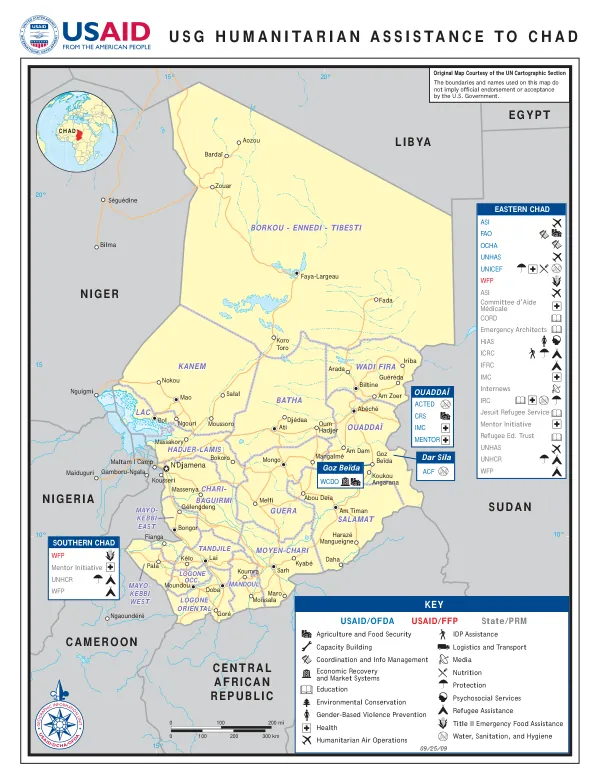
USG HUMANITARIAN ASSISTANCE TO CHAD
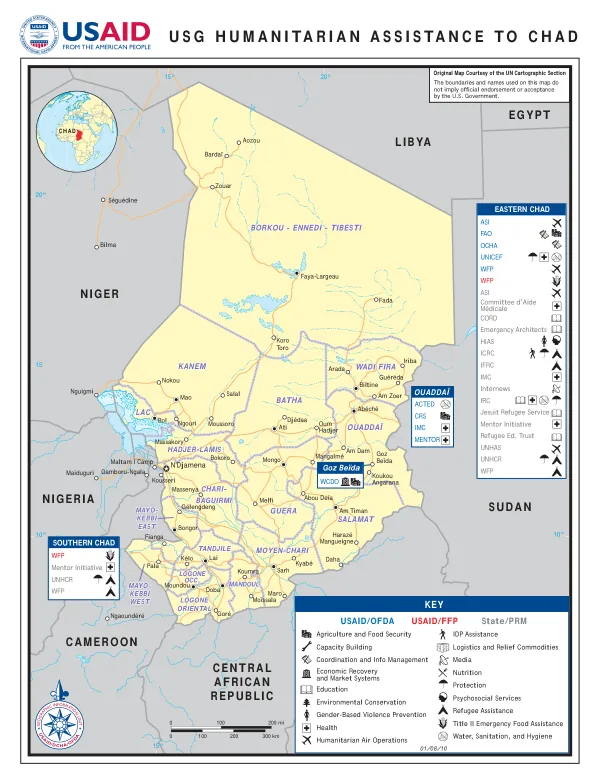
The humanitarian crisis in Eastern Chad is a pressing concern, with over 50,000 internally displaced persons (IDPs) and 25,000 refugees in need of assistance.
2010 · 2 pages
Sign in to readA free account is required to download.
Abstract
The region has been affected by conflict in neighboring Darfur, leading to a significant influx of refugees. The IDP population is scattered across various camps and settlements, with the largest concentrations found in the Ouaddaï and Salamat regions. The humanitarian response in Eastern Chad is led by the United Nations (UN) and its partners, including the United States Government (USG) through the Office of Foreign Disaster Assistance (OFDA) and the Food for Peace (FFP) program. The response focuses on providing emergency assistance, including food, shelter, and healthcare, as well as supporting the recovery and resilience of affected communities. Key partners involved in the response include the UN High Commissioner for Refugees (UNHCR), the World Food Programme (WFP), and non-governmental organizations (NGOs) such as ACTED, CRS, and IMC. The humanitarian situation in Eastern Chad is characterized by a high level of vulnerability, particularly among women and children. The IDP population faces significant challenges in accessing basic services, including healthcare, education, and sanitation. The response efforts aim to address these needs and support the recovery of affected communities. The USG humanitarian assistance to Eastern Chad is focused on providing emergency food assistance, supporting the recovery of agricultural livelihoods, and promoting economic recovery and market systems. The humanitarian response in Eastern Chad is also supported by the UN's humanitarian coordination efforts, led by the Office for the Coordination of Humanitarian Affairs (OCHA). The coordination efforts aim to ensure a coordinated and effective response to the humanitarian crisis, including the provision of emergency assistance and support to affected communities. The response efforts are also guided by the principles of humanitarian law and the protection of civilians, particularly women and children. The humanitarian situation in Eastern Chad remains complex and challenging, with ongoing conflict and displacement affecting the region. The humanitarian response efforts aim to address the immediate needs of affected populations while supporting the recovery and resilience of affected communities. The USG humanitarian assistance to Eastern Chad is a critical component of the response efforts, providing essential support to affected populations and promoting economic recovery and market systems.