USAID DEC
Child hand contamination and diarrhea in DRC
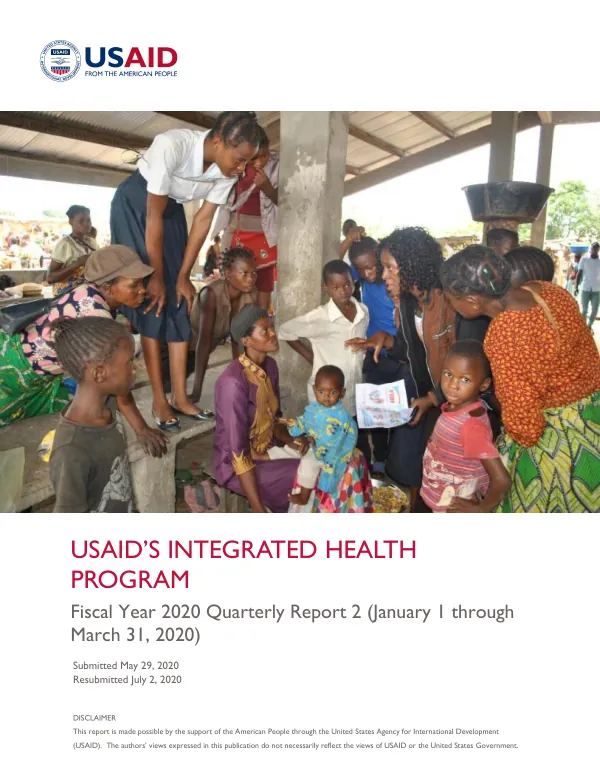
The REDUCE study, conducted in Walungu Territory of South Kivu in the Democratic Republic of the Congo, aimed to identify exposure pathways to faecal pathogens for young children and develop scalable interventions to reduce faecal contamination.
2020 · 9 pages
Sign in to readA free account is required to download.
Abstract
A prospective cohort study of 690 participants was conducted to investigate the association between hand, food, and environmental faecal contamination and diarrhoeal disease prevalence among young children. The study found that E. coli was detected in 73% of child and caregiver hand-rinse samples, 69% of soil samples from child play spaces, 54% of child food samples, 38% of objects and surfaces children were observed putting in their mouths, 74% of stored water samples, and 40% of source water samples. Children under 5 years with E. coli on their hands had significantly higher odds of diarrhoea at the 6-month follow-up, with an odds ratio of 2.03 (95% confidence interval: 1.05, 3.92). The study's findings highlight the urgent need to provide clean play spaces for young children and interventions targeting hand hygiene to reduce paediatric exposure to faecal pathogens. The study's results also suggest that environmental and hand contamination are significant contributors to diarrhoeal diseases among young children in rural DRC. The REDUCE study's methodology involved collecting hand-rinse, soil, food, object, surface, stored water, and water source samples from households in Walungu Territory. The samples were analyzed for E. coli using the most probable number (MPN) method with the IDEXX Quanti-Tray system. The study's results provide evidence that child hand contamination is associated with diarrhoeal disease in rural DRC, and that there is high faecal contamination in child play spaces and food. The study's findings have implications for the development of interventions to reduce faecal contamination and diarrhoeal disease among young children in rural DRC. The results suggest that interventions targeting hand hygiene and providing clean play spaces may be effective in reducing paediatric exposure to faecal pathogens. Further research is needed to develop and evaluate scalable interventions to reduce faecal contamination and diarrhoeal disease among young children in rural DRC. The study's results also highlight the need for further research on the role of environmental and hand contamination in diarrhoeal diseases among young children. The study's findings suggest that environmental and hand contamination are significant contributors to diarrhoeal diseases among young children in rural DRC, and that further research is needed to understand the mechanisms by which these factors contribute to diarrhoeal disease.