DEPARTMENT OF HEALTH
Collaborative Allocation Workshop for Family Planning Commodities
The agricultural development initiative in the Philippines began in 2018 with funding from USAID's MTaPS program.
2023 · 4 pages
Sign in to readA free account is required to download.
Abstract
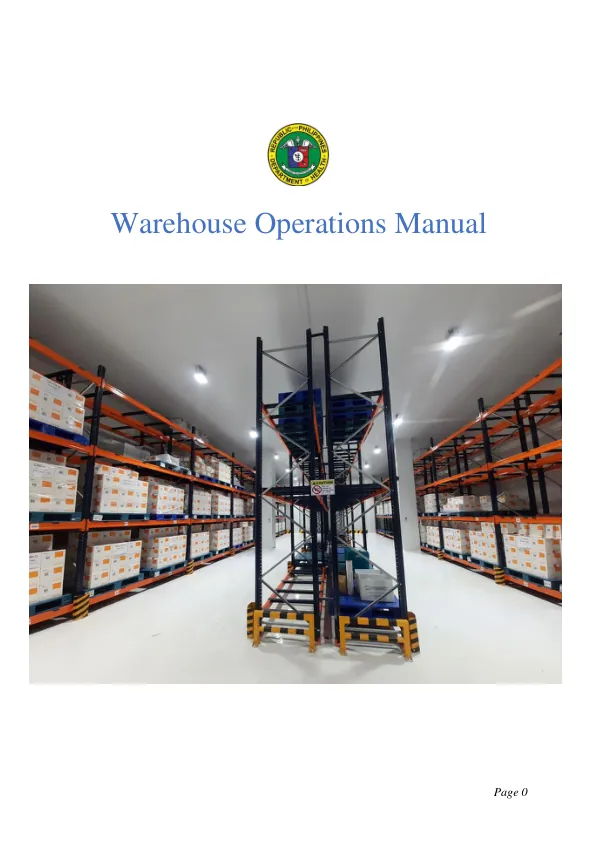
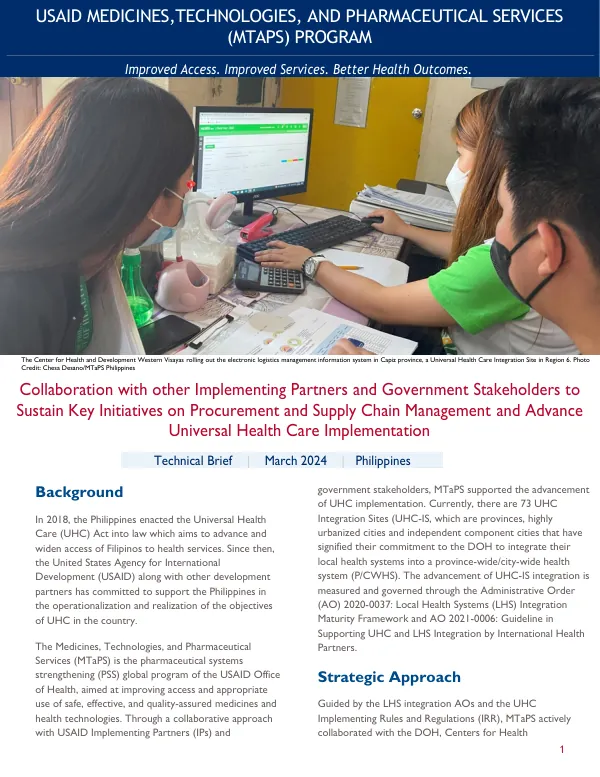
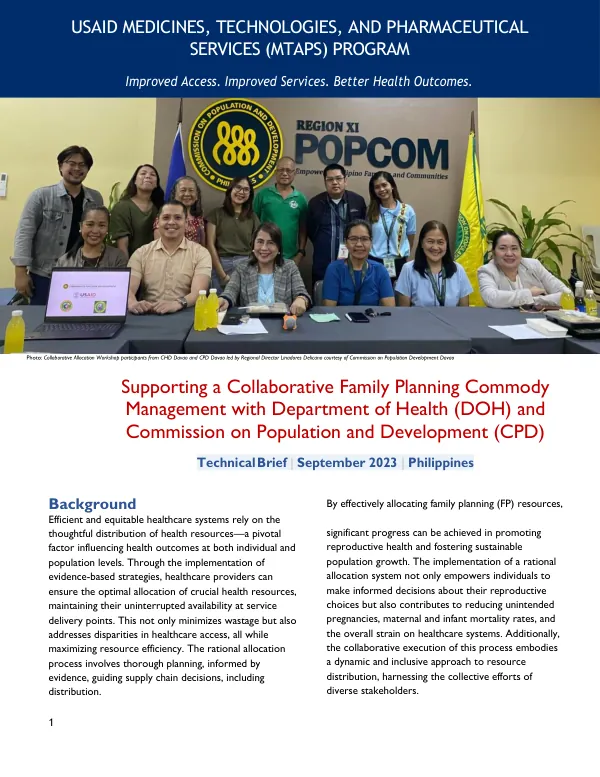
The initiative aimed to improve access to family planning (FP) resources and strengthen the country's health system. The program focused on the efficient and equitable distribution of FP commodities, ensuring that resources were allocated based on evidence-driven strategies. The MTaPS program collaborated with the Department of Health (DOH) and the Commission on Population and Development (CPD) to address the challenges in FP commodity supply chain management. The primary issue was the divergence in methodologies between the DOH and CPD, with the DOH using the Pharmaceutical Management Information System (PMIS) and the CPD relying on data generated from service delivery points through the Inventory Order Report (IOR). To address these challenges, the MTaPS program facilitated a roundtable discussion with key stakeholders, including the DOH, CPD, NEDA, DBM, DILG, USAID, and USAID. The discussion highlighted the importance of adopting a comprehensive strategy to improve the allocation and distribution processes through data-driven decision-making. The MTaPS program also facilitated the Warehouse Operation (WOM) training for CPD participants from central and regional offices. The training aimed to develop local capacity in stock management, decision-making on distribution, tracking, and reporting at service delivery points. Additionally, the program conducted eLMIS training for CPD staff to prepare them for the upcoming user training. The MTaPS program also facilitated coordination between the CPD and CHD in Region XI (Davao Region) to promote collaborative allocation and distribution of FP commodities. The meeting highlighted the importance of integrating all FP commodities stored in CPD into the eLMIS framework to ensure complete data visibility and facilitate more informed decision-making. The challenges faced in the FP commodity supply chain management underscore the potential for substantial improvement through support from development partners. The involvement of development partners can bring about significant strides in overcoming obstacles and enhancing efficiency at service delivery points. The current functions of CPD are not static, and the DOH has demonstrated adaptability and improvement in supply chain management by leveraging technological advancements. The existing warehouse and logistics infrastructure developed by CPD remain valuable assets and can be transferred to the respective CHD. The harmonization of efforts between CPD, CHD, and DOH towards an integrated health commodity supply chain system is crucial for improving resource management and better resource management.