GLOBAL COMMUNITIES
Colombia - CRRP - Jan-March 2015 Quarterly Report - FINAL
The Knowledge and Risk Reduction Program (CRRP) in Medellin, Colombia, is a project implemented by Global Communities, with funding from the United States Agency for International Development (USAID).
2015 · 5 pages
Sign in to readA free account is required to download.
Abstract
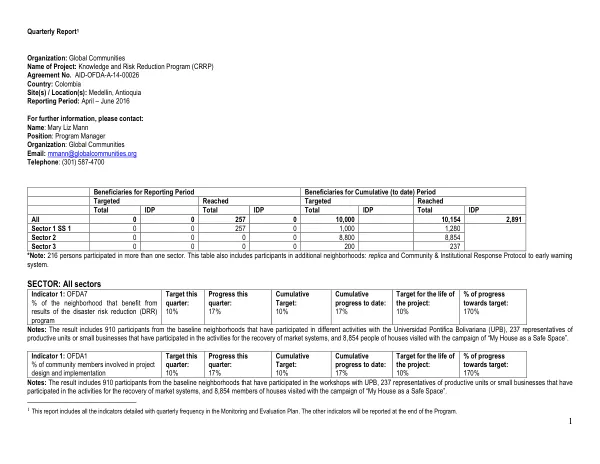
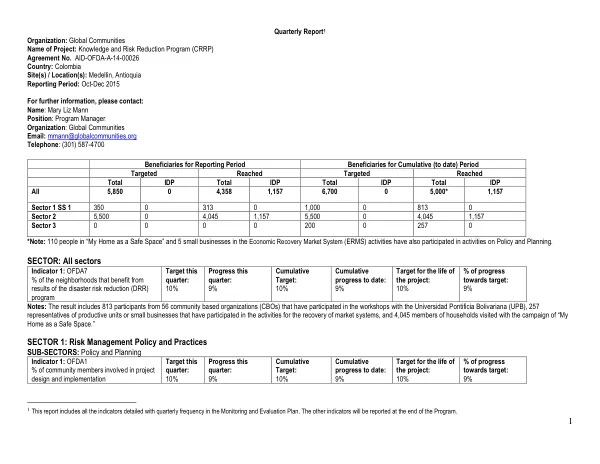
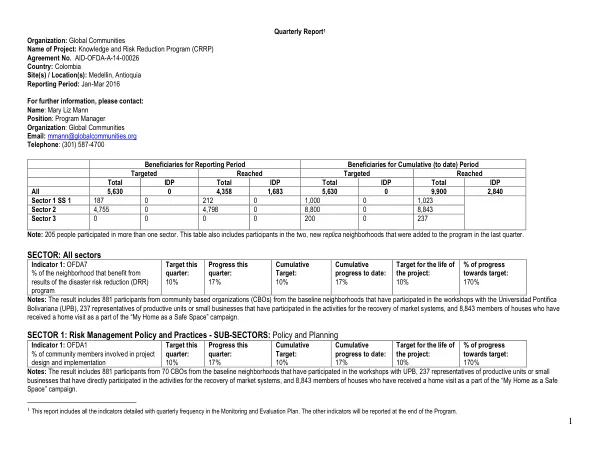
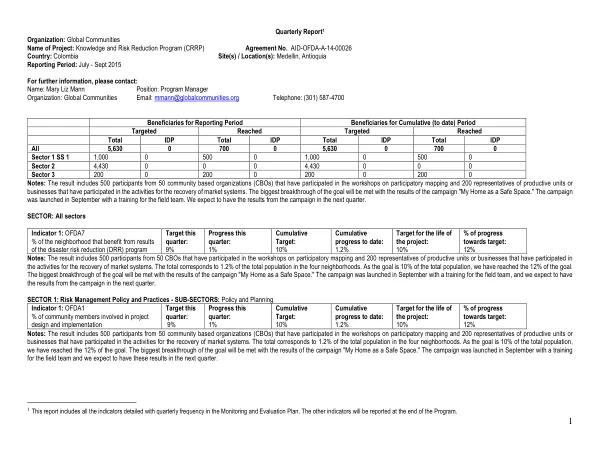
The program aims to reduce disaster risk and promote community resilience in the city. The project focuses on three main sectors: Risk Management Policy and Practices, Public-Private Partnerships, and Economic Recovery Market Systems. In the reporting period of July to September 2015, the program targeted 5,630 beneficiaries, with 700 of them being internally displaced persons (IDPs). The program's activities included workshops on participatory mapping and disaster risk reduction (DRR) for community-based organizations (CBOs) and productive units or businesses. A total of 500 participants from 50 CBOs and 200 representatives of productive units or businesses participated in these activities. The program's progress is measured through various indicators, including the percentage of the neighborhood benefiting from DRR program results, community members involved in project design and implementation, and vulnerable people involved in project design and implementation. The program has made significant progress in these areas, with 1.2% of the total population in the four neighborhoods benefiting from the DRR program results, 1.2% of community members involved in project design and implementation, and 64% of vulnerable people involved in project design and implementation. The program has also made progress in engaging private sector partners in DRR activities, with two new private sector partners supporting DRR activities in Medellin. Additionally, the program has engaged 206 private sector businesses in response or DRR-related activities, with a target of 220 businesses. The program's public-private partnerships have been strengthened, with national and local NGOs linking the objectives of the partnerships to sectors and subsectors of the program. The program's activities have been well-received by the community, with 73% of participants in participatory planning workshops being women. However, the program has faced challenges in engaging the community in risk management activities, with many people being more interested in physical improvements to their houses than receiving information and learning about risk management. To overcome this challenge, the program has included a sociologist as part of its team to motivate new community groups to get involved in participatory sessions for designing risk management plans. The program's progress is expected to continue in the next quarter, with the launch of the campaign "My Home as a Safe Space" and the training of the field team. The program's results will be closely monitored, and adjustments will be made as necessary to ensure the program's success.
Related documents