USAID DEC
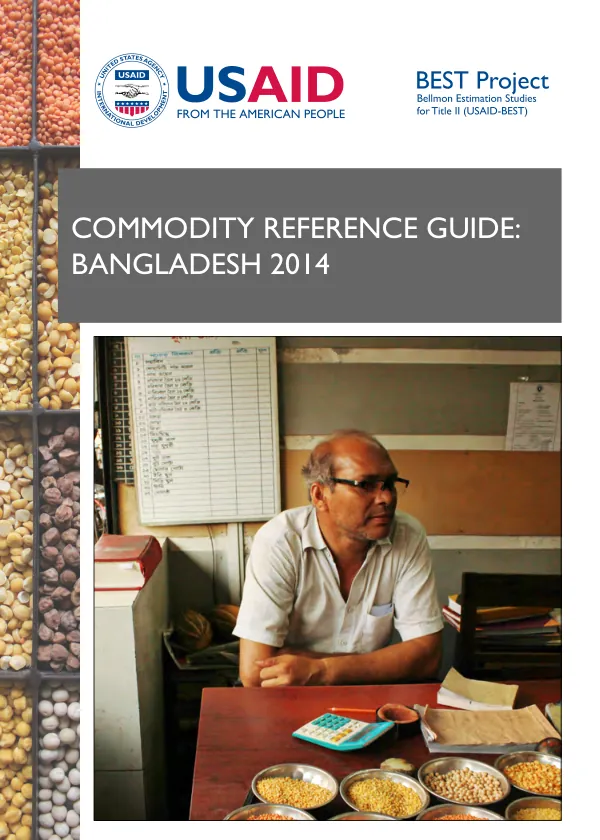
Commodity Reference Guide: Bangladesh 2014
The agricultural commodity market in Bangladesh is characterized by a diverse range of staple foods, including rice, wheat, pulses, and edible oil.
2014 · 22 pages
Sign in to readA free account is required to download.
Abstract
The staple foods collectively comprise the typical household diets in Bangladesh. Rice is the primary staple food, with various types available in the market, including coarse rice, parboiled rice, and aromatic non-parboiled rice. Coarse rice, also known as Mota Chaal, is a low-priced staple food consumed by low-middle income households. It is prepared in various forms, including bhaat (cooked rice), muri (popped rice), chira (flat rice), and khichuri (a mix of rice and pulses). Domestic and imported supplies of coarse rice are available throughout the year, with harvest months spanning the Aus, Aman, and Boro seasons. Parboiled rice, including Shorna, Ataish, Pajiom, and Miniket, is also a staple food in Bangladesh. These types of rice are consumed by middle-high income households and are prepared in similar forms to coarse rice. Domestic supplies of parboiled rice are available during the Boro and Aman seasons, with some varieties available throughout the year. Wheat is another staple food in Bangladesh, although its consumption is relatively low compared to rice. Wheat is primarily consumed by low-middle income households and is prepared in the form of bhaat (cooked wheat). Domestic and imported supplies of wheat are available throughout the year. Pulses, including red lentils, are an essential component of the Bangladeshi diet. Moshur Dal, a type of red lentil, is a high-priced staple food consumed by middle-high income households. It is prepared in the form of daal (curry/soup) and is available in domestic and imported varieties throughout the year. Edible oil is another essential commodity in Bangladesh, with various types available in the market, including mustard oil, soybean oil, and palm oil. The consumption of edible oil is relatively high in Bangladesh, with households using it for cooking and other purposes. The staple food market in Bangladesh is characterized by a diverse range of commodities, with various types of rice, wheat, pulses, and edible oil available in the market. The market is influenced by factors such as price, preparation methods, and supply chains, with different types of households consuming different staple foods based on their income levels and preferences.