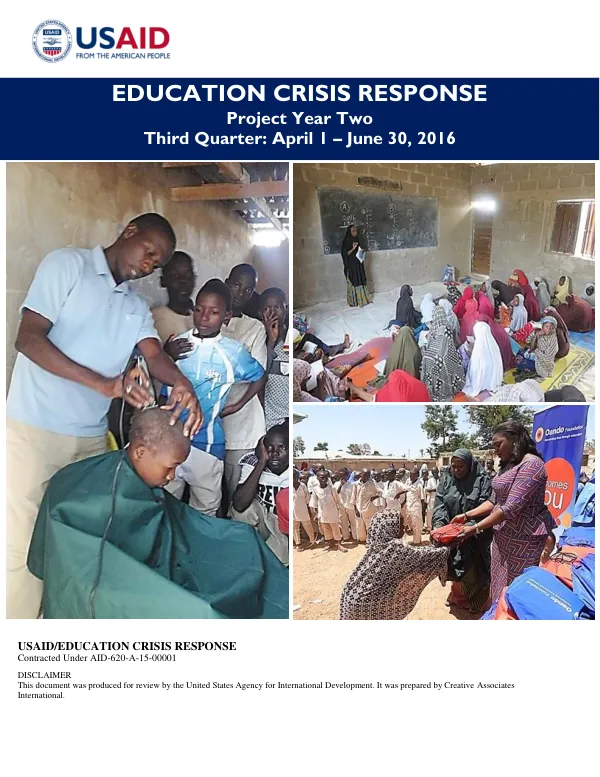
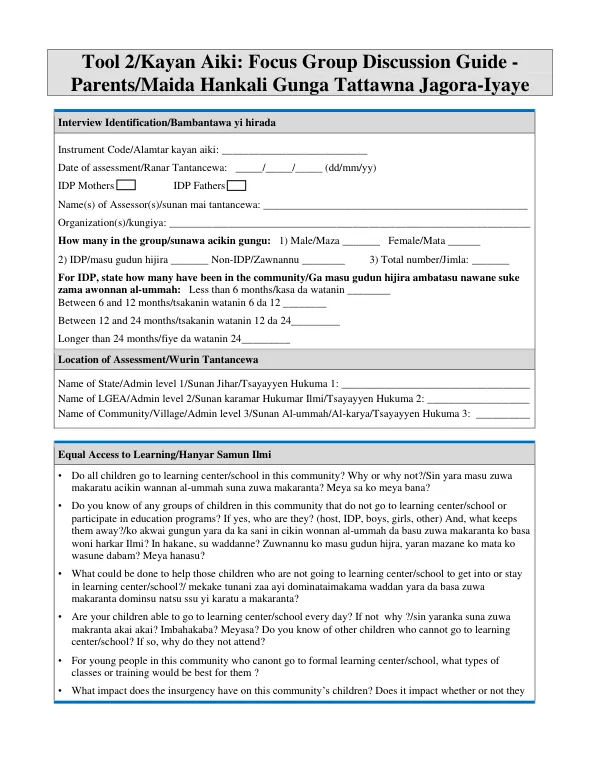
CREATIVE ASSOCIATES INTERNATIONAL INC.
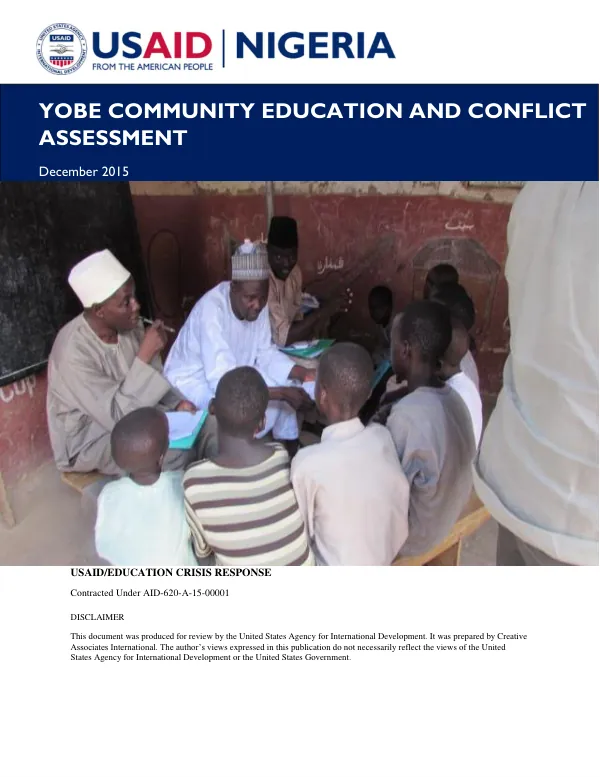
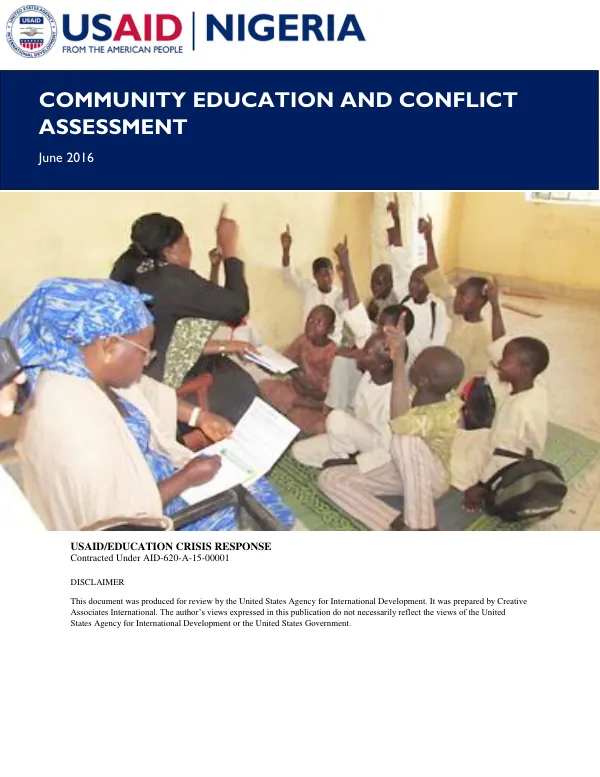
Community Education and Conflict Assessment (CECA) Report
The Community Education and Conflict Assessment (CECA) was conducted in April 2015 to assess the education crisis in Nigeria.
2015 · 36 pages
Sign in to readA free account is required to download.
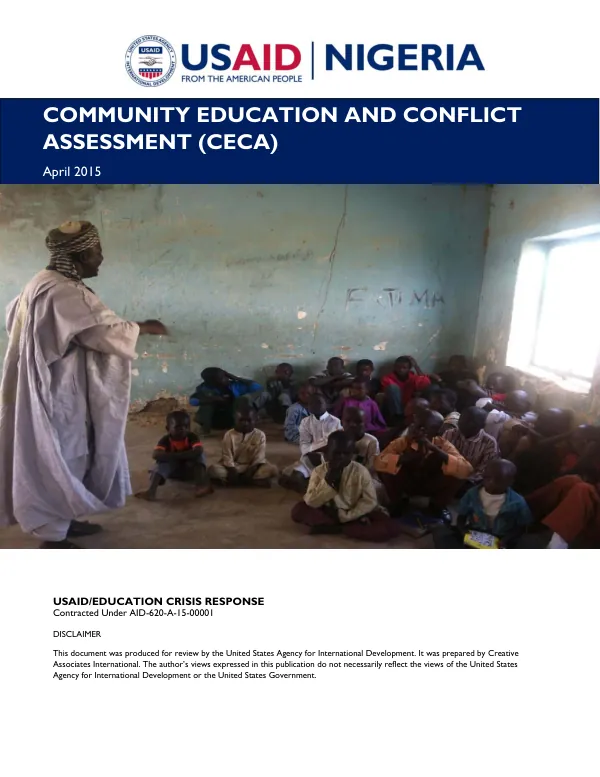
Abstract
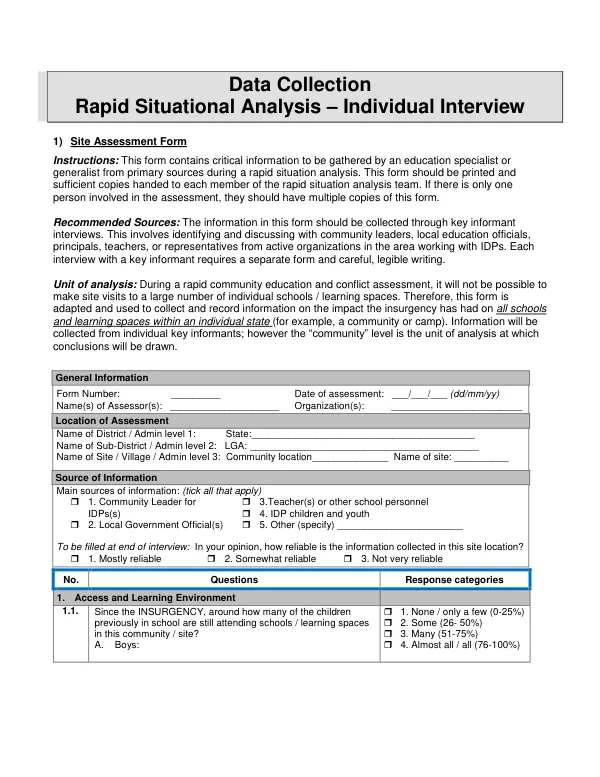
The assessment aimed to identify the challenges faced by internally displaced persons (IDPs) and host community members in accessing education. The study involved in-depth interviews, focus group discussions, and data collection from 1,652 Nigerian girls, boys, teachers, parents, and community members. The assessment found that IDPs faced significant challenges in accessing education, including limited availability of schools, inadequate infrastructure, and a lack of qualified teachers. Many IDPs were forced to attend non-formal education centers, which often lacked the necessary resources and support. The study also highlighted the importance of equitable access to education, with a focus on protecting the rights of vulnerable groups, including girls and orphans. The CECA assessment identified several key areas for improvement, including the need for increased funding for education, the development of more effective education policies, and the provision of training and support for teachers. The assessment also emphasized the importance of community engagement and participation in education initiatives, highlighting the need for more effective partnerships between government agencies, non-governmental organizations, and local communities. The assessment team consisted of 36 Nigerian enumerators, 50% of whom were women, who played a crucial role in collecting data and providing valuable insights into the experiences of IDPs and host community members. The team also received guidance and support from Creative Associates International, the Education Crisis Response Project Director, and the Monitoring and Evaluation Advisor, International Rescue Committee. The CECA assessment was conducted in collaboration with various government agencies, non-governmental organizations, and local communities, including the Nigerian Government, UNICEF, and the Safe Schools Initiative. The assessment provided a comprehensive understanding of the education crisis in Nigeria and highlighted the need for a more effective and sustainable response to address the challenges faced by IDPs and host community members. The assessment's findings and recommendations are expected to inform the Education Crisis Response Project, which aims to improve access to education for IDPs and host community members. The project's success will depend on the effective implementation of the assessment's recommendations, including the development of more effective education policies, the provision of training and support for teachers, and the establishment of more effective partnerships between government agencies, non-governmental organizations, and local communities. The assessment's methodology involved a combination of in-depth interviews, focus group discussions, and data collection from a range of stakeholders, including IDPs, host community members, teachers, and government officials. The assessment team used a range of data collection tools, including a secondary data tool, a focus group discussion tool, and an in-depth interview tool, to gather information on the education crisis in Nigeria. The assessment's conclusions highlight the need for a more effective and sustainable response to the education crisis in Nigeria, including the development of more effective education policies, the provision of training and support for teachers, and the establishment of more effective partnerships between government agencies, non-governmental organizations, and local communities. The assessment's recommendations are expected to inform the Education Crisis Response Project and contribute to the improvement of access to education for IDPs and host community members in Nigeria.
Related documents