CREATIVE ASSOCIATES INTERNATIONAL INC.
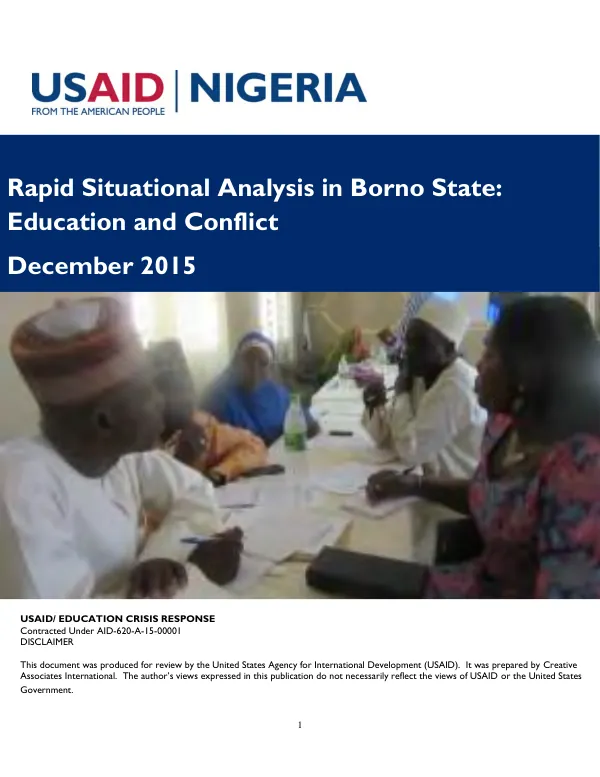
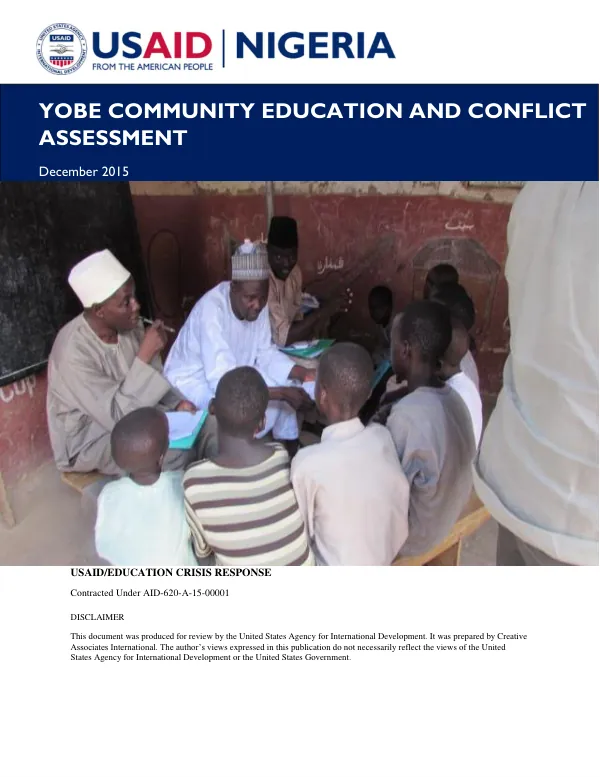
Rapid Situational Analysis for Yobe State, NIGERIA
The rapid situational analysis for education in crisis-affected areas involves collecting data through individual interviews and focus group discussions.
2015 · 8 pages
Sign in to readA free account is required to download.
Abstract
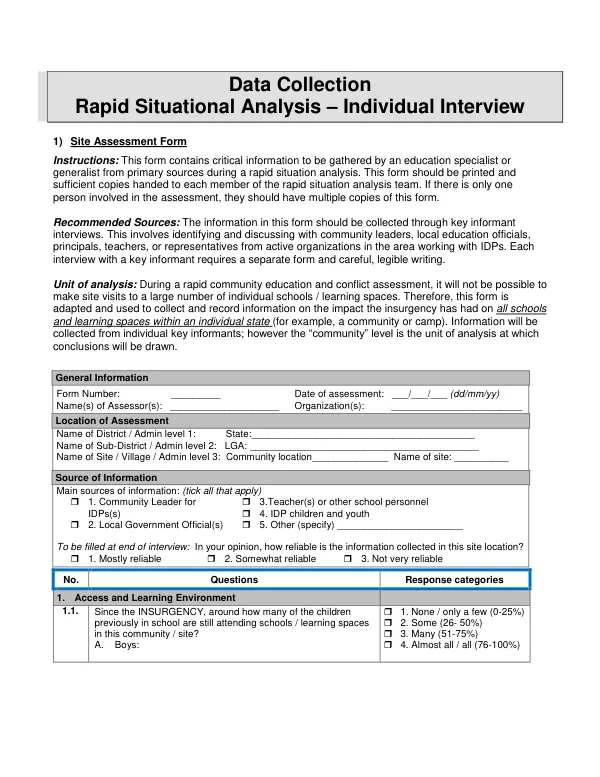
The analysis focuses on assessing the impact of the insurgency on education, including access to learning environments, teaching and learning, education policy and coordination, and community participation. The individual interview form is used to collect information from key informants, including community leaders, local education officials, principals, teachers, and representatives from organizations working with internally displaced persons (IDPs). The form is adapted to collect information on the impact of the insurgency on all schools and learning spaces within a state or community. The form collects data on various aspects, including the number of children previously in school who are still attending schools or learning spaces, the number of functioning schools or learning spaces before and after the crisis, and the number of IDPs attending existing schools. The form also assesses the risks faced by boys and girls when they are in or traveling to schools or learning spaces, including exposure to school attacks, health risks, and sexual abuse. The form also collects data on teaching and learning, including the loss of materials such as textbooks, teaching materials, and furniture due to the insurgency. It also assesses the urgent messages or information needed by children and youth to protect themselves during the ongoing insurgency. The focus group discussion guidance is used to collect data from children and parents through focus group discussions. The themes for the focus group discussions are based on the categories in the individual interview tool, and the guidance provided to supervisors is to use the themes without asking direct questions. The rapid situational analysis aims to provide an initial snapshot of the education situation, including urgent issues for attention from other clusters that are relevant to education. The analysis will be used to inform education responses and interventions in crisis-affected areas. The secondary data form is used to collect information from secondary sources, including reports, documents, and other relevant data. The form is used to provide complete information needed to complete an initial snapshot of the education situation and to put the primary data into context. The analysis will focus on the following geographic areas: three districts and six communities with pairs of male/female enumerators. The analysis will provide information on the education situation, including access to learning environments, teaching and learning, education policy and coordination, and community participation. The analysis will also provide information on the following timeframes: the impact of the insurgency on education, the number of children previously in school who are still attending schools or learning spaces, and the number of functioning schools or learning spaces before and after the crisis. The recommendations from the analysis will inform education responses and interventions in crisis-affected areas, including the need for repair of damaged school buildings or facilities, establishment of temporary learning spaces, and provision of educational materials and teacher training. The analysis will also provide information on community priorities, including the need for psychosocial support to teachers and students, school feeding, and other essential support to education. The analysis will inform education responses and interventions in crisis-affected areas, including the need for urgent messages or information to protect children and youth during the ongoing insurgency.