CREATIVE ASSOCIATES INTERNATIONAL INC.
Rapid Situational Analysis in Borno State: Education and Conflict
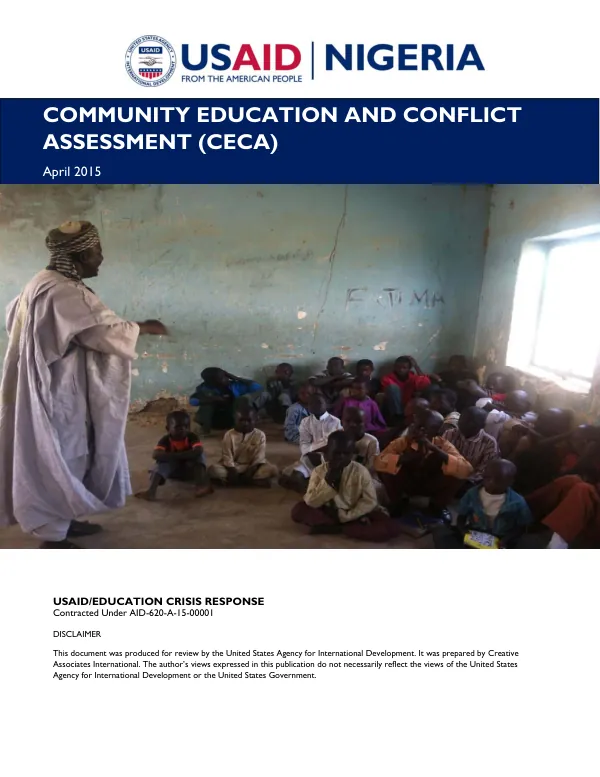
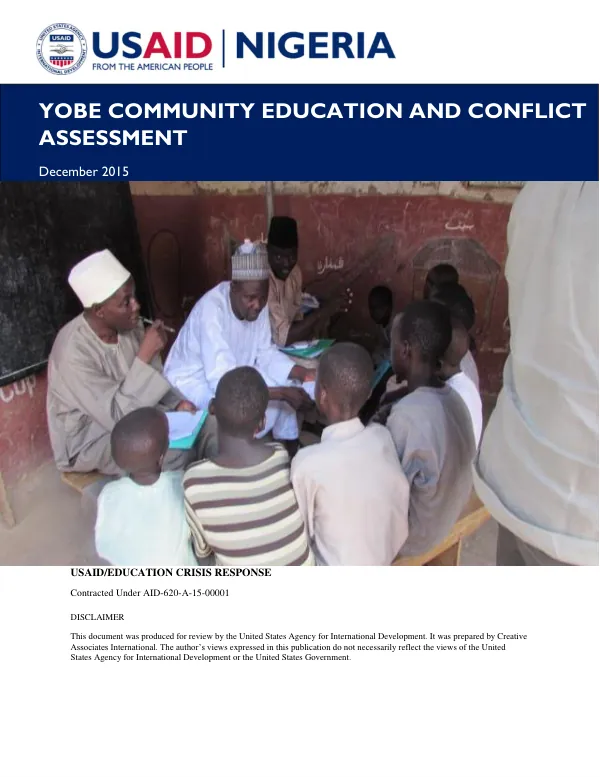
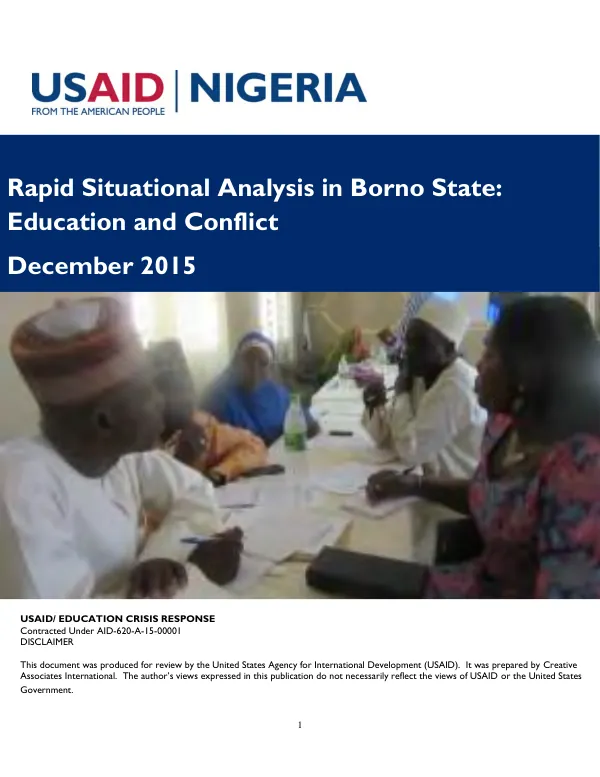
The Rapid Situational Analysis in Borno State was conducted between November and December 2015 to assess the education context in the state, particularly in relation to Internally Displaced Persons (IDPs) and their children and youth.
2015 · 24 pages
Sign in to readA free account is required to download.
Abstract
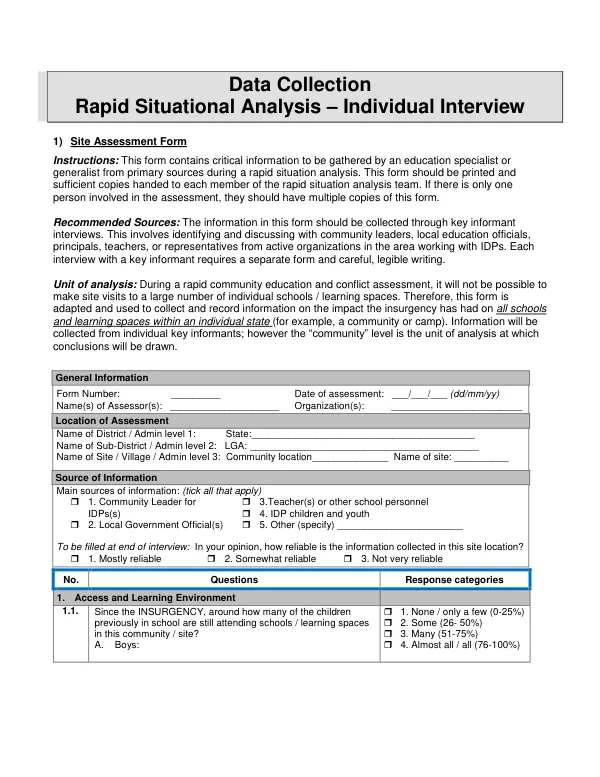
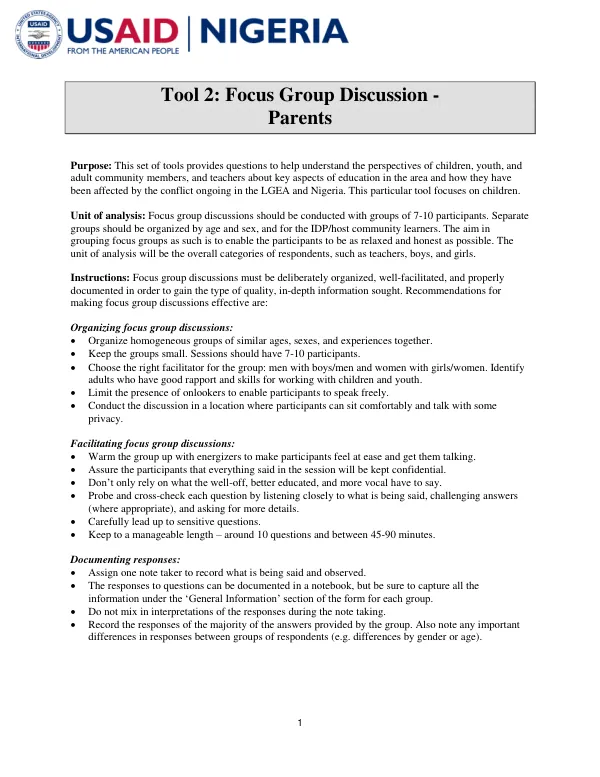
The analysis aimed to provide information on access to education, learning environments, teaching and learning, and parental and community perceptions of schooling. The study found that children are displaced from school, with an average of 26-51% of students displaced in the six Local Government Authorities (LGAs) surveyed. The magnitude of displacement varies across LGAs, with some communities experiencing 100% displacement and others having no schools or learning spaces available. The teaching force also needs to grow in areas where fewer than 50% of teachers have returned. Parents expressed great concern about the role of the insurgency in displacing their children from school, with many identifying the insurgency as the primary reason for their children's out-of-school status. The study also found that children, youth, and their parents remain fearful of attacks, kidnappings, and abductions by insurgents, with school attacks being the most common fear identified. Community support for education is conditioned on meeting basic needs such as facilities and provision of teaching-learning materials. Participants advocated for peace, Technical Vocational Education and Training (TVET), and merged education for the future of their children. The community is eager for education opportunities related to peace and skill development. The study highlights the dire education situation in Borno State, with a growing population of IDPs and out-of-school girls, boys, and youth. The state is among the worst performing in the nation on education indicators, reflecting the broader political, economic, and social crisis in Borno. The findings of the study have significant implications for education policy and programming in Borno State, emphasizing the need for targeted interventions to address the root causes of displacement and promote access to quality education for all. The Rapid Situational Analysis was conducted via a mixed-methods approach, combining quantitative and qualitative data. The study relied on a literature review, one-on-one interviews with community members, and focus group discussions. Data was collected in six LGAs and analyzed to draw conclusions and recommendations. The study's findings and conclusions are organized by key question, providing a systematic approach to understanding the education context in Borno State. The study's recommendations emphasize the need for education opportunities related to peace and skill development, as well as the provision of basic needs such as facilities and teaching-learning materials. The study's methodology involved a two-day training for enumerators, followed by data collection in six LGAs. The data was entered in the field and analyzed, with draft reports vetted by the Nigerian team. The study's findings and conclusions are based on data and findings, providing a comprehensive understanding of the education context in Borno State. The study's recommendations have significant implications for education policy and programming in Borno State, emphasizing the need for targeted interventions to address the root causes of displacement and promote access to quality education for all. The study's findings and conclusions highlight the importance of community support for education, emphasizing the need for education opportunities related to peace and skill development. The study's methodology and findings provide a comprehensive understanding of the education context in Borno State, highlighting the need for targeted interventions to address the root causes of displacement and promote access to quality education for all. The study's recommendations emphasize the importance of community support for education, emphasizing the need for education opportunities related to peace and skill development.