FHI 360
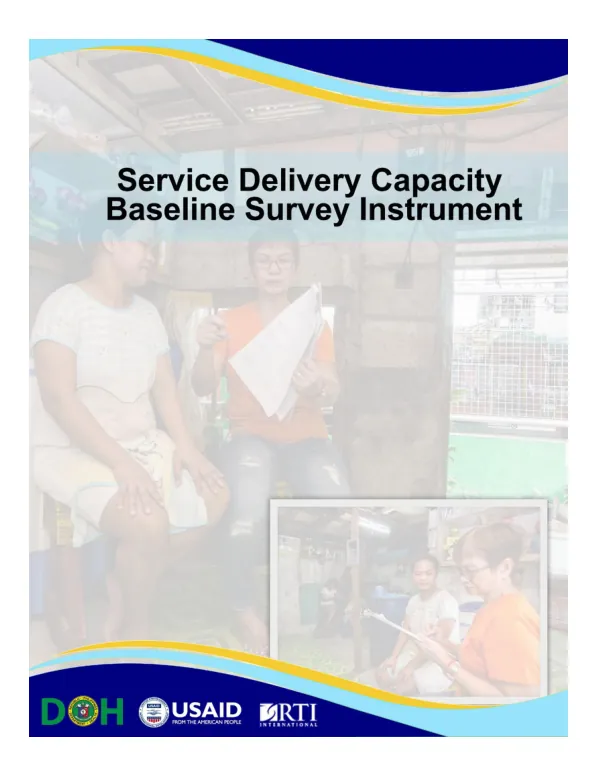
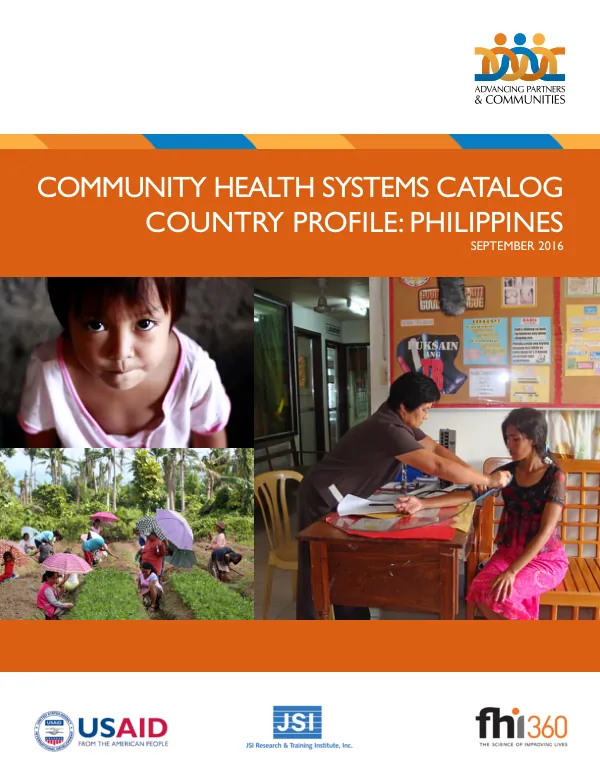
Community Health Systems Catalog Country Profile: Philippines
The Philippines has a decentralized system of governance, with local government units (LGUs) playing a crucial role in implementing community health programs.
2016 · 20 pages
Sign in to readA free account is required to download.
Abstract
The country has a multitude of health policies and strategies, with no single policy guiding community health. The Policy on Primary Health Care for Community Health Development, released in 1996, emphasizes self-reliance and community ownership of health and development. The Aquino Health Agenda: Achieving Universal Health Care for All Filipinos, introduced in 2010, aims to achieve universal health care through the National Health Insurance Program and strengthening human resources. The Philippines has four main cadres of community health providers: barangay health workers (BHWs), barangay nutrition scholars (BNSs), barangay service point officers (BSPOs), and community health team (CHT) members. Each cadre is tied to a respective national health program implemented and supported through LGUs. The policies outline general job descriptions for community health providers, but there is limited guidance on the type of training they should receive and the scope of their service. Community health providers may work with community groups to provide health and education. LGUs are the principal funders and implementers of many national and large-scale community health programs in the Philippines. Some programs focus on services that community health providers deliver, while others focus on specific health issues, such as tuberculosis (TB), immunization, and malaria. The Philippines has a high number of community health providers, with an estimated 223,399 CHT members and 11,058 BSPOs. The recommended number of community health providers is not available, but the number of BHWs may not exceed 1% of the population. Community-level data collection is conducted, and levels of community-level service delivery are managed at the national, district, municipal/city, and barangay levels. The Philippines has a number of key community health programs, including the BHW program, BNS, BSPO, and CHT programs, as well as national health-focused programs such as immunization, malaria, and TB. The country has a high number of community health providers, but there is limited guidance on the type of training they should receive and the scope of their service.