USAID
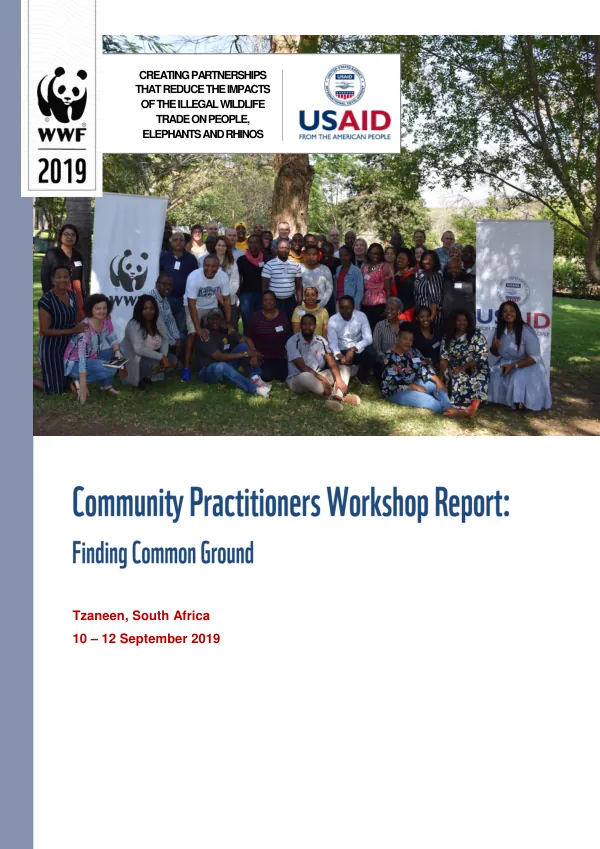
Community Practitioners Workshop Report: Finding Common Ground
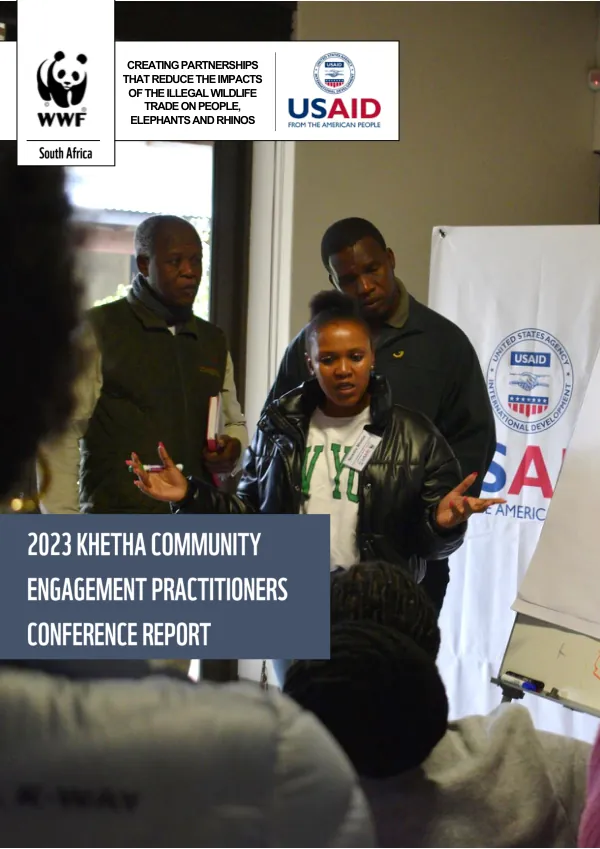
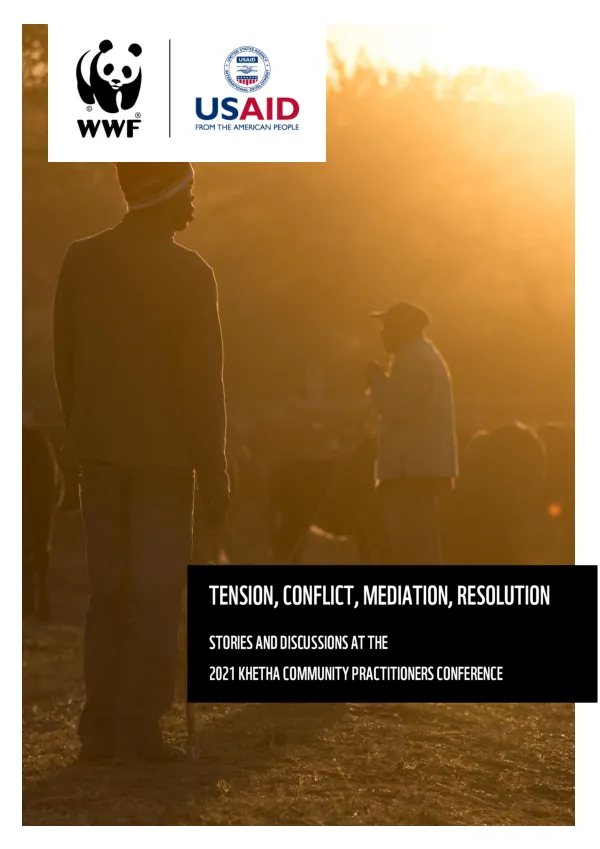
The Community Practitioners Workshop: Finding Common Ground was a collaborative effort between the World Wide Fund for Nature South Africa (WWF SA) and the United States Agency for International Development (USAID).
2019 · 45 pages
Sign in to readA free account is required to download.
Abstract
The workshop aimed to share experiences in implementing community-based conservation initiatives along the western boundary of the Kruger National Park in South Africa, an area heavily affected by wildlife trafficking. Community involvement and shared benefits are critical components in conservation and addressing illegal wildlife trade. The workshop brought together 88 prominent community and conservation practitioners from government, non-government organizations (NGOs), and the private sector to share their experiences and explore ways to effectively engage and include communities in conservation efforts. The discussions highlighted a common understanding of the causes of poaching, the impacts of illegal wildlife trade on communities, and the socio-economic interventions required to influence the wildlife conservation story. Participants agreed that working with communities is complex and requires awareness of governance structures, socio-economic priorities, history, culture, and language. The workshop emphasized the need for conservation to encourage co-existence between people and nature, and the equitable sharing of benefits and costs. As part of mapping a way forward, participants agreed on the development of a Learning Hub to act as a platform for information sharing, learning, and capacity building to improve the implementation of community-based initiatives. The Khetha Program, implemented by WWF SA, aims to promote paradigm shifts and partnerships to reduce wildlife trafficking impacts on flagship species and communities in the South African and Mozambican landscape of the Great Limpopo Transfrontier Conservation Area (GLTFCA). The program's overall goal is to contribute to an increase in growth rates of black and white rhinos and maintain positive growth rates for elephants in the focal area by 2022. The workshop allowed for robust reflection on whether current conservation activities are adequately inclusive of and of benefit to communities. It was clear that concepts of community engagement and inclusion and benefits should be more widely reconsidered from a community-based perspective. The workshop established valuable contacts and partners motivated to improve the relationship between communities and protected areas and between people and wildlife. The Khetha Program focuses on four innovation nodes in the GLTFCA, supporting innovative partnerships and novel approaches to improve relationships between people and wildlife. The program also aims to support the implementation of critical wildlife trafficking policy frameworks for South Africa and Mozambique to increase crime prevention, detection, prosecution, and collaboration. The workshop's discussions and outcomes have significant implications for conservation efforts in the GLTFCA. The development of a Learning Hub and the establishment of valuable contacts and partners will contribute to improving the implementation of community-based initiatives and promoting co-existence between people and nature.