USAID DEC
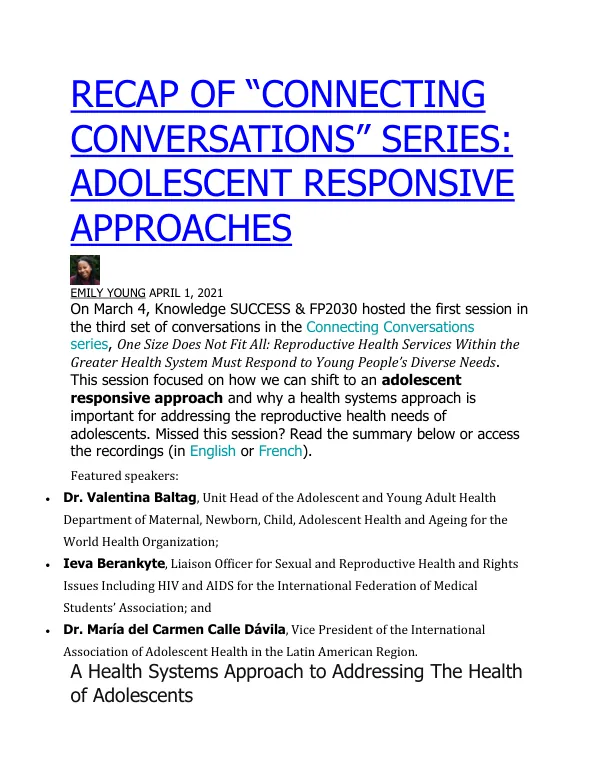
Connecting Conversations Series Launches: Setting the Stage for Understanding and Investing in Adolescent and Youth Reproductive Health
Sign inGEORGETOWN UNIVERSITY
Connecting Conversations Series Launches: Setting the Stage for Understanding and Investing in Adolescent and Youth Reproductive Health
Adolescent and youth reproductive health is a critical area of focus for global development.
2020 · 5 pages
Sign in to readA free account is required to download.
Abstract
The "Connecting Conversations" series, launched by FP2020 and Knowledge SUCCESS, aims to facilitate discussions on this topic. The series kicked off on July 15, 2020, with a webinar featuring Professor Susan Sawyer, Chair of Adolescent Health at The University of Melbourne. Professor Sawyer emphasized the importance of understanding the dynamic nature of young people's social environments during adolescence. This period is marked by strong peer and media influences, as well as significant social transitions, such as education to employment and family changes. These factors must be considered when planning programs for youth. The concept of the "triple dividend" was also discussed, highlighting the benefits of investing in adolescents. Direct investments in adolescents result in a healthier cohort of young people, while also contributing to a healthier adult population and intergenerational benefits, such as higher levels of education and healthier families. Professor Sawyer proposed extending the definition of adolescence from ages 10-19 years to 10-24 years, aligning with contemporary knowledge of brain development and social role transitions. This revised definition would influence the scope and nature of laws, policies, and programs that protect and empower young people. The webinar also touched on the importance of advocacy to increase investment in adolescent health. Currently, under 2% of development health assistance is allocated to adolescent health, despite adolescents making up a significant proportion of populations in many countries. Building professional capacity around adolescent health, including public health, clinical services, and research, is essential for moving this agenda forward. Engaging young people is also crucial, as they can provide valuable insights to policymakers and program developers. Collaboration with a range of partners is key to incorporating diverse young opinions into program design. The importance of laws in protecting young people while respecting their diversity was also emphasized, with Professor Sawyer suggesting that changing laws to bring down the legal age of engaging in relatively safe behaviors could be beneficial. The "Connecting Conversations" series will consist of five modules, focusing on foundational understanding of adolescent development and health, improving young people's knowledge and skills, providing services, creating supportive environments, and addressing the diversity of young people. The series aims to provide a framework for understanding adolescent and youth reproductive health and implementing stronger programs with and for young people.
Related documents