USAID DEC
Consejos para los Docentes
Establishing a positive and inclusive classroom environment is crucial for motivating students to participate and learn.
1 pages
Sign in to readA free account is required to download.
Abstract
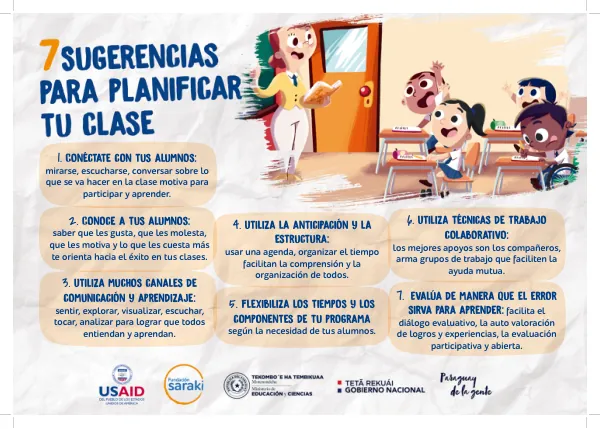
This can be achieved by encouraging students to look at themselves, listen to each other, and engage in conversations about the class activities. This approach helps to create a sense of community and fosters a collaborative atmosphere. Getting to know students is essential for understanding their individual needs and preferences. By learning what they enjoy, what they find challenging, and what motivates them, teachers can tailor their instruction to meet the needs of their students. This knowledge also helps teachers to identify areas where students may require additional support, ultimately leading to greater success in the classroom. Effective communication and learning involve using multiple channels to engage students. This can include visual, auditory, and kinesthetic approaches, such as exploring, visualizing, listening, touching, and analyzing. By incorporating a range of teaching methods, teachers can cater to different learning styles and ensure that all students understand and retain the material. Using a structured approach to teaching can help students stay organized and focused. This can be achieved by creating a lesson plan, setting clear goals, and allocating specific time slots for different activities. A well-organized schedule enables students to anticipate what is expected of them and plan accordingly. Flexibility is also essential in teaching, as students' needs and abilities can vary significantly. Teachers should be willing to adjust their lesson plans and teaching methods to accommodate the diverse needs of their students. This may involve modifying the pace of instruction, providing additional support, or offering alternative assignments. Collaborative learning is a powerful tool for promoting student engagement and understanding. By grouping students together to work on tasks and projects, teachers can encourage peer-to-peer learning, foster a sense of teamwork, and develop essential communication and problem-solving skills. This approach also helps students to learn from one another's strengths and weaknesses. Evaluating student progress is an essential aspect of teaching, but it should be done in a way that encourages learning from mistakes rather than simply punishing errors. Teachers can facilitate this by engaging students in reflective discussions, encouraging self-assessment, and promoting a growth mindset. This approach helps students to view challenges as opportunities for growth and development, rather than threats to their ego.