USAID DEC
Conservación de Colombia: A Stimulus Package for Subnational Protected Area Establishment in Colombia
Sign inTNC
Conservación de Colombia: A Stimulus Package for Subnational Protected Area Establishment in Colombia
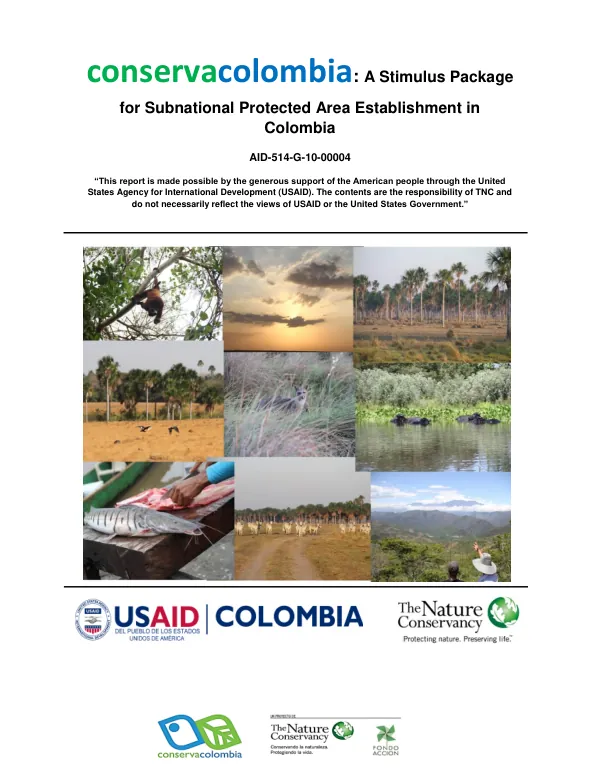
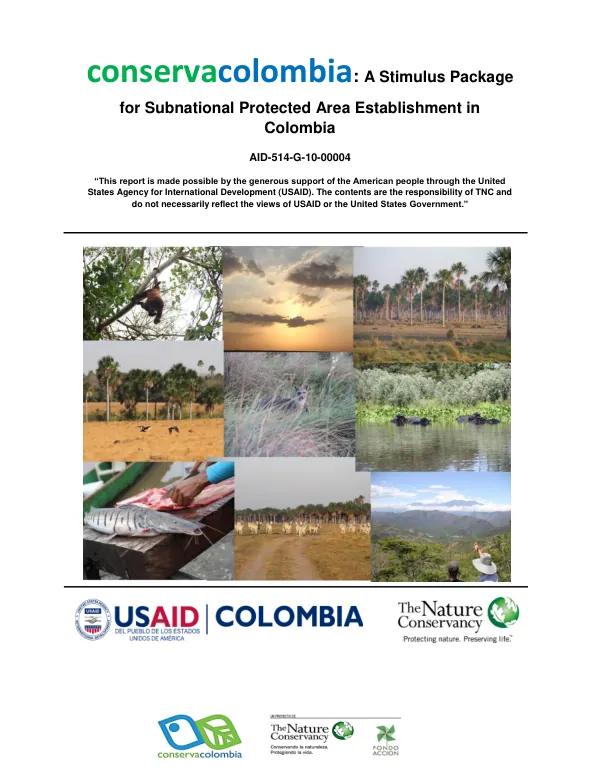
The Casanare region in Colombia is characterized by extensive savannas that have been intervened for at least 300 years, initially by the development of livestock and more recently by the expansion of agro-industrial crops and the extraction of hydrocarbons.
2014 · 82 pages
Sign in to readA free account is required to download.
Abstract
These interventions have led to the opening of roads and an increase in human population, resulting in significant changes to the composition of the savannas' flora and fauna. The region's savannas are classified as part of the Orinoquia subregion, which is characterized by tropical savannas. The savannas are part of the Orinoquia megasystem, which includes the subprovince of low-lying plains. The region's savannas are essential for the country's ecosystem services, including the regulation of nutrient cycles, water cycles, and erosion control, as well as providing opportunities for tourism, recreation, and education. The region's riverine systems are areas of transition between terrestrial and aquatic environments, influenced by continental waters and extending from the margins of rivers to the limits of terrestrial communities. These systems establish interactions between aquatic and terrestrial components of the landscape, such as the tropical savanna's riverine forests, which are narrow strips of forest associated with rivers and immersed in a landscape dominated by herbaceous vegetation. The riverine forests in the Casanare region can be differentiated into two types: vega forests and gallery forests. Vega forests develop on flooded surfaces in the valleys of rivers with white waters originating from the Andes, such as the Cravo Sur and Meta rivers, and are characterized by high exuberance due to their fertile soils. Gallery forests, on the other hand, develop on the margins of rivers, canals, and cañadas that originate in the savannas and can be further divided into non-inundable and inundable gallery forests, depending on their location on the riverbanks or in the floodplains. The Casanare region's riverine forests play a crucial role in the physical and biological processes of the landscape, including the modification of sediment transport, control of microclimates, and maintenance of biological connections through environmental gradients. They also provide essential ecosystem services, such as offering refuge and breeding grounds for river and savanna fauna, providing organic matter for aquatic organisms, and filtering out harmful sediments, nutrients, and agrochemicals from upstream areas.