USAID DEC
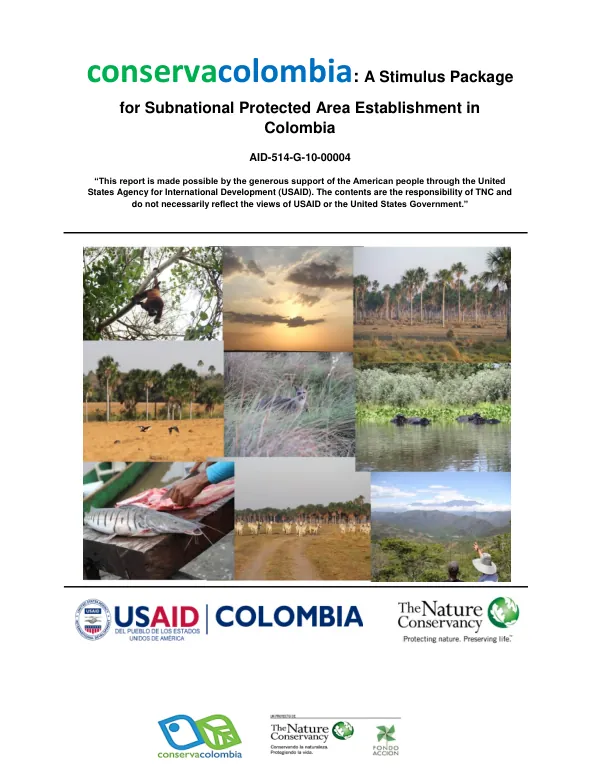
Conservacolombia: A Stimulus Package for Subnational Protected Area Establishment in Colombia
Sign inTNC
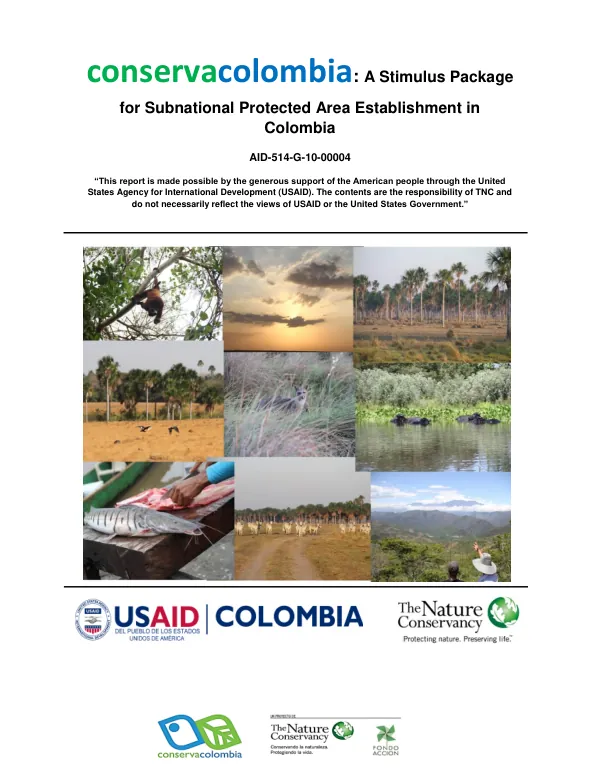
Conservacolombia: A Stimulus Package for Subnational Protected Area Establishment in Colombia
The conservation of the Arbustal and Matorral Medio Muy Seco in Montaña Fluvio-gravitacional ecosystem in Colombia is a pressing concern due to its high level of degradation and fragmentation.
2013 · 37 pages
Sign in to readA free account is required to download.
Abstract
This ecosystem, which covers approximately 1200 km2, is considered one of the most threatened in the country, with a remaining 5% of its original coverage. The region's unique characteristics, such as its dry climate and soil conditions, make it an attractive area for human development, leading to widespread deforestation and habitat loss. The study area, located in the municipalities of Toro, Roldanillo, and La Unión in the Valle del Cauca department, is home to a diverse range of flora and fauna. The region's vegetation is characterized by a mix of Matorral Arbustal medio muy seco, bosques de galería, and pastures. The Matorral Arbustal medio muy seco is a dry, scrubby area with limited vegetation cover, while the bosques de galería are more developed and conserved, with emergent trees and a variety of epiphytes and vines. The study aimed to characterize the mammals present in the area, with a focus on the Arbustal and Matorral Medio Muy Seco ecosystem. A review of secondary information and previous studies was conducted to identify potential species present in the area. Field surveys were then carried out between September 7 and 27, 2013, using a combination of direct and indirect methods, including the use of traps, camera traps, and interviews with local residents. The field surveys were conducted in three main areas: Matorral Arbustal medio muy seco, bosques de galería, and pastures. The Matorral Arbustal medio muy seco was characterized by its dry, scrubby vegetation, while the bosques de galería were more developed and conserved, with emergent trees and a variety of epiphytes and vines. The pastures were dominated by rastrojo, a type of vegetation that is managed for extensive grazing and causes moderate levels of erosion. A total of 20 Sherman traps and 20 Havahart traps were used to capture small and medium-sized mammals. The traps were baited with sardines and papaya, and were checked daily to avoid animal mortality. The traps were placed in strategic locations, such as on the ground or on tree trunks, and were camouflaged with leaves and branches to avoid detection. The study also used 4 mist nets to capture flying mammals, such as bats. The nets were 12 meters long and 2.7 meters wide, with a mesh size of 16 mm and 5 bags. The nets were opened between 6 pm and 12 am, and were checked every 30 or 60 minutes. The nets were placed in areas with high bat activity, such as near caves, fruiting trees, and forest edges. A total of 23 species of mammals were identified during the study, including 14 species of bats and 9 species of small and medium-sized mammals. The most common species were the common opossum, the white-eared opossum, and the brown-throated sloth. The study also identified several species of rodents, including the hispid cotton mouse and the Bolivian grass mouse. The results of the study highlight the importance of conserving the Arbustal and Matorral Medio Muy Seco ecosystem in Colombia. The region's unique characteristics and biodiversity make it an important area for conservation efforts. The study's findings also emphasize the need for further research and monitoring to better understand the ecology and conservation status of the region's mammals.