USAID DEC
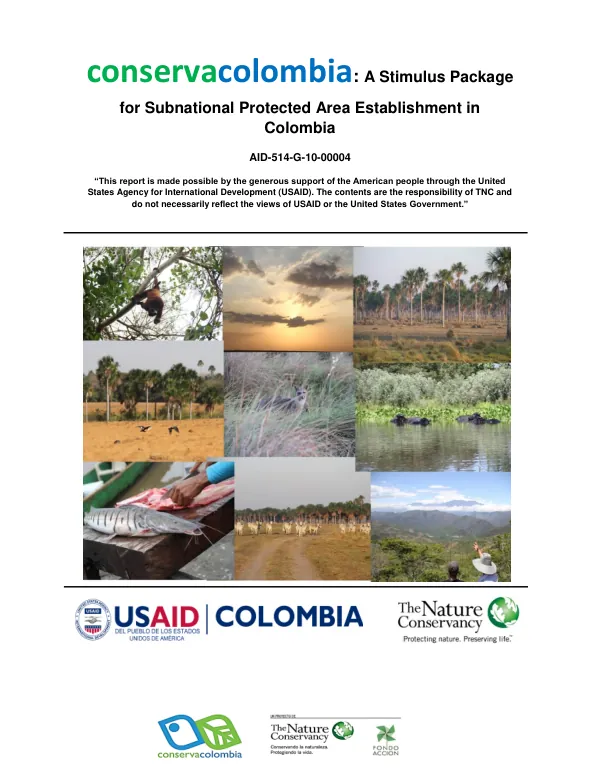
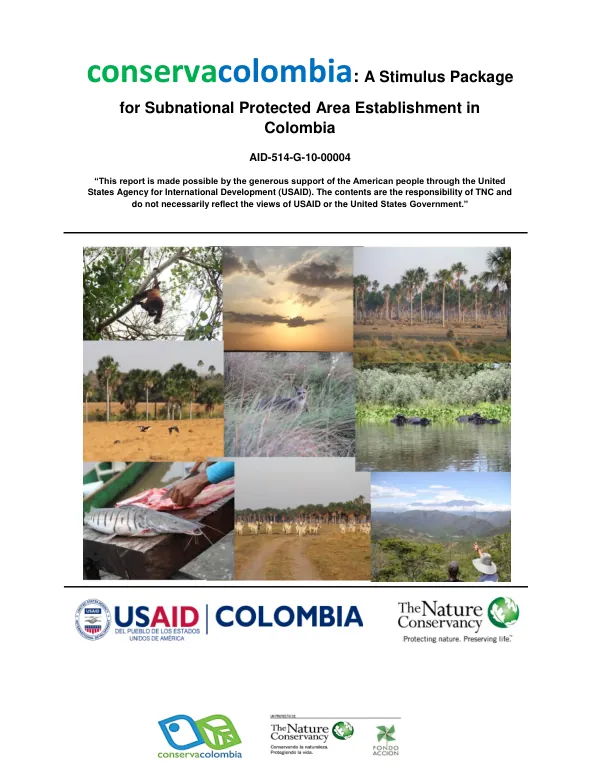
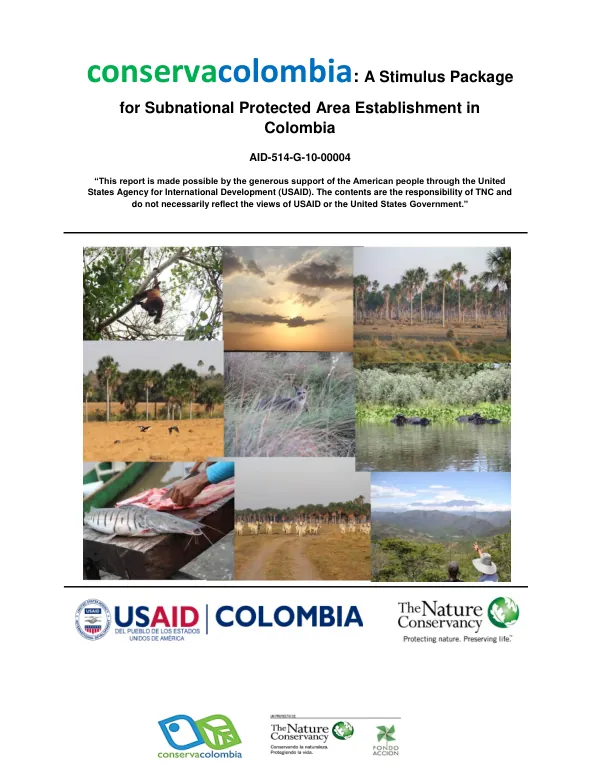
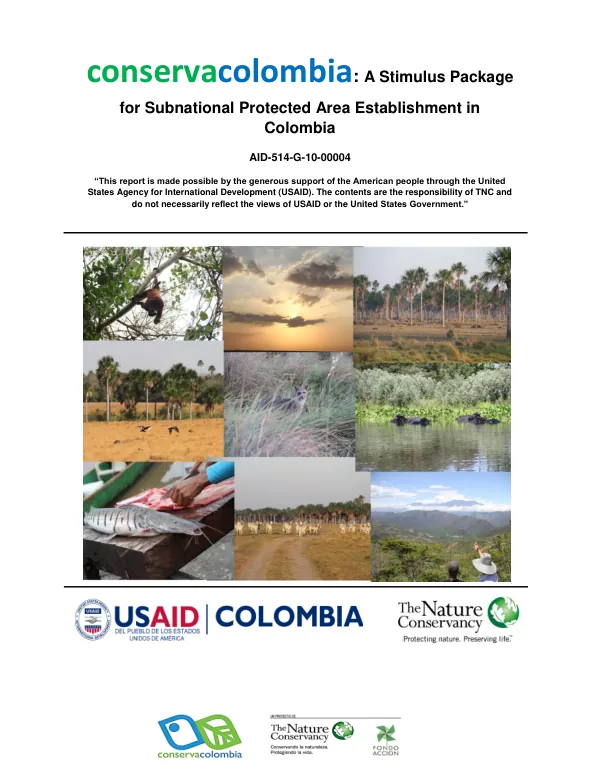
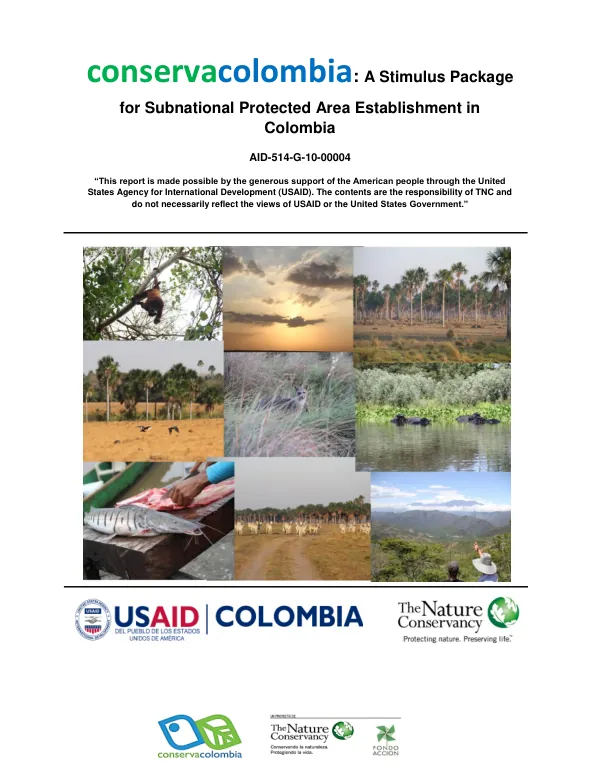
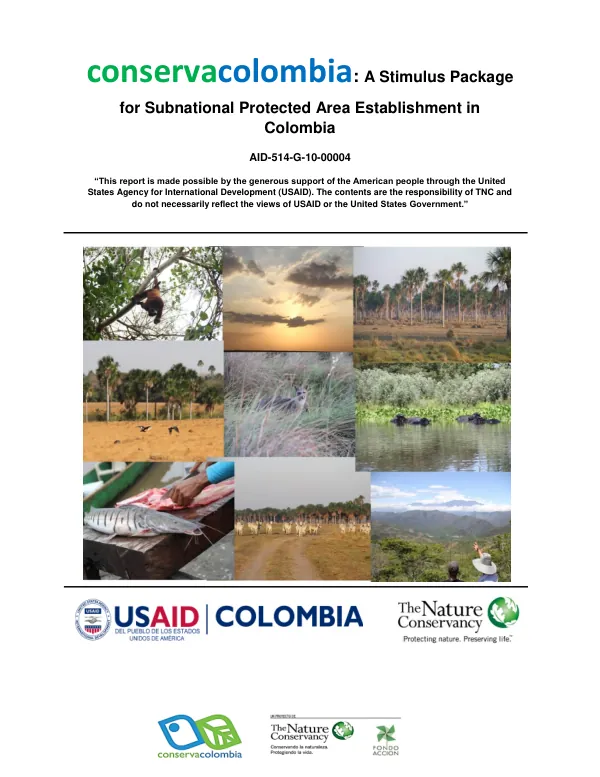
Conservacolombia: A Stimulus Package for Subnational Protected Area Establishment in Colombia
Sign inTHE NATURE CONSERVANCY
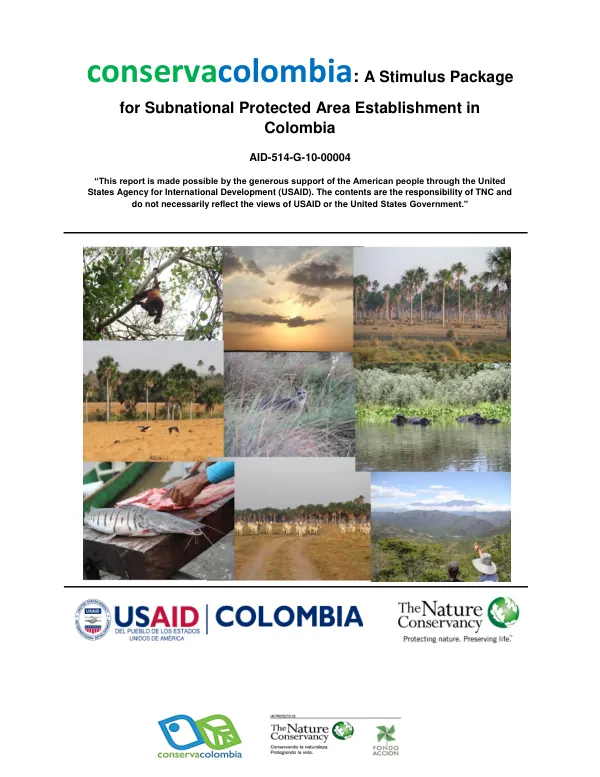
Conservacolombia: A Stimulus Package for Subnational Protected Area Establishment in Colombia
However, this summary will focus on the document "Conservacolombia: A Stimulus Package for Subnational Protected Area Establishment in Colombia."
2015 · 19 pages
Sign in to readA free account is required to download.
Abstract
The document outlines a methodology for evaluating and selecting conservation objectives and values in the municipalities of Dagua and La Cumbre. The evaluation process involves assessing the state and threats to the values to be conserved. The document presents a table (Table 1) that outlines the objectives and conservation values for the Regional Natural Sites of Conservation (RNSC) using the PCA methodology. The evaluation process focuses on two main objectives: ensuring the continued functioning of ecological processes and the genetic flow necessary for the perpetuation of species, and guaranteeing the offer of essential environmental goods and services for human development. The document presents several criteria for evaluating the conservation values, including the presence of ecotones, areas with multiple ecosystems, and the presence of species classified as "in danger" or "vulnerable" by the IUCN. The document also highlights the importance of maintaining vegetation cover to regulate water supply, prevent erosion, and control sedimentation. The presence of river births, areas with native vegetation, and humedales or bodies of water that prevent or reduce the possibility of flooding are considered essential for conservation. Additionally, the document emphasizes the need to conserve the capacity of ecosystems for sustainable use of fauna and flora resources. The evaluation process also considers the presence of species that provide essential services for agriculture and silviculture, such as pollination and biological control. The document highlights the importance of preserving areas or species that provide services related to the productivity of agriculture, such as pollination and biological control. The presence of humedales or natural forests that provide resources for human communities or species with potential is also considered essential for conservation. The document presents several criteria for evaluating the conservation values, including the presence of species that provide essential services for human development, such as pollination and biological control. The evaluation process also considers the presence of areas or species that provide services related to the productivity of agriculture, such as pollination and biological control. The document emphasizes the need to provide natural spaces for investigation, recreation, education, and conservation. The presence of programs for long-term research in the area and the presence of sites with facilities for recreation, tourism, and environmental education in natural areas are considered essential for conservation. The document highlights the importance of preserving areas or species that provide essential services for human development, such as pollination and biological control. The evaluation process involves assessing the state and threats to the values to be conserved, and the document presents several criteria for evaluating the conservation values. The presence of species that provide essential services for human development, such as pollination and biological control, is considered essential for conservation. The document emphasizes the need to provide natural spaces for investigation, recreation, education, and conservation. The document presents a methodology for evaluating and selecting conservation objectives and values in the municipalities of Dagua and La Cumbre. The evaluation process involves assessing the state and threats to the values to be conserved, and the document presents several criteria for evaluating the conservation values. The presence of species that provide essential services for human development, such as pollination and biological control, is considered essential for conservation.