USAID DEC
Construction Monthly Progress Report – December 2016: Gaza - Construction of Reservoirs and Pumping Facilities Package I
Sign inTHE MORGANTIE GROUP, INC.
Construction Monthly Progress Report – December 2016: Gaza - Construction of Reservoirs and Pumping Facilities Package I
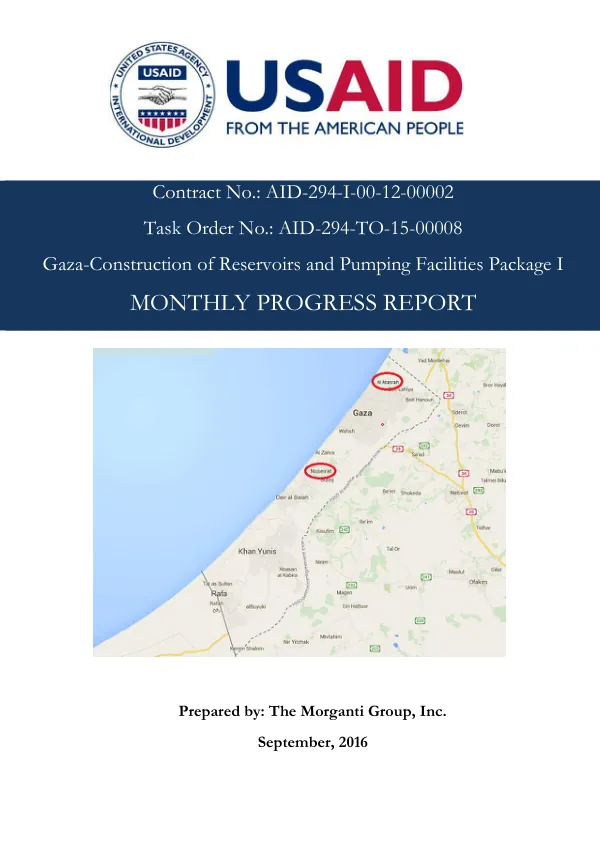
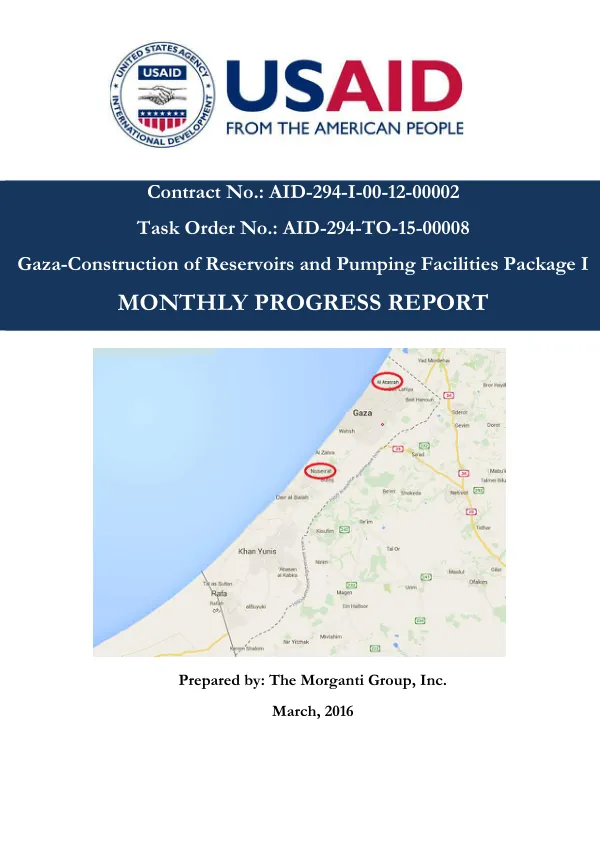
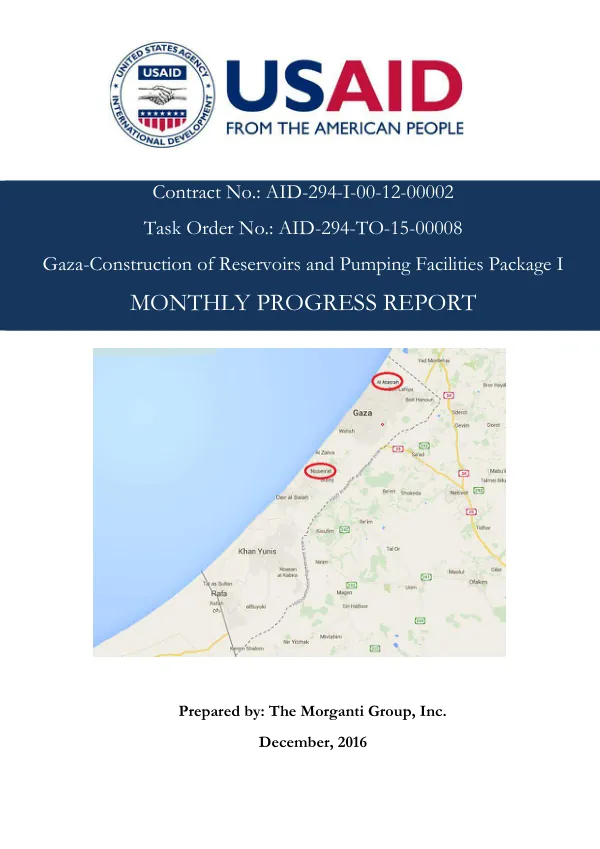
The Gaza-Construction of Reservoirs and Pumping Facilities Package I project is a water infrastructure development initiative aimed at improving access to clean drinking water for the population of Gaza.
2016 · 315 pages
Sign in to readA free account is required to download.
Abstract
The project is part of the USAID Mission Infrastructure Needs Program II (INP II), which focuses on the rehabilitation and construction of roads, schools, and water and wastewater projects. The objective of this Task Order is to construct two new water reservoirs, two new booster pump stations, and their associated supply and distribution pipelines. The project is located in the Al Atatrah area, north of the Gaza Strip, and is expected to increase access to clean drinking water for the local population. The project's scope of work includes the construction of two new water reservoirs with a combined capacity of 2,500 cubic meters, two new booster pump stations, and the associated supply and distribution pipelines. The project also includes the installation of new water meters and the rehabilitation of existing water infrastructure. The project's construction schedule is divided into several phases, with the first phase focusing on site preparation and excavation work. The second phase involves the construction of the reservoirs and pump stations, while the third phase focuses on the installation of the supply and distribution pipelines. The project's completion is expected to take approximately 12 months, with the first phase scheduled to be completed by the end of January 2017. The project's safety and environmental compliance measures are being implemented in accordance with the USAID guidelines and the Palestinian Authority's regulations. The project's risk management plan includes measures to mitigate potential risks associated with the construction process, including the risk of accidents, environmental damage, and community disruption. The project's community outreach program is also in place to ensure that the local community is informed and engaged throughout the construction process. The project's progress and scheduling are being closely monitored by the project team, with regular site visits and meetings with the contractor and other stakeholders. The project's indicators, including the construction schedule, cost, and quality, are being tracked and reported on a monthly basis. The project's working and non-working days are also being closely monitored to ensure that the project is completed on time and within budget. The project's material and equipment delivery to site is being managed by the contractor, with regular inspections and testing to ensure that the materials and equipment meet the required standards. The project's quality control measures are also in place to ensure that the construction work meets the required standards and specifications. The project's inspection requests and test results are being documented and reported on a regular basis. The project's general statistics, including the number of workers, materials, and equipment used, are being tracked and reported on a monthly basis. The project's payments and variation orders are also being closely monitored to ensure that the project is completed on time and within budget. The project's obstacles and challenges, including the risk of accidents, environmental damage, and community disruption, are being closely monitored and mitigated through the project's risk management plan. The project's progress photos and site memos are being documented and reported on a regular basis. The project's annexes, including the materials-equipment receiving log, updated schedule, progress curve, and one-month look ahead, are being maintained and updated regularly. The project's inspection request log, submittal log, request for information log, and risk register log are also being maintained and updated regularly.
Related documents