USAID DEC
Construyendo nuevas rutas de aprendizaje para el desarrollo de la fluidez y comprensión lectora con la XO
Sign inUSAID
Construyendo nuevas rutas de aprendizaje para el desarrollo de la fluidez y comprensión lectora con la XO
The educational development initiative in Nicaragua began with the implementation of the "Construyendo nuevas rutas de aprendizaje para el desarrollo de la fluidez y comprensión lectora con la XO" module.
2012 · 144 pages
Sign in to readA free account is required to download.
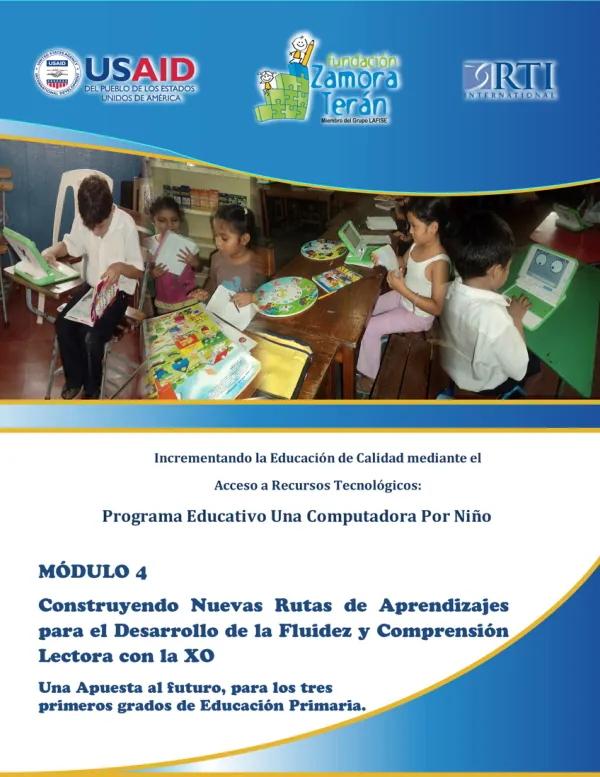
Abstract
This module is part of the "Programa Educativo Una Computadora Por Niño" (One Laptop Per Child) project, which aims to improve educational opportunities for Nicaraguan children. The module is designed to address the problems detected by the Early Grade Reading Assessment (EGRA) related to reading and writing in the first three grades of primary education. The module is structured into four units, each with its own themes and subtopics. The first unit provides a brief analysis of the context of primary education in Nicaragua, focusing on the first three grades, and the results of the EGRA. It also presents strategies to overcome the difficulties faced by students. The second unit is a theoretical reflection on how students learn to read and write, from a constructivist perspective, with the didactic approach adopted by the Ministry of Education (MINED). It also includes a section on designing effective learning environments, such as classroom ambiance, cooperative work, and the affective world in the classroom. The third unit is the core of the module and presents practical strategies supported by the XO tool, which contribute to the development of linguistic competencies related to reading fluency and comprehension, as well as other intervening factors such as phonological awareness, alphabet code, and vocabulary. The fourth unit allows for the integration of all the components of a didactic planning using the XO tool, with the aim of promoting the development of reading and writing skills in students. The module is designed to be implemented by teachers, who will be able to reflect on the process of acquiring reading and writing skills from a constructivist perspective and with the communicative and functional approach adopted by the MINED. They will also be able to apply new didactic tools to favor the development of reading competencies, such as fluency and comprehension, phonological awareness, alphabet code, and vocabulary, using the XO tool. Additionally, they will be able to assume commitments and define strategies to favor the academic success of students in the first three grades of primary education. The module is the result of a collaboration between the Fundación Zamora Terán, the Ministry of Education, private companies, and the United States Agency for International Development (USAID). The content of the module is the responsibility of the author and does not necessarily reflect the opinions of USAID or the Government of the United States of America. The module is accompanied by a format that includes a glossary, bibliography, and annexes, which provide additional information and resources for teachers. The module is designed to be a valuable tool for teachers to improve the reading and writing skills of their students and to promote the development of linguistic competencies in a fun and engaging way. The implementation of the module is expected to have a positive impact on the academic success of students in the first three grades of primary education, as it addresses the problems detected by the EGRA and provides teachers with the necessary tools and strategies to promote the development of reading and writing skills.