AVENIR HEALTH
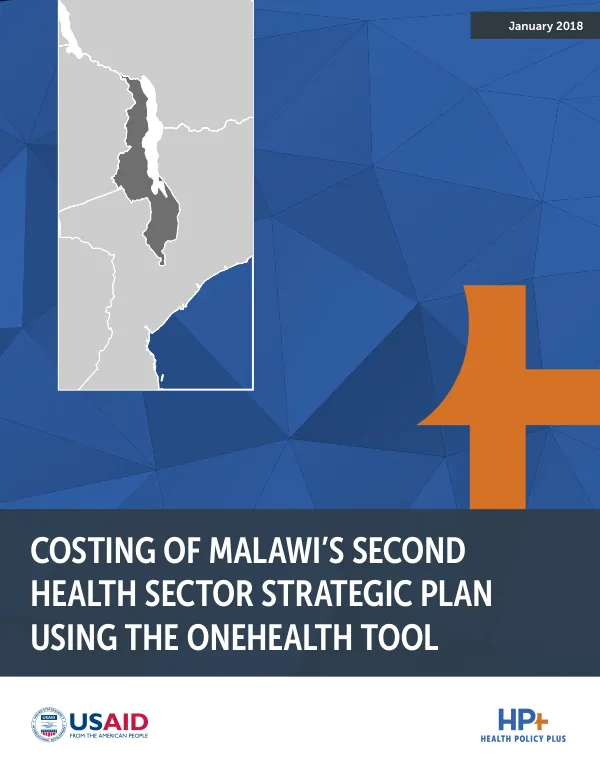
Costing of Malawi's Second Health Sector Strategic Plan Using the OneHealth Tool
Malawi's Health Sector Strategic Plan 2017-2022, also known as HSSP II, aims to achieve universal coverage of quality, equitable, and affordable health services.
2018 · 46 pages
Sign in to readA free account is required to download.
Abstract
The plan focuses on improving the health status of the population, with a specific emphasis on the health status of the most vulnerable groups. The plan is guided by the Ministry of Health and Development Partners, with support from the Health Policy Plus project. The HSSP II is based on the OneHealth Tool, a costing tool used to estimate the costs of health interventions. The tool was applied to Malawi's health sector to estimate the costs of implementing the HSSP II. The costing process involved data collection from various sources, including the Ministry of Health, development partners, and implementing partners. The HSSP II aims to achieve several key objectives, including reducing maternal and child mortality, reducing the burden of infectious diseases, and improving the health status of the population. The plan also aims to strengthen the health system, including the health workforce, infrastructure, and infrastructure. The costing of the HSSP II was done using the OneHealth Tool, which estimates the costs of health interventions based on the health status of the population, the health workforce, and the infrastructure. The tool was applied to Malawi's health sector to estimate the costs of implementing the HSSP II. The costing of the HSSP II revealed that the plan requires significant resources to achieve its objectives. The plan requires an estimated $1.3 billion over the five-year period, with the majority of the costs being allocated to the essential health package (EHP). The EHP is a package of health interventions that includes interventions for maternal and child health, infectious diseases, and non-communicable diseases. The costing of the HSSP II also revealed that the plan requires significant human resources to achieve its objectives. The plan requires an estimated 14,000 health workers, including doctors, nurses, and nurses' aides. The plan also requires significant infrastructure to support the health workforce, including hospitals, clinics, and health centers. The HSSP II prioritization process involved the identification of the most critical health interventions that require resources to achieve the plan's objectives. The prioritization process was done using the OneHealth Tool, which estimates the costs and benefits of health interventions based on the health status of the population, the health workforce, and the infrastructure. The HSSP II prioritization process identified several key interventions that require resources to achieve the plan's objectives. The interventions include the essential health package (EHP), which includes interventions for maternal and child health, infectious diseases, and non-communicable diseases. The plan also prioritized the strengthening of the health workforce, including the recruitment and training of health workers. The HSSP II costing and prioritization process was done in collaboration with the Ministry of Health, development partners, and implementing partners. The process involved the collection of data from various sources, including the Ministry of Health, development partners, and implementing partners.