JHPIEGO
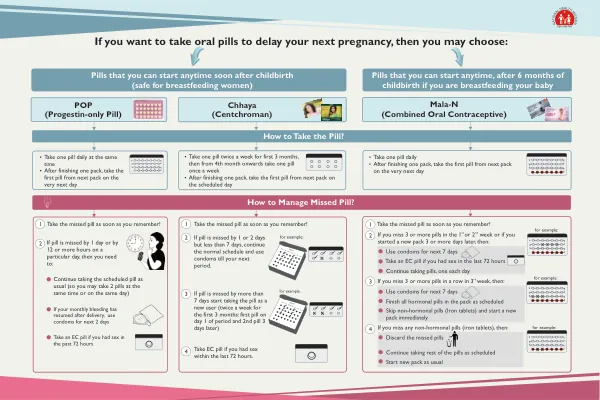
Counseling Card for Health Education
The counseling card is a tool used in counseling sessions to facilitate discussion and understanding of a particular topic or image.
2014 · 1 pages
Sign in to readA free account is required to download.
Abstract
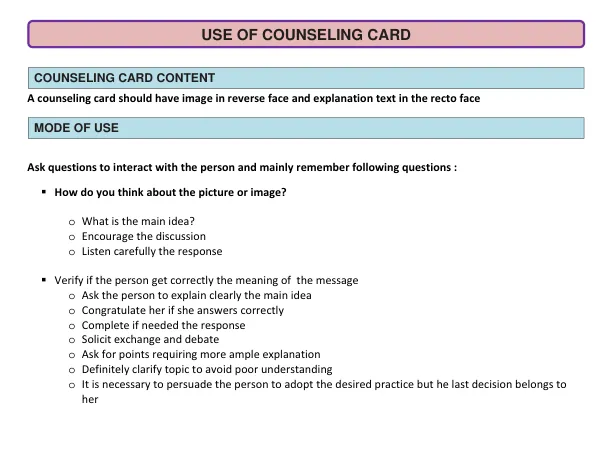
The card typically has an image on the verso, or reverse, side and explanatory text on the recto, or front, side. The image is often used as a prompt to initiate conversation and encourage the person to share their thoughts and opinions. When using the counseling card, the counselor asks questions to interact with the person and gauge their understanding of the image and its meaning. The primary questions asked are: How do you think about the picture or image? This question is designed to encourage the person to share their initial thoughts and reactions to the image. To further explore the person's understanding, the counselor may ask follow-up questions such as: What is the main idea of the image? This question helps to clarify the person's interpretation of the image and identify any misconceptions. The counselor also listens carefully to the person's response, providing an opportunity for them to share their thoughts and feelings. To verify the person's understanding of the image, the counselor may ask them to explain the main idea in their own words. If the person answers correctly, the counselor congratulates them and provides additional information or clarification as needed. The counselor also solicits exchange and debate, encouraging the person to engage in a discussion about the image and its meaning. In some cases, the counselor may need to clarify specific points or provide additional explanation to ensure the person understands the topic. However, the counselor's role is not to persuade the person to adopt a particular practice or opinion, but rather to facilitate a discussion and provide information to aid in their decision-making process. Ultimately, the decision to adopt a particular practice or opinion belongs to the individual. The counseling card is a versatile tool that can be used in a variety of settings, including counseling sessions, educational programs, and community outreach initiatives. Its use can help to promote critical thinking, communication skills, and empathy, while also providing a platform for individuals to share their thoughts and opinions.
Related documents