IMA WORLD HEALTH INTERNATIONAL
Counter Gender-Based Violence Project Final Report FY17-FY23
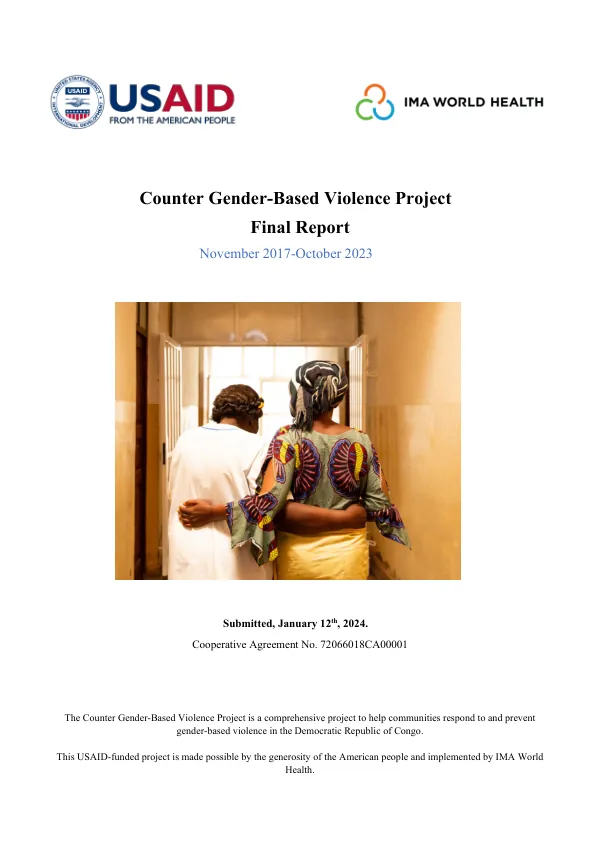
The Counter Gender-Based Violence Project in the Democratic Republic of Congo aimed to help communities respond to and prevent gender-based violence.
2024 · 62 pages
Sign in to readA free account is required to download.
Abstract
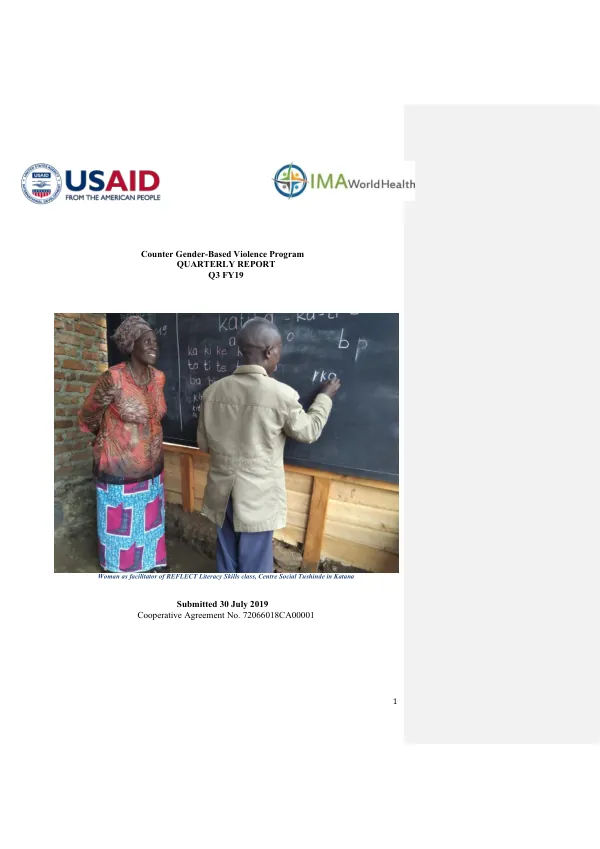
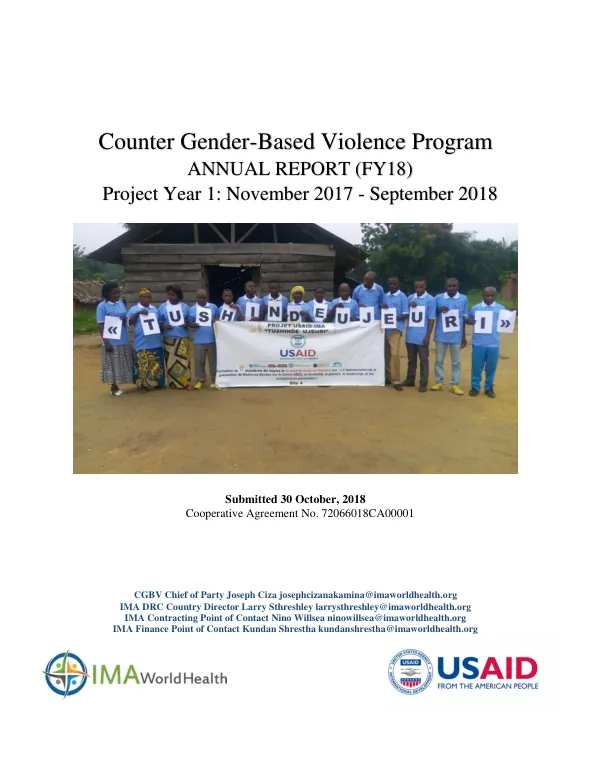
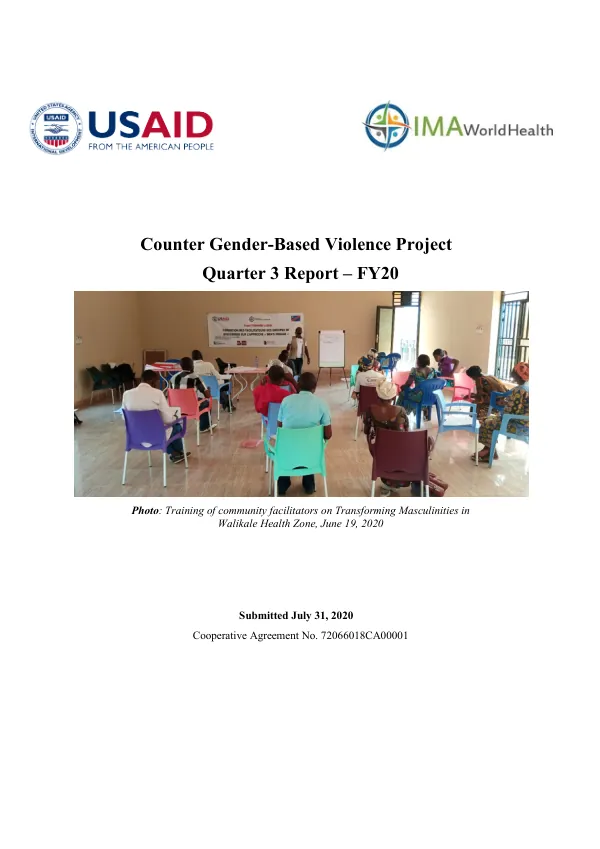
The project was implemented by IMA World Health, a USAID-funded initiative, from November 2017 to October 2023. The project's objectives were to strengthen community-based prevention and response to sexual and gender-based violence in Eastern DRC and improve the quality of and access to holistic care for survivors, particularly among vulnerable groups including LGBTQI+ individuals. The project focused on community-level interventions, providing comprehensive and wrap-around services to survivors of GBV. Locally trained and equipped providers offered immediate medical and psychosocial care, while survivors received legal guidance and representation through project-supported legal clinics. Rehabilitative and restorative services linked survivors and their families with avenues for socio-economic assistance. The project relied heavily on community-centric initiatives, such as Men's Engage discussion groups, Alternative Dispute Resolution mechanisms, and Community-based Trauma Healing approaches. By delivering aid directly to targeted areas and empowering community leaders and collectives with the expertise and abilities to prevent, detect, and address GBV, the project sought to effect substantial change. The project initially included two local NGO implementing partners (HEAL Africa and Panzi Foundation) and three technical partners (American Bar Association Rule of Law Initiative, The University of Washington/Johns Hopkins University, and Search for Common Ground). The IMA-led consortium successfully launched the initial five-year implementation grant on November 13, 2017. The project's overall goals were to strengthen community-based prevention and response to sexual and gender-based violence in Eastern DRC and improve the quality of and access to holistic care for survivors, particularly among vulnerable groups including LGBTQI+ individuals. The project's intermediate results included: * Target communities demonstrating greater acceptance of positive gender roles * Availability of community-level GBV-related services improved * Perceptions of stigma surrounding reintegrated survivors reduced * Civil society organizations' capacity strengthened to respond to and counter attempts from local or national policymakers to enact discriminatory policy laws against LGBTQI+ people The project achieved nearly all planned interventions and widely surpassed targets on many. The strength of the project lies in the close collaboration with partners and state institutions, community mobilization, and continuity built on the foundation of the previous USAID-funded C-GBV project Ushindi. The project's geographic coverage included Nord Kivu Province (Karisimbi and Walikale Health Zones), Sud Kivu Province (Bunyakiri, Katana, Nyangezi Health Zones), and Kinshasa city. The project's reporting period was six years, from November 14, 2017, to October 13, 2023. The project's success was attributed to the close collaboration with partners and state institutions, community mobilization, and continuity built on the foundation of the previous USAID-funded C-GBV project Ushindi. The project's achievements demonstrate the importance of community-based prevention and response to sexual and gender-based violence in Eastern DRC.