IMA WORLD HEALTH INTERNATIONAL
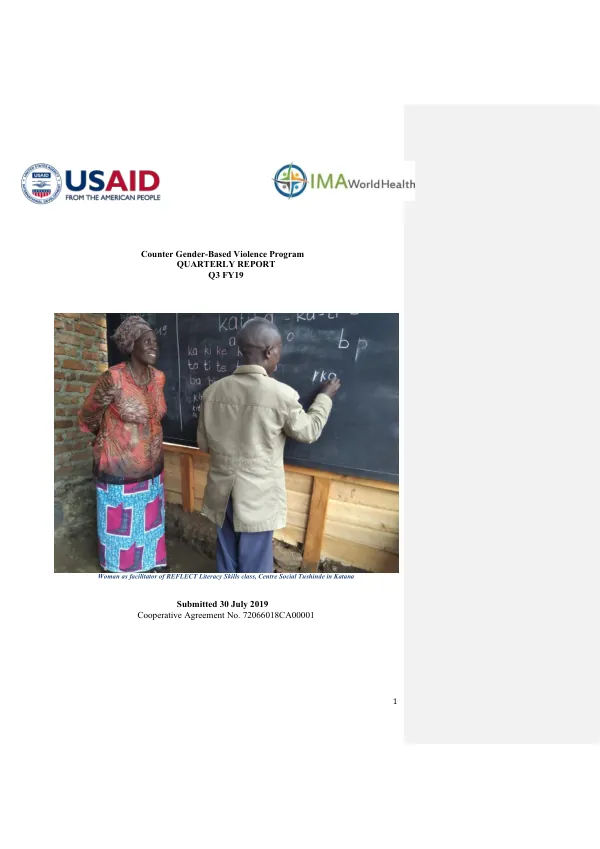
Counter Gender-Based Violence Program: Quarterly Report Q3 FY19
The Counter Gender-Based Violence Program is a comprehensive program implemented by IMA World Health in the Democratic Republic of Congo.
2019 · 53 pages
Sign in to readA free account is required to download.
Abstract
The program aims to strengthen community-based prevention of and response to gender-based violence (GBV) and effectively reduce GBV incidence. The program is implemented in five health zones in the North and South Kivu Provinces of the DRC, with community-based services in North Kivu Province implemented by Heal Africa and Panzi Foundation implementing services in South Kivu Province. The program's overarching goals are to strengthen community-based prevention of and response to GBV, reduce GBV incidence, and improve the quality of and access to holistic care for survivors, particularly vulnerable groups including LGBTQI. The program is implemented in partnership with various organizations, including Search for Common Ground, the American Bar Association Rule of Law Initiative, and the University of Washington/Johns Hopkins University. The program's quarterly report for Q3 FY19 highlights various achievements and results on key indicators. In North Kivu Province, insecurity is common, but support is provided to ensure continuity of services and meet the needs of vulnerable populations. In Karisimbi Health Zone, cases of human trafficking were observed, but the program's efforts to raise awareness and report cases have improved. In South Kivu Province, humanitarian services were maintained, but security threats required flexibility in program activities. Recurring fighting between militia groups has led to an increased number of internally displaced persons, potentially leading to human rights abuses, including sexual violence. Cases of rape were reported in various health zones, with some survivors not receiving Post-Exposure Prophylaxis (PEP) due to fear of further assault or distance to travel for care. The program's efforts to address GBV and human trafficking have led to improved reporting and awareness of these issues. The program's quarterly report highlights the challenges faced in implementing the program in a context of insecurity and conflict. Despite these challenges, the program continues to work towards its goals of reducing GBV incidence and improving access to care for survivors. The program's quarterly report also highlights the importance of community-based services in addressing GBV and human trafficking. The program's efforts to engage with local communities and provide training and support to community volunteers have improved the program's impact and reach. The program's quarterly report provides a snapshot of the program's progress and challenges, highlighting the need for continued support and resources to achieve its goals. The program's quarterly report also highlights the importance of addressing the root causes of GBV and human trafficking, including poverty, lack of education, and lack of access to resources. The program's efforts to address these underlying issues have improved the program's impact and sustainability. The program's quarterly report provides a comprehensive overview of the program's achievements and challenges, highlighting the need for continued support and resources to achieve its goals. The program's quarterly report also highlights the importance of collaboration and partnership in addressing GBV and human trafficking. The program's partnership with various organizations has improved the program's impact and reach. The program's quarterly report provides a snapshot of the program's progress and challenges, highlighting the need for continued collaboration and partnership to achieve its goals. The program's quarterly report also highlights the importance of monitoring and evaluation in addressing GBV and human trafficking. The program's efforts to track and report on key indicators have improved the program's impact and sustainability. The program's quarterly report provides a comprehensive overview of the program's achievements and challenges, highlighting the need for continued monitoring and evaluation to achieve its goals.
Related documents