USAID
Designing Norms-Shifting Interventions
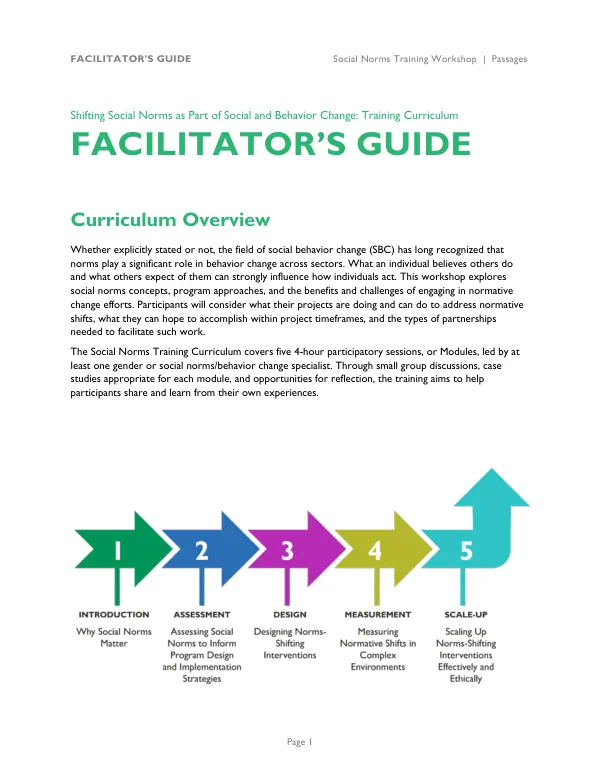
Designing Norms-Shifting Interventions is a critical component of social change initiatives.
36 pages
Sign in to readA free account is required to download.
Abstract
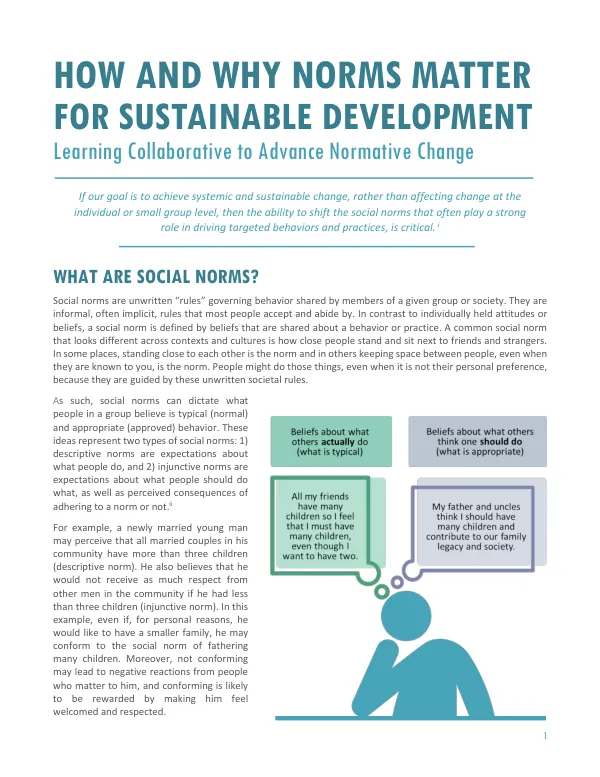
These interventions aim to improve behavioral outcomes by shifting social norms. A community-based norms-shifting intervention is an approach focused on improving behavioral outcomes at least in part by shifting social norms. This approach may be standalone or integrated into a broader Social Behavior Change (SBC) intervention. Social norms are tacit rules of behavior that are often not consciously obeyed. They can be embedded in formal institutions through codification into law and institutional policies. For instance, some school policies do not allow unmarried girls who become pregnant and give birth to return to finish their studies, while the boys who got the girls pregnant are permitted to continue their education. This highlights the institutionalization of certain norms. Social norms differ from individual attitudes or beliefs. They are what others expect or want individuals to do, creating a norm of what is appropriate behavior. The "others" form part of an individual's reference group, which can exert a considerable amount of influence on behavior. Reference groups can be a valued social group, such as a village or a broad religious community, and can pass on and enforce norms. There are two types of social norms: descriptive norms, which are what others do, and injunctive norms, which are what is considered appropriate behavior. For example, descriptive norms around handwashing before eating may be observed in a community, while injunctive norms may be enforced by a teacher or parent. These norms can influence behavior, and individuals may comply with them due to various reasons, including not knowing they are doing it, being sanctioned for behaving differently, or wanting to be part of a group. Designing norms-shifting interventions requires consideration of various factors, including the importance of ethical grounding. Community programs can shift norms, but it can take longer, often three to five years. Challenges in shifting norms include power dynamics and the influence of reference groups. To design a project that can lead to incremental shifts over time, it is essential to understand the complexities of social norms and the factors that influence them. Social and gender norms can shift through programs, drawing from learnings coming out of programs and research. People comply with social norms for various reasons, including not knowing they are doing it, being sanctioned for behaving differently, or wanting to be part of a group. Understanding these reasons is crucial for designing effective norms-shifting interventions. By recognizing the complexities of social norms and the factors that influence them, it is possible to design interventions that can lead to incremental shifts over time and ultimately improve behavioral outcomes.