USAID DEC
Detection of Deformed Wing Virus in the Local Bee Colonies Apis Mellifera Intermissa in Algeria and Its Relationship with Varroa Destructor
Sign inUSAID DEC
Detection of Deformed Wing Virus in the Local Bee Colonies Apis Mellifera Intermissa in Algeria and Its Relationship with Varroa Destructor
The deformed wing virus (DWV) is one of the most prevalent viruses affecting honeybees worldwide.
2014 · 8 pages
Sign in to readA free account is required to download.
Abstract
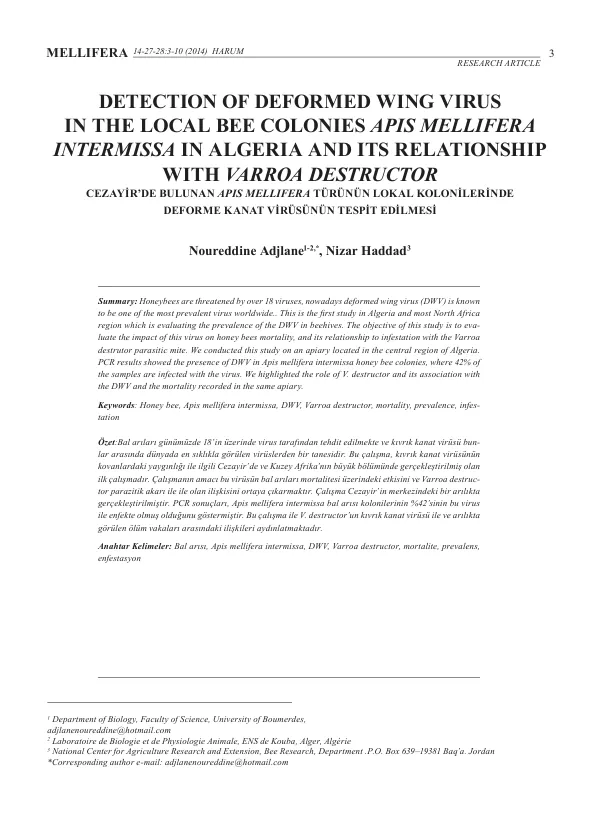
This study aimed to evaluate the prevalence of DWV in Apis mellifera intermissa honeybee colonies in Algeria and its relationship with Varroa destructor infestation. The study was conducted on an apiary located in the central region of Algeria, where 45 colonies were sampled. The biological material used consisted of adult worker bees of indeterminate age, which had already been treated against V. destructor in June 2011. The collection of samples involved randomly selecting adult bees within the colonies and storing them in RNAlate at -25°C until use in the detection of DWV using PCR and biotechnology techniques. A bigger sample of approximately 100 bees from each colony was collected in plastic bags and stored at -25°C until usage to determine the Varroa infestation level. The infestation rate of brood (IRB) was determined by counting the number of cells infested with V. destructor and dividing it by the total number of open cells. The experimental method for estimating the rate of infestation of adult bees with V. destructor involved shaking two frames of brood over a plastic film, collecting the bees in a glass jar, and then counting the mites present in the second screen after thorough rinsing with water. The percentage of infection was determined by sample using the rule of three, which lets you know the bee infestation rate (B.I.R). The methodology of virus detection DWV involved taking 10-12 bees at random within each sample and placing them in sterile plastic bags using sterile forceps containing 10 ml of phosphate buffer saline (PBS). The resulting homogenate was centrifuged at 1500g for 10 minutes, and the supernatant was collected and centrifuged again at 12,000 g for 15 minutes. An amount of 140 ml of the supernatant was removed with a view to the extraction of viral RNA using a commercial kit produced in Germany: NucleoSpin RNA II (ACHEREY-NAGEL) according to the manufacturer's instructions. The results showed that 8 out of 19 hives were characterized by the presence of DWV virus, with 42.1% of samples contaminated with the virus. The bee viruses usually cause subclinical infections that can not be detected by beekeepers for many years. Being one of the most dangerous viruses, deformed wing virus can cause significant damage to honeybee colonies. The study highlights the importance of monitoring DWV and Varroa destructor infestation in honeybee colonies to prevent the spread of this virus and its associated mortality. The study also found that the infestation rate of brood (IRB) was significantly higher in colonies with DWV-infected bees, suggesting a strong association between DWV and Varroa destructor infestation. The results of this study contribute to the understanding of the relationship between DWV and Varroa destructor infestation in honeybee colonies and highlight the need for further research on the impact of this virus on honeybee health and colony productivity. The deformed wing virus (DWV) is a significant threat to honeybee colonies worldwide, and its prevalence and impact on colony health are of great concern. This study provides valuable insights into the relationship between DWV and Varroa destructor infestation in honeybee colonies in Algeria and highlights the importance of monitoring and managing these factors to prevent the spread of this virus and its associated mortality.
Related documents