DEMOCRACY INTERNATIONAL, INC.
Developmental Evaluation of the Reconciliation Activity in Colombia
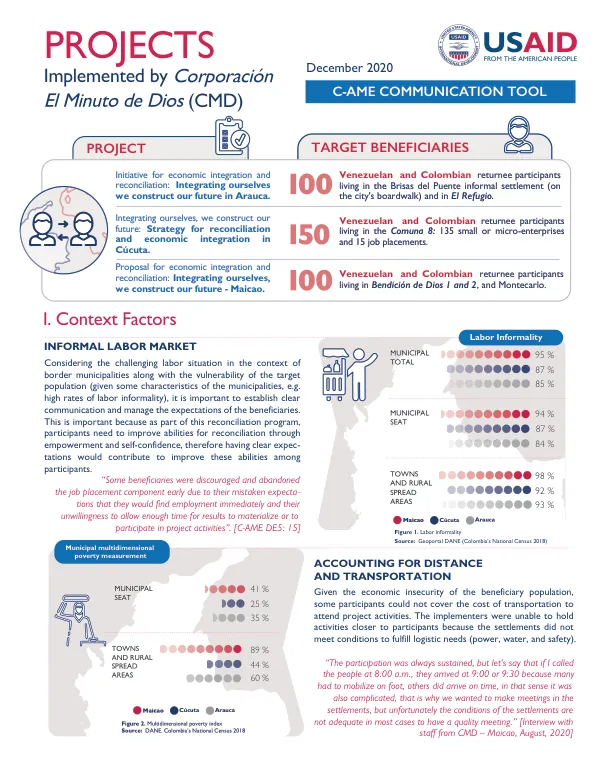
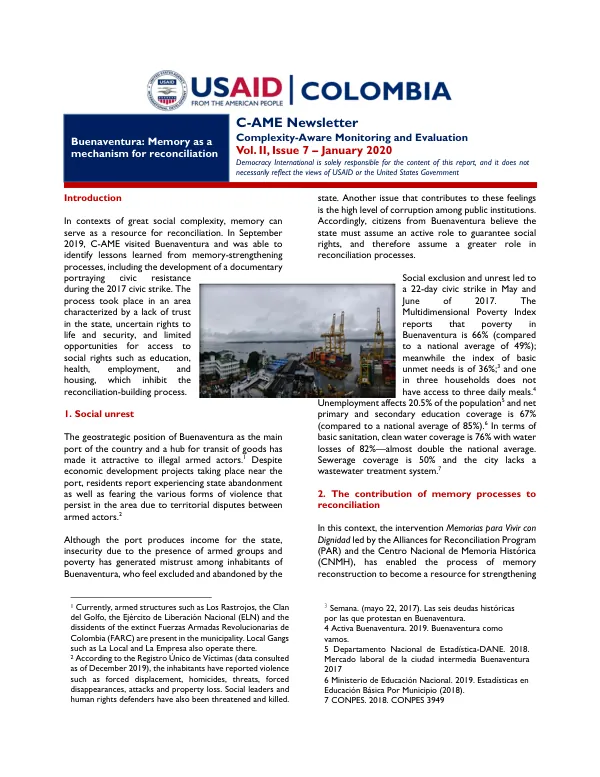
The Reconciliation Activity in Colombia is a developmental evaluation focused on five municipalities, including Bogotá, Bojayá, Buenaventura, Medellín, and San Carlos.
2020 · 77 pages
Sign in to readA free account is required to download.
Abstract
The evaluation aimed to assess the effectiveness of the Reconciliation Activity in promoting reconciliation and addressing the root causes of conflict in these municipalities. The evaluation was conducted by C-AME, a mixed-methods analysis team, and focused on three national strategic partners: Centro Nacional de Memoria Histórica (CNMH), Fundación Asociación Nacional de Empresarios de Colombia (F. ANDI), and Corporación Reconciliación Colombia (CRC). The evaluation found that CNMH's memory initiatives, including the Historias de Vida de las Víctimas Mortales de la Masacre de Bojayá and Memorias para Vivir con Dignidad, achieved significant progress in reconstructing individual and collective memories of victims of the armed conflict. The projects implemented CNMH methodologies, which resulted in a balance between collective and individual memories, and promoted intergenerational interaction and Afro-Colombian cultural practices. However, the evaluation found that there was an incomplete methodological transfer of PAR's Reconciliation Approach in both projects, which limited their capacity to continue building reconciliation skills and addressing the issue of lack of trust in state institutions. F. ANDI's inclusive linkages involving vulnerable producers aimed to promote transformative alliances that boost economic and social opportunities for vulnerable individuals and communities. The evaluation found that the lettuce and strawberry inclusive linkage projects achieved significant progress in increasing output and producing higher quality crops, and the implementing partner and beneficiaries highlighted the identification and consolidation of commercial partnerships as a project achievement. However, the evaluation noted that the model focuses on commercial relationships with wholesale buyers or large restaurant chains located far from the point of production, which could become a missed opportunity to strengthen local communities towards reconciliation. The evaluation also found that CRC's work focused on the advancement of PAR's local partner strategy as its transition partner, to ensure continuity and sustainability. The evaluation highlighted the main findings per implementing partner and noted that the Reconciliation Activity has made significant progress in promoting reconciliation and addressing the root causes of conflict in the five municipalities. The evaluation identified several key findings, including: * The Reconciliation Activity has made significant progress in promoting reconciliation and addressing the root causes of conflict in the five municipalities. * CNMH's memory initiatives achieved significant progress in reconstructing individual and collective memories of victims of the armed conflict. * F. ANDI's inclusive linkages involving vulnerable producers achieved significant progress in increasing output and producing higher quality crops. * The Reconciliation Activity has made significant progress in promoting intergenerational interaction and Afro-Colombian cultural practices. * The Reconciliation Activity has made significant progress in promoting commercial relationships between producers and buyers. The evaluation also identified several recommendations and lessons learned, including: * The Reconciliation Activity should prioritize the implementation of PAR's Reconciliation Approach in all projects to ensure continuity and sustainability. * The Reconciliation Activity should focus on strengthening local communities towards reconciliation by promoting commercial relationships between producers and buyers in local markets. * The Reconciliation Activity should prioritize the promotion of intergenerational interaction and Afro-Colombian cultural practices. * The Reconciliation Activity should prioritize the advancement of PAR's local partner strategy as its transition partner to ensure continuity and sustainability. Overall, the evaluation found that the Reconciliation Activity has made significant progress in promoting reconciliation and addressing the root causes of conflict in the five municipalities, but there are several areas for improvement, including the implementation of PAR's Reconciliation Approach and the promotion of commercial relationships between producers and buyers in local markets.