USAID
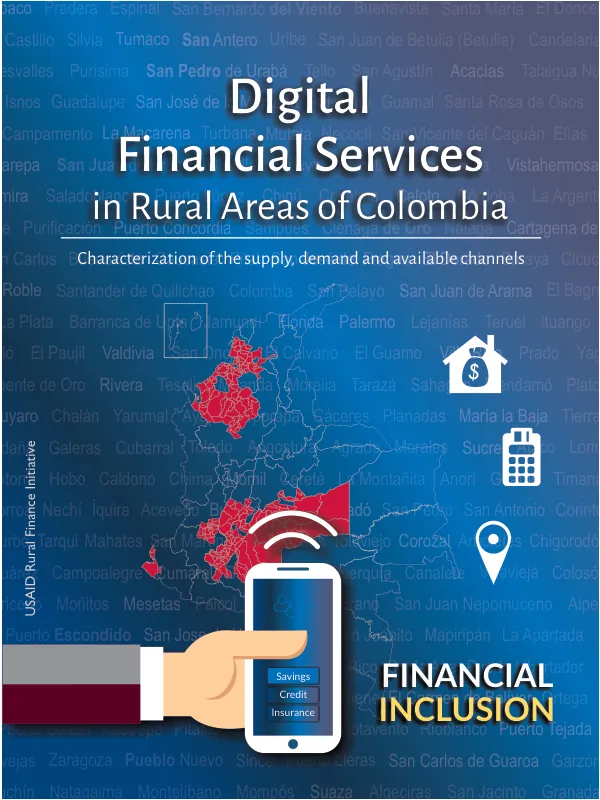
Digital Financial Services in Rural Areas of Colombia
The Rural Finance Initiative (RFI) is a program implemented by the United States Agency for International Development (USAID) in collaboration with the Government of Colombia and the financial sector.
2019 · 80 pages
Sign in to readA free account is required to download.
Abstract
The primary objective of RFI is to increase access to financial services for the country's most vulnerable population in rural areas. This initiative is part of a broader effort to build a more stable Colombia with peace and economic opportunities for all. The RFI program focuses on promoting digital financial services in rural areas, with the goal of increasing the number of clients served by Colombian financial entities. To achieve this objective, RFI explores and promotes new operation models that enable financial entities to expand their services to rural areas. The program also aims to strengthen digital financial dynamics in the country by leveraging the technical knowledge and experience of its human team and network of collaborators. A preliminary methodological clarification highlights the importance of understanding the economic and financial characteristics of rural populations in Colombia. General data from studies conducted in the country reveal that rural populations face significant challenges in accessing financial services, including limited access to savings and credit. The majority of rural households do not have savings accounts, and those that do have limited access to formal credit. Financial behaviors in rural areas are characterized by a lack of trust in digital channels, with many individuals preferring to use traditional methods for making payments and accessing financial services. However, there is a growing trend towards the use of digital financial services, particularly among younger and more educated individuals. The use of internet and mobile phones is becoming increasingly common in rural areas, with many individuals using these platforms to access financial services and make transactions. Despite the growing trend towards digital financial services, there are still significant barriers to adoption, including a lack of trust in online transactions and concerns about fraud risk. However, the data also suggests that there are opportunities for digital financial services to reach a wider audience in rural areas, particularly if financial entities can provide secure and user-friendly platforms for making transactions. The RFI program has identified several key motivators for using digital transactional channels, including convenience, speed, and cost savings. However, there are also several barriers to adoption, including a lack of trust in online transactions and concerns about fraud risk. To overcome these barriers, financial entities must provide secure and user-friendly platforms for making transactions, as well as education and training programs to help individuals build their confidence in using digital financial services. The RFI program has also identified several key attributes of digital transaction channels, including security, convenience, and cost savings. These attributes are critical in building trust and confidence in digital financial services, particularly among rural populations. The program has also identified several key motivators for using digital financial services, including the ability to access financial services remotely and the convenience of making transactions online. Overall, the RFI program is an important initiative in promoting digital financial services in rural areas of Colombia. By leveraging the technical knowledge and experience of its human team and network of collaborators, the program aims to increase access to financial services for the country's most vulnerable population and build a more stable Colombia with peace and economic opportunities for all.