UNITED NATIONS
Disengaged Children and Adolescents in Colombia
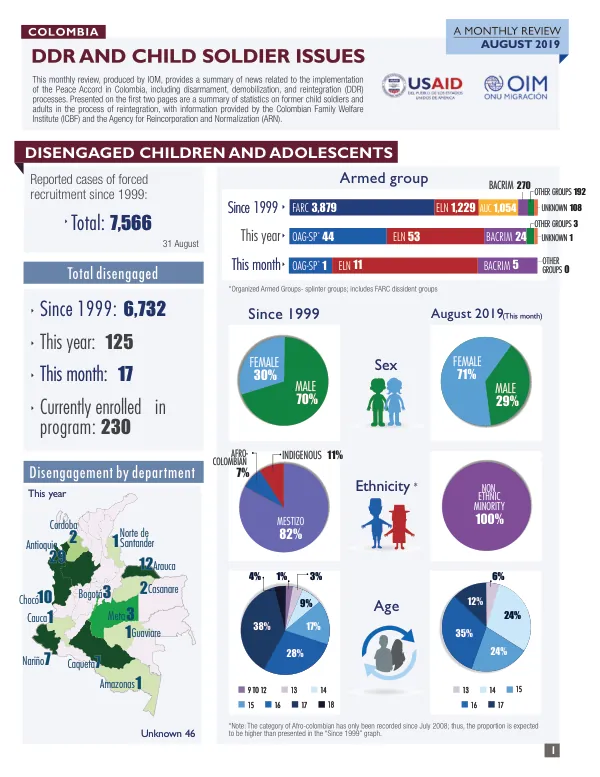
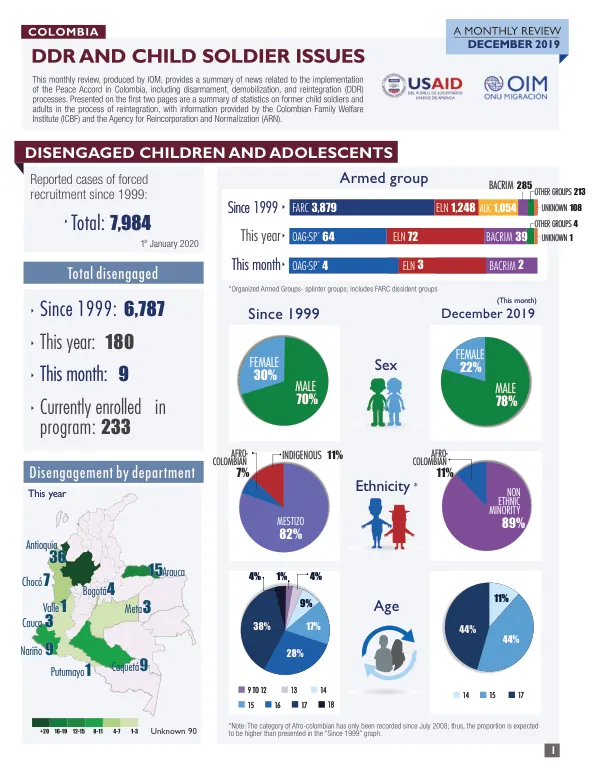
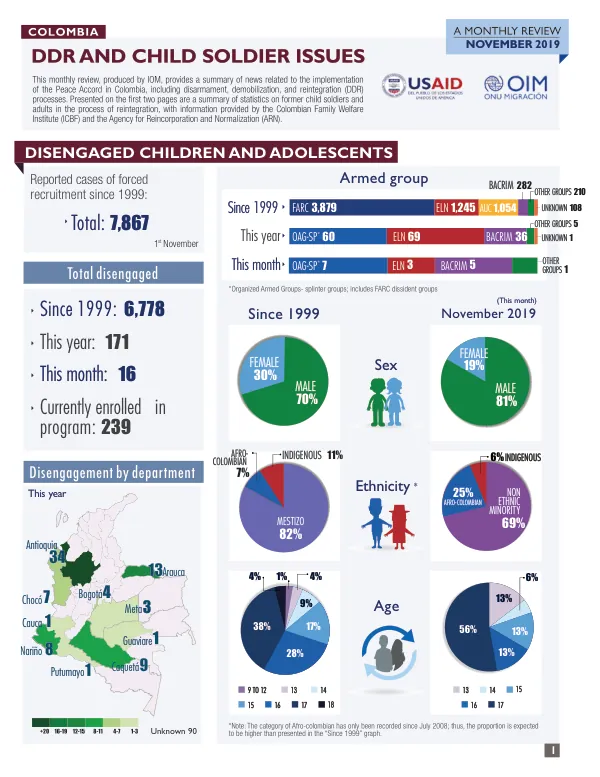
Disengaged Children and Adolescents Total disengaged: 6,778 since 1999, 171 this year, and 16 this month.
2019 · 4 pages
Sign in to readA free account is required to download.
Abstract
Currently, 239 children and adolescents are enrolled in a program. Armed Group Composition The majority of disengaged children and adolescents are affiliated with the FARC, with 81% being mestizo ethnicity and 81% being male. Since 1999, 7,000 children and adolescents have been disengaged from the FARC, with 60% being male and 81% being mestizo ethnicity. Breakdown by Armed Group Since 1999, the FARC has been responsible for 6,778 disengaged children and adolescents, with 60% being male and 81% being mestizo ethnicity. The ELN has been responsible for 1,245 disengaged children and adolescents, with 81% being male and 81% being mestizo ethnicity. The BACRIM has been responsible for 84 disengaged children and adolescents, with 81% being male and 81% being mestizo ethnicity. Disengagement by Department This year, the departments with the highest number of disengaged children and adolescents are Chocó, Antioquia, and Meta. The majority of disengaged children and adolescents are unemployed, with 49% being employed in the informal sector. Reintegration Process Currently, 30 children and adolescents are in the reintegration process, with 28% being under 18 years old. The majority of reintegration cases are individual, with 83% being male and 83% being mestizo ethnicity. The most common age range for reintegration is 18-25 years old, with 46% of cases falling within this range. Implementation of the Peace Accords The implementation of the peace accords has been slow, with 54% of reintegration cases being collective. The majority of reintegration cases are in the Bogotá, Cauca, and Casanare departments. The most common type of demobilization is individual, with 83% of cases being male and 83% being mestizo ethnicity. National Strike The national strike has been ongoing for five weeks, with protesters demanding more opportunities and a better future. The strike has been led by unions, students, teachers, peasants, and peasants' organizations. The government has been criticized for its handling of the peace accords and its lack of inclusivity. Victims' Participation The National Participation Committee has been established to extend the Victims' Law and to monitor the implementation of the peace accords. The committee will also coordinate with the Truth, Justice, Reparation, and Non-Repetition System. Security Challenges The security situation in Colombia remains a challenge, with 23 people killed in a police cadet school attack in Bogotá. The government has been criticized for its handling of the peace accords and its lack of inclusivity. The OHCHR has recommended a comprehensive government presence in the territories most affected by the armed conflict. International Support The international community has expressed support for the peace accords, with the EU and the EU's High Representative for Foreign Affairs and Security Policy expressing their commitment to supporting the peace process. The EU has also expressed its concern about the security situation in Colombia and the need for a comprehensive government presence in the territories most affected by the armed conflict.
Related documents