GOVERNMENT OF COLOMBIA
Disengaged Children and Adolescents in Colombia
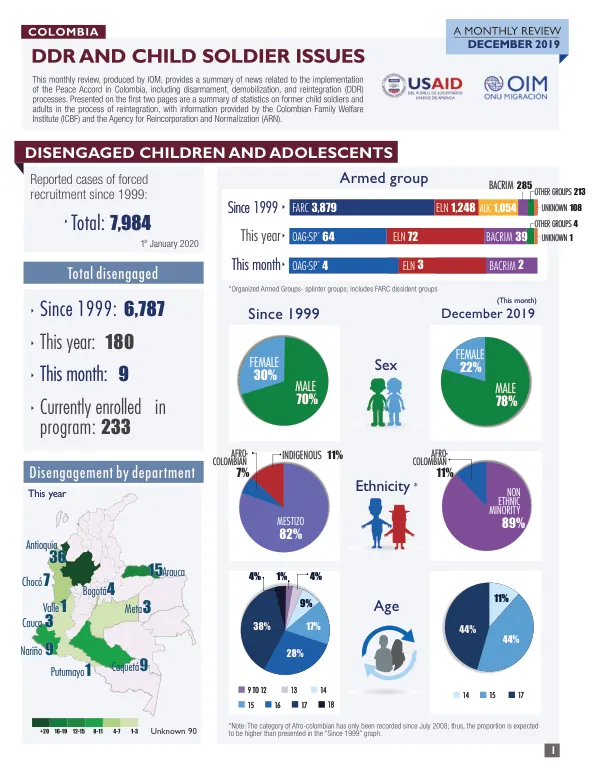
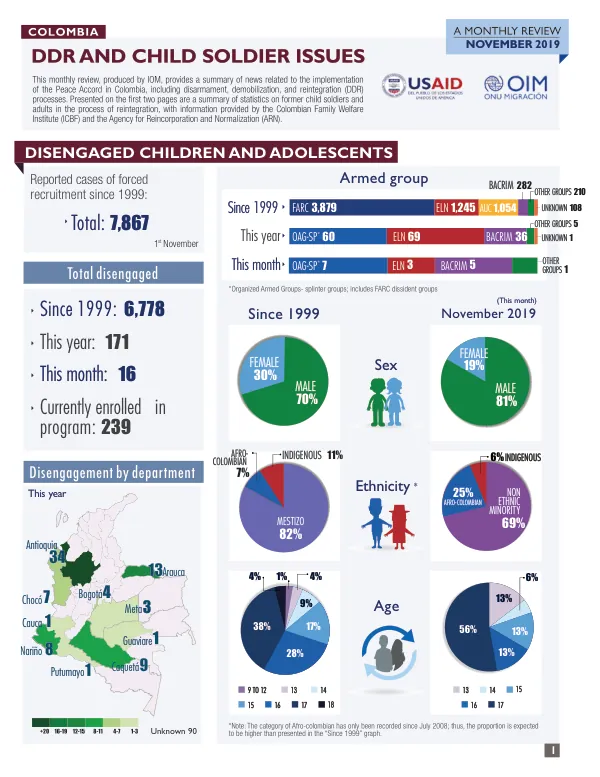
DISENGAGED CHILDREN AND ADOLESCENTS The number of disengaged children and adolescents in Colombia has been a significant concern since 1999.
2019 · 4 pages
Sign in to readA free account is required to download.
Abstract
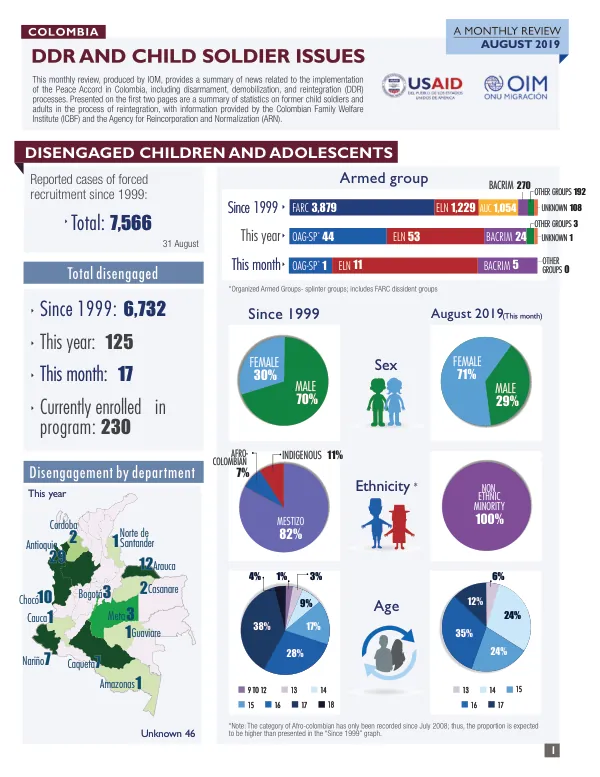
According to reported cases, a total of 6,732 individuals have been forcibly recruited by armed groups since 1999. This year, 125 cases have been reported, with 17 cases occurring in the past month. Currently, 230 individuals are enrolled in a program aimed at reintegrating them into society, while 46 individuals' whereabouts are unknown. Demographic data on disengaged children and adolescents reveals that 82% are of Mestizo ethnicity, 7% are Afro-Colombian, and 11% are Indigenous. The majority, 29%, are male, while 71% are female. The age range of disengaged children and adolescents is diverse, with 35% between 9 and 12 years old, 24% between 13 and 15 years old, and 24% between 16 and 17 years old. Geographically, disengaged children and adolescents are found in various departments across Colombia, with the highest numbers in Chocó, Nariño, and Antioquia. The majority, 70%, are unemployed, while 22% are employed in the informal sector, and 9% are employed in the formal sector. Implementation of the Peace Accords The Colombian government has made efforts to implement the peace accords, which include the establishment of Territorial Training and Reincorporation Spaces (ETCRs). However, the legal validity of the ETCRs ended on August 15, and the government plans to relocate them to former FARC territories. Currently, 13,012 FARC ex-combatants are in the process of reincorporation, with 25% residing in one of the 24 ETCRs. Despite efforts to implement the peace accords, some FARC commanders have announced their rearmament, including Iván Marquez and Jesús Santrich. The Colombian government has condemned their actions and vowed to fiercely persecute those involved. The Special Jurisdiction of Peace has begun the procedure to expel the former FARC members from the peace process. Reintegration Efforts The FARC has made efforts to reintegrate into society, including the establishment of a women-led productive project in Antioquia. The project, called "Autonomous Women: land, territory and solidarity economy for peace and reconciliation," aims to provide employment opportunities for female ex-FARC combatants. The FARC has also provided information on hundreds of missing persons, which is seen as an important step towards compliance with the peace agreement. Security Concerns The situation in Colombia remains volatile, with an increase in numbers of forcibly recruited children reported by the UN. The UN special representative for children and armed conflict, Virginia Gamba, warned that these numbers are only the tip of the iceberg. The conflict has exposed civilians to potential rights abuses, including murder, forced disappearance, sexual violence, and forced recruitment of minors. Humanitarian efforts are underway to address the situation, including the formation of a humanitarian commission to attend to the people affected by the fighting between the Colombian Army and members of the Jaime Martínez group. The commission has not been able to attend to the people affected due to the ongoing conflict.