USAID DEC
Reintegration and Prevention of Recruitment (RPR) Program Quarterly Report #17 (Q1 FY2020)
Sign inGOVERNMENT OF COLOMBIA
Reintegration and Prevention of Recruitment (RPR) Program Quarterly Report #17 (Q1 FY2020)
The Reintegration and Prevention of Recruitment (RPR) program aims to support the Government of Colombia in promoting sustainable and inclusive reintegration of former combatants and preventing further recruitment.
2020 · 59 pages
Sign in to readA free account is required to download.
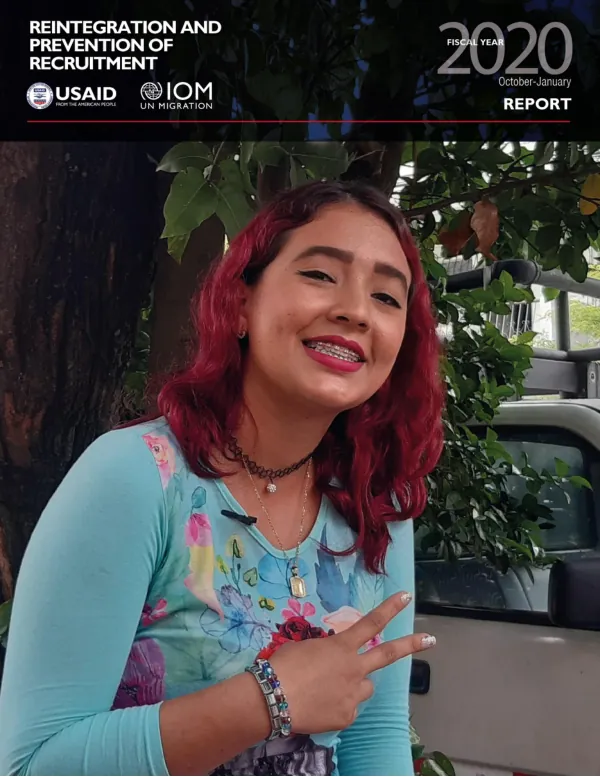
Abstract
The program's Strategic Objective is to provide policy support to the Government of Colombia to make available reintegration services throughout the Disarmament, Demobilization, and Reintegration (DDR) cycle, thereby minimizing recidivism and preventing the recruitment of adolescents and youth. The program's approach recognizes the Government of Colombia's leadership and targets assistance to address its institutional constraints and priorities. The RPR program focuses on four result areas: (1) reintegration of former combatants, (2) prevention of recruitment, (3) community engagement and social cohesion, and (4) institutional strengthening and capacity building. The program's activities are designed to address the needs of former combatants, including provision of livelihoods, education, and healthcare services. The program also aims to prevent the recruitment of adolescents and youth by providing them with alternative livelihoods and education opportunities. The program's monitoring and evaluation framework is designed to track progress against key indicators, including the number of former combatants reintegrated, the number of adolescents and youth prevented from being recruited, and the level of community engagement and social cohesion. The program's coordination with other USAID-funded programs is also an essential component of its strategy. The RPR program has made significant progress in Q1 of FY2020, including the implementation of various activities aimed at promoting reintegration and prevention of recruitment. The program has also made progress in integrating cross-cutting issues, such as gender, life-cycle, indigenous and ethnic groups, persons with disabilities, and private sector participation. The program's life story illustrates the impact of its activities and highlights the success of its beneficiaries. The program's geographic focus is on the regions of Colombia where the conflict has been most intense, including the departments of Antioquia, Antioquia, and Chocó. The program's timeframes are aligned with the Government of Colombia's peace process, which aims to achieve lasting peace and stability in the country. The RPR program has a strong partnership with the Government of Colombia, which is essential for its success. The program's coordination with other stakeholders, including civil society organizations and the private sector, is also critical to its effectiveness. The program's financial management is sound, and its budget is aligned with its strategic objectives. The RPR program's results are presented in the Summary of Key Quarterly Results and the accompanying Map of RPR Program Activities. The program's progress is also detailed in Section 2. Activity Implementation Progress, which highlights key achievements in each of the four result areas. The program's management and administration are discussed in Section 3, which provides an overview of its monitoring and evaluation framework, coordination with other USAID-funded programs, and financial management. The RPR program's Strategic Objective is to support the Government of Colombia in promoting sustainable and inclusive reintegration of former combatants and preventing further recruitment. The program's approach recognizes the Government of Colombia's leadership and targets assistance to address its institutional constraints and priorities. The program's activities are designed to address the needs of former combatants, including provision of livelihoods, education, and healthcare services. The program also aims to prevent the recruitment of adolescents and youth by providing them with alternative livelihoods and education opportunities.