USAID DEC
Effect of concurrent use of anti-retroviral therapy and levonorgestrel sub-dermal implant for contraception on CD4 counts: a prospective cohort study in Kenya
Sign inFHI 360
Effect of concurrent use of anti-retroviral therapy and levonorgestrel sub-dermal implant for contraception on CD4 counts: a prospective cohort study in Kenya
The study examined the effect of concurrent use of anti-retroviral therapy (ART) and levonorgestrel sub-dermal implant for contraception on CD4 counts in women living with HIV in Kenya.
2013 · 4 pages
Sign in to readA free account is required to download.
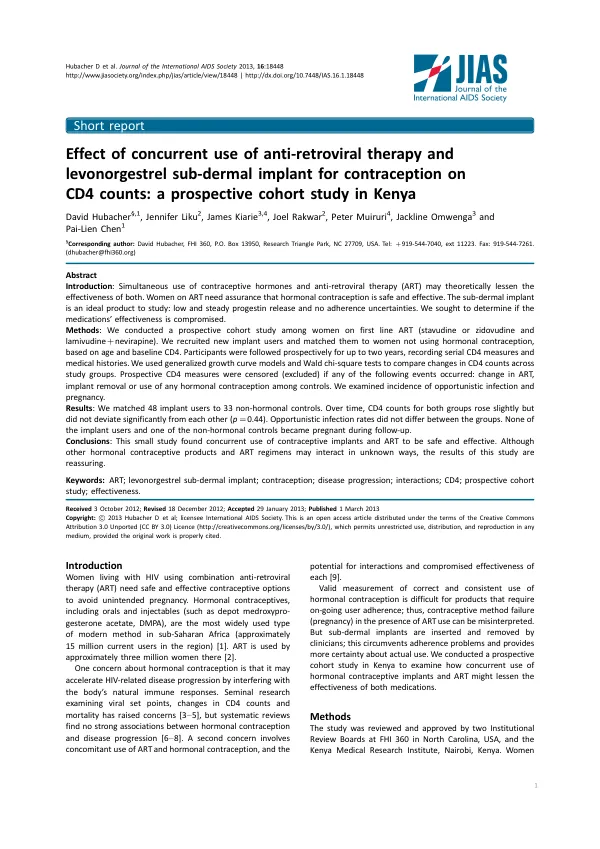
Abstract
The study was a prospective cohort study that recruited 48 women on ART who received a levonorgestrel implant and 33 matched controls who were not using hormonal contraception. The participants were recruited from the comprehensive care centre of Kenyatta National Hospital in Nairobi, Kenya. The inclusion criteria for the study were women aged between 18 and 44 years, last CD4 count of at least 200 cells, at least six months on a first line therapy of stavudine or zidovudine plus lamivudine-nevirapine, and sexually active and willing to continue ART. The exclusion criteria included women who were pregnant, desired pregnancy in the next 12 months, or had medical contraindications for implant use. The study used a matching criteria of age, baseline CD4 count, and ART regimen to match the implant users with non-hormonal controls. The participants were followed prospectively for up to two years, with regular hospital services including periodic check-ups, ART provision, and periodic blood draws to measure CD4 counts. The study found that CD4 counts for both groups rose slightly over time, but did not deviate significantly from each other. Opportunistic infection rates did not differ between the groups, and none of the implant users became pregnant during follow-up, while one of the non-hormonal controls became pregnant. The study concluded that concurrent use of contraceptive implants and ART is safe and effective, and that the results are reassuring for women living with HIV who use hormonal contraception. The study had a small sample size, with 48 implant users and 33 matched controls. However, the study was designed to detect a difference of 105 cells per mL in the change from baseline CD4 count, and the results suggest that the concurrent use of ART and levonorgestrel implant does not compromise the effectiveness of either medication. The study's findings are consistent with previous research that has found no strong associations between hormonal contraception and disease progression in women living with HIV. The study's results have implications for the management of HIV in women who use hormonal contraception. The study suggests that women living with HIV can safely use levonorgestrel implants as a form of contraception, without compromising their ART regimen. The study's findings also highlight the importance of providing women living with HIV with safe and effective contraceptive options, and of monitoring their CD4 counts regularly to ensure that their ART regimen is effective.