FOOD AND AGRICULTURAL ORGANIZATION
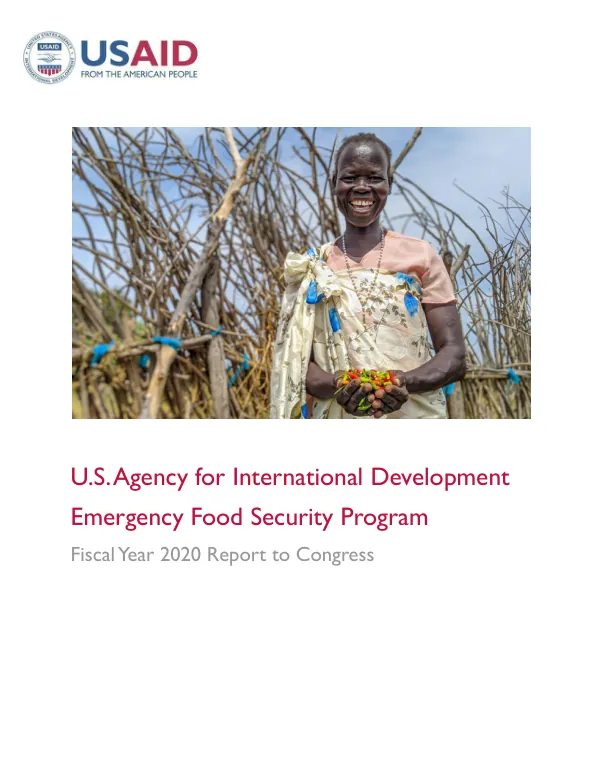
Emergency Food Security Program FY 2020 Report to Congress
The Emergency Food Security Program (EFSP) is a key component of the U.S.
2021 · 21 pages
Sign in to readA free account is required to download.
Abstract
Agency for International Development's (USAID) humanitarian assistance efforts. The program was formally authorized in 2016 through the Global Food Security Act and has been reauthorized through 2023. The EFSP aims to mitigate the effects of manmade and natural disasters by utilizing innovative approaches to delivering aid that support affected persons and communities, build resilience and early recovery, and reduce opportunities for waste, fraud, and abuse. In Fiscal Year 2020, USAID provided more than $2.88 billion in EFSP assistance, reaching nearly 44 million people in 52 countries. The program used market-based modalities, including local, regional, and international food procurement; cash transfers for food; and food vouchers. The selection of modality was based on four criteria: market appropriateness, feasibility, project objectives, and cost. Local and regional commodity sources were emphasized to reinforce developing markets. The EFSP played a critical role in addressing food insecurity in emergency situations, particularly in countries affected by conflict and climatic shocks. In FY 2020, USAID provided emergency food assistance to millions of people in both acute and chronic emergencies. The program supported a mix of cash-based and in-kind assistance, depending on market conditions and accessibility. In Somalia, USAID funded humanitarian partners to provide emergency food assistance to those experiencing acute food insecurity, primarily through cash transfers for food and U.S.-sourced commodities. The program reached nearly 3.2 million people in Somalia, reducing food consumption gaps at the household level and preventing potentially catastrophic outcomes. In South Sudan, USAID supported UN agencies and NGOs to bolster food security, livelihoods, and early recovery efforts, reaching over 2.5 million people with emergency food assistance. The EFSP's use of market-based modalities and cash transfers for food allowed beneficiaries to purchase foods of their choice quickly in local markets, directly supporting local operations. The program's flexibility and adaptability were critical in responding to the COVID-19 pandemic and its impact on global and local food markets and supply chains. In FY 2020, the EFSP accounted for more than 42 percent of USAID's humanitarian assistance programming, with LRIP commodities, food vouchers, and cash transfers making up the majority of the program's funding. Essential complementary activities and other related activities accounted for 5 percent of EFSP funding. The program's success in FY 2020 demonstrates the importance of innovative approaches to delivering aid and the need for continued support to address the complex humanitarian challenges facing vulnerable populations around the world. The EFSP's geographic focus was on countries affected by conflict, climatic shocks, and other humanitarian crises. The program's implementation details included the use of local and regional commodity sources, cash transfers for food, and food vouchers. The program's timeframes varied depending on the specific context and emergency situation, but the EFSP's flexibility and adaptability allowed it to respond quickly and effectively to emerging humanitarian needs. The EFSP's recommendations for future programming include continued support for market-based modalities and cash transfers for food, as well as the need for increased flexibility and adaptability in responding to emerging humanitarian challenges. The program's success in FY 2020 demonstrates the importance of innovative approaches to delivering aid and the need for continued support to address the complex humanitarian challenges facing vulnerable populations around the world.
Related documents