USAID | PROJECTO DELIVER
Encouraging Stewardship through Coordination and Country-Led Response, June 2016
Country leadership and collaboration are crucial for delivering quality, efficiency, and accountability across the public health supply chain system.
2016 · 1 pages
Sign in to readA free account is required to download.
Abstract
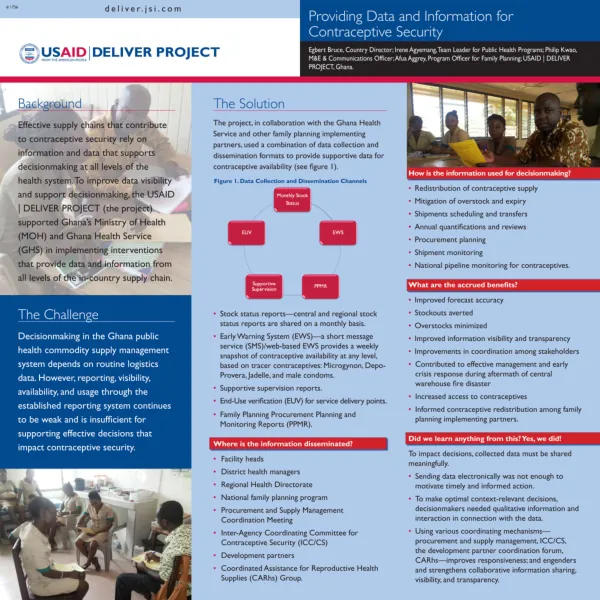
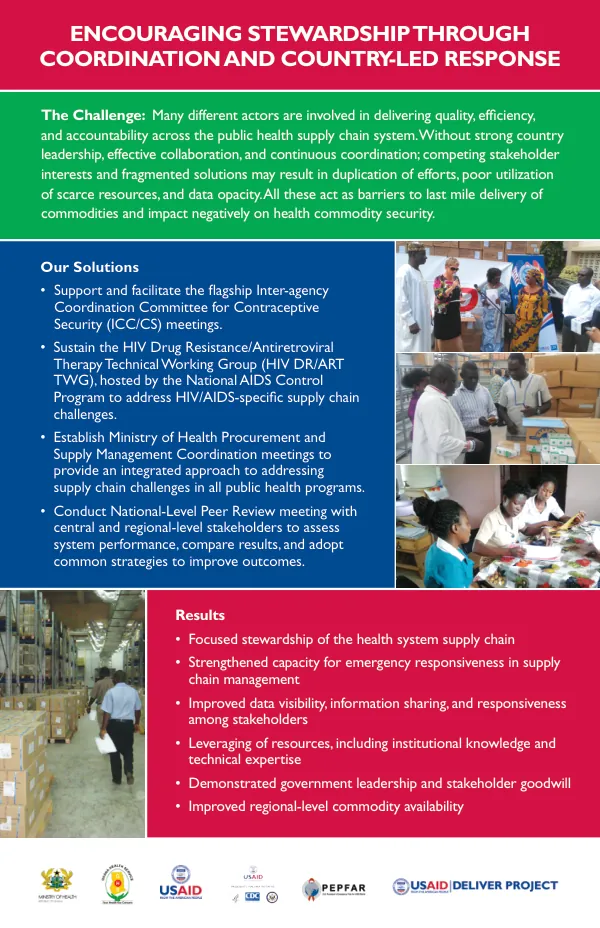
Without strong leadership, coordination, and continuous collaboration, competing stakeholder interests and fragmented solutions may result in duplication of efforts, poor utilization of scarce resources, and data opacity. These barriers negatively impact the last mile delivery of commodities and health commodities. Focused stewardship of the health system supply chain has been achieved through strengthened capacity for emergency responsiveness in supply chain management. Improved data visibility, information sharing, and sharing among stakeholders have also been realized. Leveraging resources, including institutional knowledge, technical expertise, and expertise, has been demonstrated. Additionally, leadership and stakeholder goodwill have been demonstrated, and improved commodity availability has been achieved at the regional level. The Inter-Agency Coordination Committee for Contraceptive Security (ICC/CS) meetings have been supported and facilitated to address supply chain challenges. The HIV Drug Resistance/Antiretroviral Therapy Technical Working Group (HIV DR/ART TWG) has been sustained to address HIV/AIDS-specific supply chain challenges. The Ministry of Health Procurement and Supply Management Coordination meetings have been established to provide an integrated approach to addressing supply chain challenges in public health programs. A National Peer Review meeting has been conducted with stakeholders to assess system performance, compare results, and adopt common strategies to improve outcomes. Country leadership and collaboration are essential for delivering quality, efficiency, and accountability across the public health supply chain system. Strong leadership, coordination, and continuous collaboration are necessary to address competing stakeholder interests and fragmented solutions. The results of these efforts have been positive, with improved data visibility, information sharing, and sharing among stakeholders. Leveraging resources, including institutional knowledge, technical expertise, and expertise, has also been demonstrated.
Related documents