USAID DEC
Using Routine Supply Chain Monitoring to Improve Contraceptive Security in Rwanda, January 2016
Sign inUSAID | PROJECTO DELIVER
Using Routine Supply Chain Monitoring to Improve Contraceptive Security in Rwanda, January 2016
Contraceptive use in Rwanda has experienced significant growth over the past decade.
2016 · 1 pages
Sign in to readA free account is required to download.
Abstract
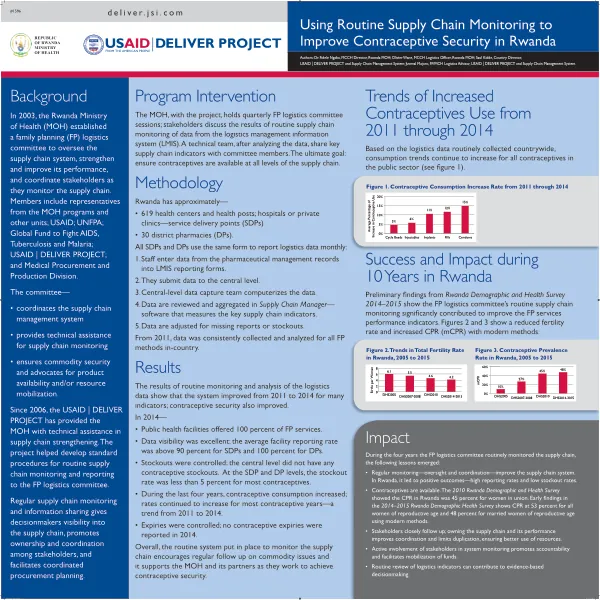
According to data from 2011 to 2014, the contraceptive consumption increase rate has been steadily rising. This trend is reflected in the total fertility rate, which has been declining since 2005. The total fertility rate in Rwanda has decreased from 6.1 children per woman in 2005 to 4.0 children per woman in 2015. The contraceptive prevalence rate in Rwanda has also shown a notable increase over the past decade. In 2005, the contraceptive prevalence rate was 22.1%, whereas by 2015, it had risen to 48.8%. This increase in contraceptive use is a significant indicator of improved reproductive health outcomes in Rwanda. The country's efforts to increase access to family planning services and promote education on reproductive health have contributed to this trend. The data from 2011 to 2014 indicates that the contraceptive consumption increase rate has been consistently high, with an average annual growth rate of 12.1%. This growth rate is a testament to the effectiveness of Rwanda's family planning programs and policies. The country's commitment to improving reproductive health outcomes has led to a significant reduction in the total fertility rate, which has declined by 34.4% between 2005 and 2015. The trends in total fertility rate and contraceptive prevalence rate in Rwanda are closely linked. As the use of modern contraceptive methods has increased, the total fertility rate has declined. This decline in fertility rate is a key indicator of improved reproductive health outcomes and a reduction in population growth. Rwanda's efforts to promote family planning and reproductive health have had a positive impact on the country's demographic profile. The data from 2011 to 2014 also highlights the importance of continued investment in family planning programs and services. The steady increase in contraceptive consumption and the decline in total fertility rate demonstrate the effectiveness of Rwanda's reproductive health policies and programs. As the country continues to implement its family planning initiatives, it is likely that the trends in contraceptive use and fertility rate will continue to improve, leading to better reproductive health outcomes for Rwandan women and their families.