USAID | PROJECTO DELIVER
End-Use Verification in Ghana
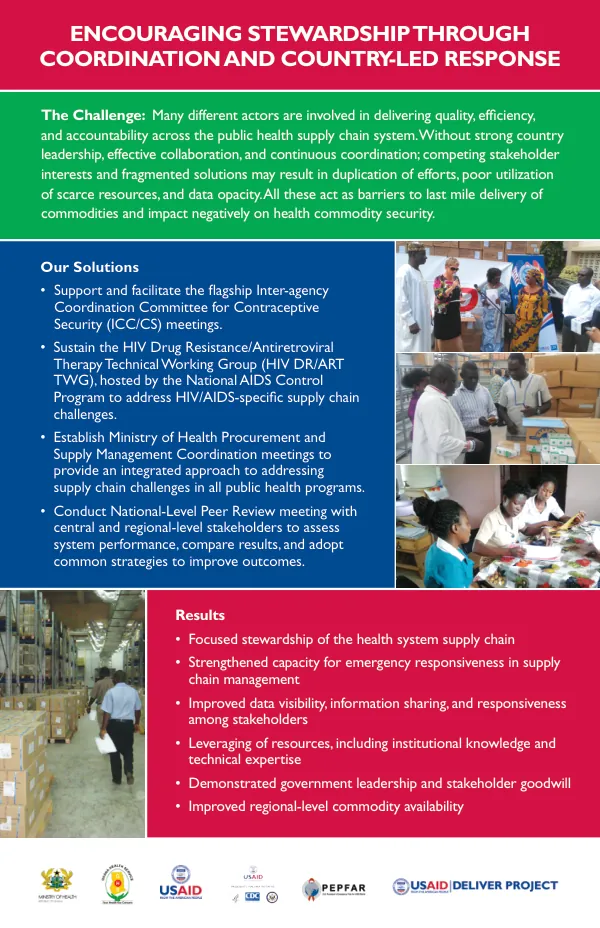
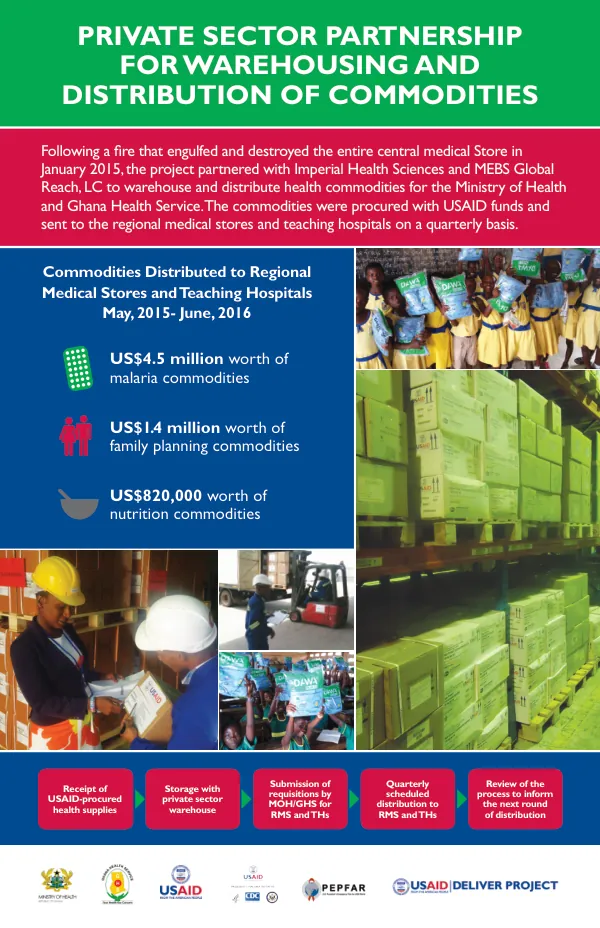
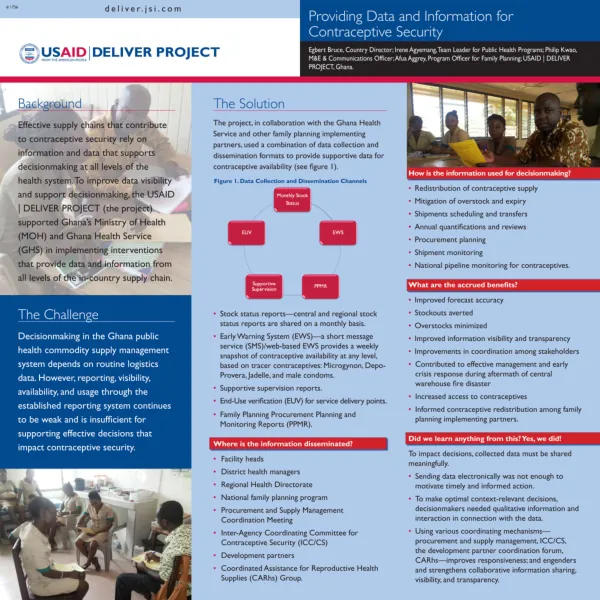
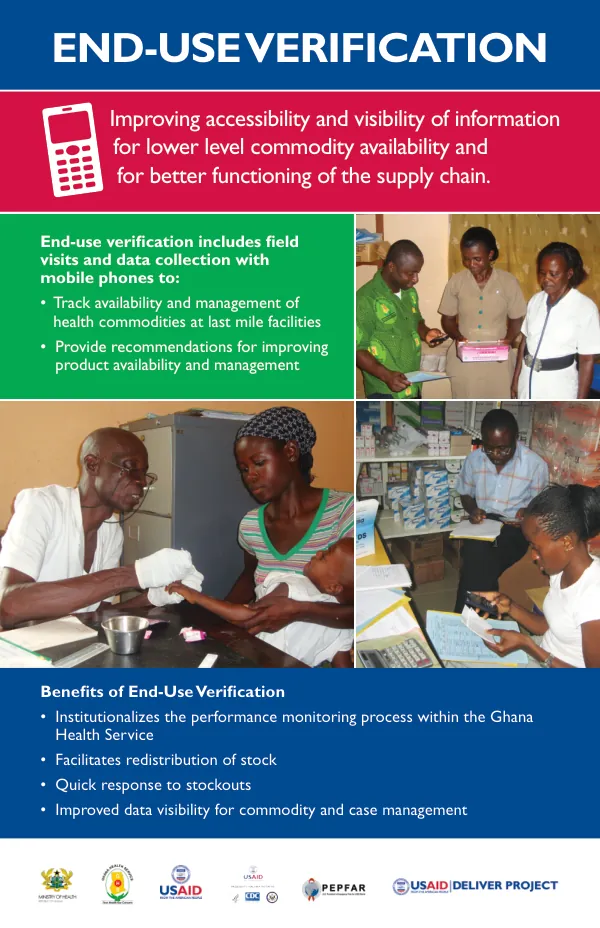
End-use verification is a critical component of improving accessibility and visibility of information for lower level commodity availability and better functioning of the supply chain.
2016 · 1 pages
Sign in to readA free account is required to download.
Abstract
This process involves field visits and data collection using mobile phones to track the availability and management of health commodities at last mile facilities. The primary objectives of end-use verification are to monitor the performance of the supply chain and provide recommendations for improving product availability and management. The benefits of end-use verification are multifaceted. Institutionalizing the performance monitoring process within the Ghana Health Service enables the organization to track its progress and identify areas for improvement. This process also facilitates the redistribution of stock, allowing for a more efficient allocation of resources. Additionally, end-use verification enables a quick response to stockouts, which can have a significant impact on the availability of essential health commodities. Furthermore, improved data visibility for commodity and case management enables healthcare providers to make informed decisions and optimize their services. End-use verification involves the use of mobile phones to collect data on the availability and management of health commodities at last mile facilities. This data is then used to provide recommendations for improving product availability and management. The process is designed to be flexible and adaptable, allowing for the collection of data in a variety of settings and contexts. By leveraging mobile technology, end-use verification can be implemented in even the most remote and resource-constrained areas. The implementation of end-use verification has the potential to significantly improve the functioning of the supply chain and increase the availability of essential health commodities. By providing real-time data and insights, end-use verification enables healthcare providers to make informed decisions and optimize their services. This, in turn, can have a positive impact on health outcomes and improve the overall quality of care. In Ghana, the implementation of end-use verification is being led by the Ghana Health Service, in collaboration with other stakeholders. The process is being rolled out in a phased manner, with a focus on identifying areas for improvement and developing strategies for addressing these challenges. As the process is implemented, it is expected that the benefits of end-use verification will become increasingly apparent, leading to improved health outcomes and a more efficient supply chain.