ADVANCED ENGINEERING ASSOCIATES INTERNATIONAL, INC. /SGGA
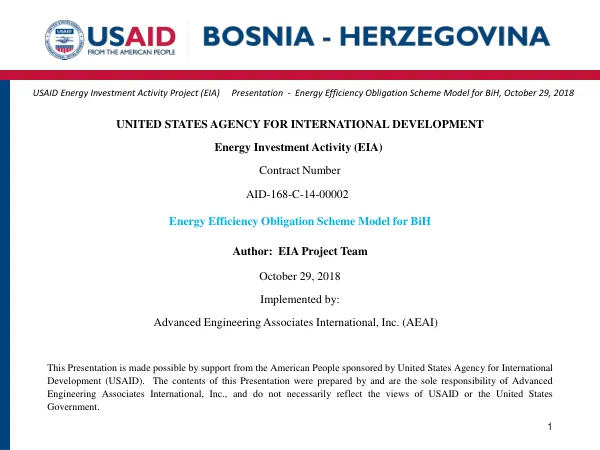
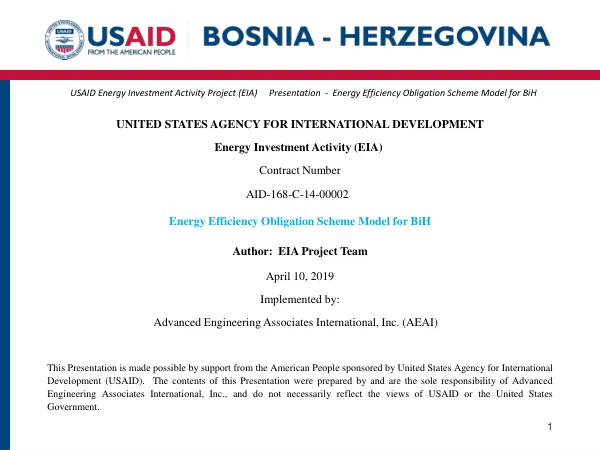
Energy Efficiency Obligation Scheme Model for BiH
The Energy Efficiency Obligation Scheme Model for Bosnia and Herzegovina (BiH) is a presentation developed by the Energy Investment Activity (EIA) Project Team.
2019 · 38 pages
Sign in to readA free account is required to download.
Abstract
The model aims to promote energy efficiency in BiH by establishing an obligation scheme for energy utilities to meet energy savings targets. The presentation was implemented by Advanced Engineering Associates International, Inc. (AEAI) under contract AID-168-C-14-00002. The obligation scheme model is based on the European Union's (EU) Energy Efficiency Directive, which requires member states to establish national energy efficiency plans. The model involves setting energy savings targets for energy utilities, which are then required to meet these targets through various energy efficiency measures. The presentation outlines the key components of the model, including the target setting process, the selection of energy efficiency measures, and the monitoring and verification of energy savings. The presentation highlights the benefits of the obligation scheme model, including increased energy efficiency, reduced greenhouse gas emissions, and cost savings for energy utilities and consumers. The model also promotes the development of a competitive energy efficiency market in BiH, which can attract investment and create jobs. The presentation provides a detailed overview of the model's implementation, including the roles and responsibilities of key stakeholders, such as energy utilities, regulatory bodies, and consumers. The obligation scheme model is designed to be flexible and adaptable to the specific needs and circumstances of BiH. The presentation outlines the key steps involved in implementing the model, including the establishment of a regulatory framework, the development of energy efficiency plans, and the monitoring and evaluation of energy savings. The model also provides a framework for the development of a national energy efficiency plan, which can be used to guide energy policy and decision-making in BiH. The presentation concludes by highlighting the potential benefits of the obligation scheme model for BiH, including increased energy efficiency, reduced greenhouse gas emissions, and cost savings for energy utilities and consumers. The model has the potential to promote economic growth and development in BiH, while also contributing to the country's energy security and environmental sustainability.