USAID DEC
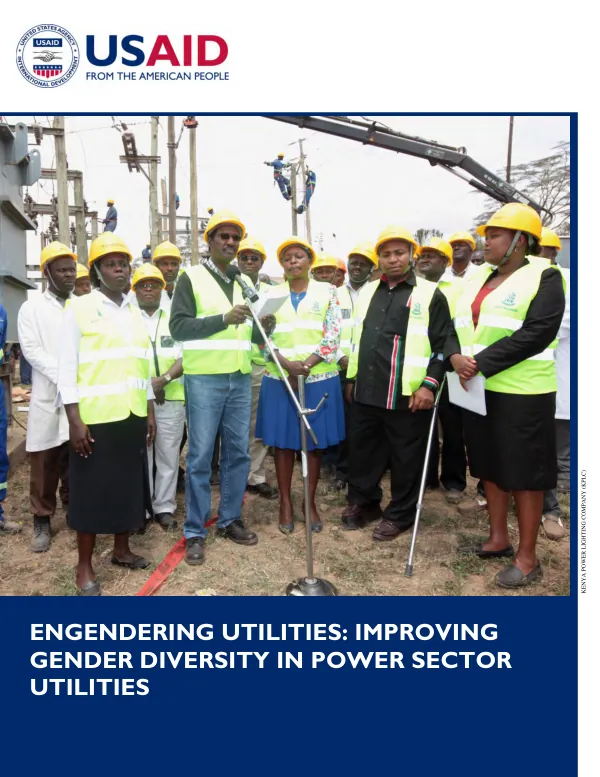
ENGENDERING UTILITIES: IMPROVING GENDER DIVERSITY IN POWER SECTOR UTILITIES
The agricultural development initiative in Kenya Power and Lighting Company (KPLC) began in 2016 as part of the Engendering Utilities Program.
2016 · 50 pages
Sign in to readA free account is required to download.
Abstract
The program aimed to improve gender diversity in power sector utilities. The initiative focused on increasing labor market participation by women and mitigating disparities throughout a company's human resources practices. The study found that women's employment within electric power distribution companies (DISCOs) in the sample averaged 13 percent of the workforce, with a range from less than 1 percent in Pakistan to more than 10 percent in Kenya. Women worked at all employment levels and in all departments, including technical field operations, high-voltage line operations, and field maintenance. However, the study also found that women were not equally represented in all departments. Technical field operations and high-voltage line maintenance remained dominated by men, with women making up less than 10 percent of the workforce in these departments. Even when excluding technical field operations data, almost all companies had gender imbalances in remaining units. The study also found that most utilities did not use internships or professional training opportunities to correct unequal employment outcomes. Only 18.9 percent of women received internships, and 6.7 percent of training opportunities went to women. The study suggests that utilities need to develop organizational instruments to improve gender disparities within their companies. This includes creating a culture that values diversity and inclusion, providing training and development opportunities for women, and implementing policies that promote equal employment opportunities. The study also found that utilities need to address the challenges facing women within the power sector. This includes providing support for women to take on leadership roles, promoting women's participation in decision-making processes, and creating a safe and inclusive work environment. The study recommends that utilities develop a comprehensive strategy to address gender disparities and promote gender diversity within their companies. This includes conducting a gender audit to identify areas of improvement, developing policies and procedures to promote equal employment opportunities, and providing training and development opportunities for women. The study also recommends that utilities establish a committee to address gender disparities and promote gender diversity within their companies. This committee should be responsible for developing and implementing policies and procedures to promote equal employment opportunities, providing training and development opportunities for women, and promoting women's participation in decision-making processes. Overall, the study highlights the need for utilities to take a proactive approach to promoting gender diversity and inclusion within their companies. This includes developing a comprehensive strategy to address gender disparities, providing training and development opportunities for women, and promoting women's participation in decision-making processes.
Related documents