USAID DEC
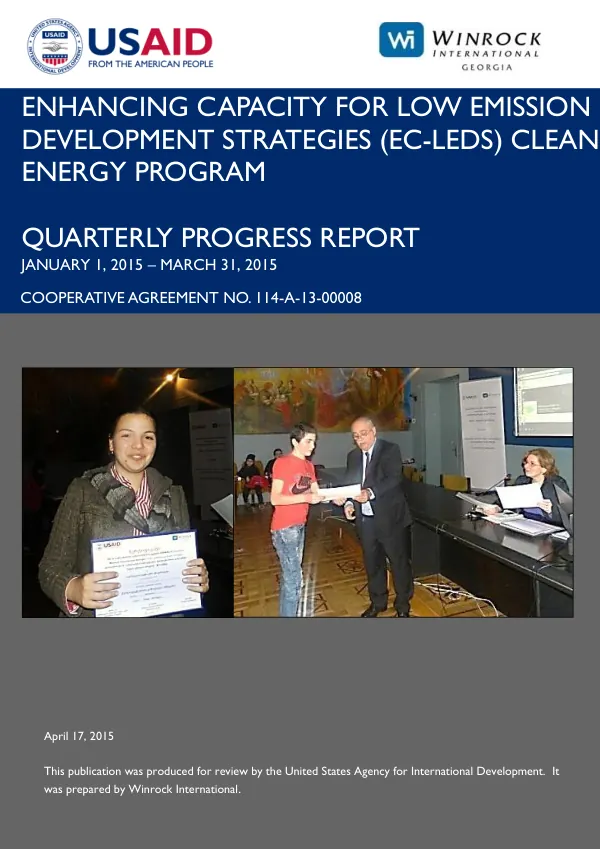
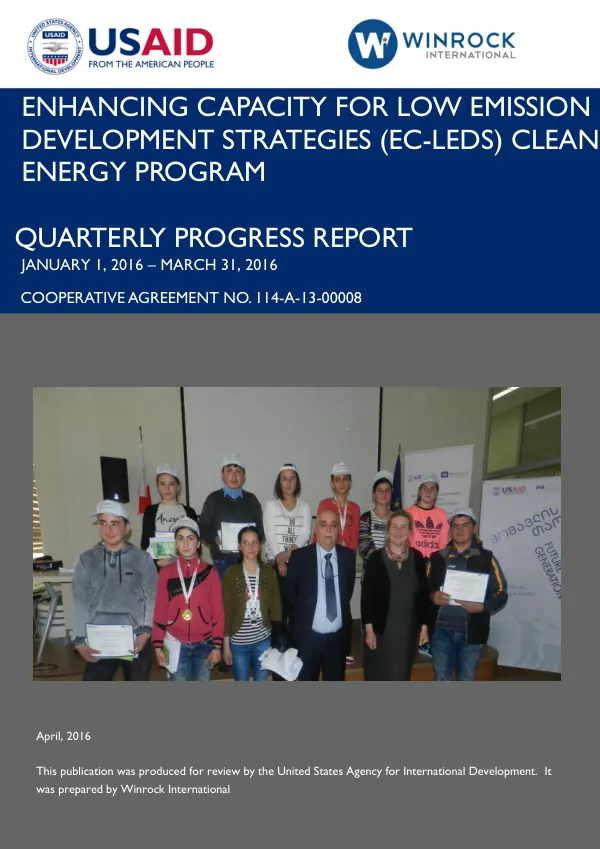
Enhancing Capacity for Low Emission Development Strategies (EC-LEDS) Clean Energy Program, Quarterly Progress Report (January 1, 2016 – March 31, 2016)
Sign inWINROCK INTERNATIONAL FOUNDATION
Enhancing Capacity for Low Emission Development Strategies (EC-LEDS) Clean Energy Program, Quarterly Progress Report (January 1, 2016 – March 31, 2016)
Georgia's Enhance Capacity for Low Emission Development Strategies (EC-LEDS) Clean Energy Program, funded by the United States Agency for International Development (USAID), is a four-year initiative (October 2013 to September 2017) focusing on three key activities: 1) Georgian Municipal Energy Efficiency (GeMunee); 2) Green Building Rating and Certification System; and 3) National EC-LEDS Working Group and Project Assistance.
2016 · 67 pages
Sign in to readA free account is required to download.
Abstract
GeMunee, a component of the program, aims to enhance energy efficiency in municipalities through the implementation of energy-efficient technologies and practices. The program has made significant progress in this area, with 15 municipalities participating in the initiative. These municipalities have implemented energy-efficient lighting and building envelope improvements, resulting in a total energy savings of 1,500 MWh. The Green Building Rating and Certification System is another key component of the program, which aims to promote green building practices in the country. The system has been completed, and a green building rating and certification system has been developed. This system will enable building owners and developers to assess and improve the energy efficiency of their buildings. The National EC-LEDS Working Group and Project Assistance component of the program provides technical assistance to the Government of Georgia to support the development of a National Low Emission Development Strategy (NLEDS). The working group has been established, and a draft NLEDS has been developed. The draft NLEDS outlines the country's vision and goals for reducing greenhouse gas emissions and promoting low emission development. The program has also made significant progress in the area of project administration, with a project management unit established to oversee the implementation of the program. The unit has been responsible for coordinating the activities of the program, including the implementation of the three key activities mentioned above. In terms of lessons learned, the program has identified several key takeaways, including the importance of engaging with local stakeholders and building partnerships with local organizations. The program has also highlighted the need for a more comprehensive approach to addressing the energy efficiency and green building challenges in the country. The program has also made significant progress in the area of environmental protection, with a focus on reducing greenhouse gas emissions and promoting low emission development. The program has implemented several environmental protection measures, including the development of a national low emission development strategy and the implementation of energy-efficient technologies and practices in municipalities. In conclusion, the EC-LEDS Clean Energy Program has made significant progress in its first three years, with a focus on enhancing energy efficiency and promoting green building practices in the country. The program has established a strong foundation for future success and has identified several key lessons learned that will inform future programming. The program has also made significant progress in the area of cross-cutting activities, with a focus on promoting gender equality and empowering women and girls. The program has implemented several cross-cutting activities, including the development of a gender action plan and the implementation of gender-sensitive training programs for program staff. The program has also made significant progress in the area of monitoring and evaluation, with a focus on tracking progress and identifying areas for improvement. The program has established a robust monitoring and evaluation framework, which includes the development of indicators and targets for each of the three key activities mentioned above. In terms of environmental compliance, the program has made significant progress in ensuring that all activities are carried out in compliance with environmental regulations. The program has implemented several environmental compliance measures, including the development of an environmental management plan and the implementation of environmental impact assessments for all activities. The program has also made significant progress in the area of communications and outreach, with a focus on promoting the program's activities and achievements to a wider audience. The program has implemented several communications and outreach activities, including the development of a program website and the implementation of social media campaigns to promote the program's activities and achievements.
Related documents
Documents in this collection
 2016
2016USAID DEC
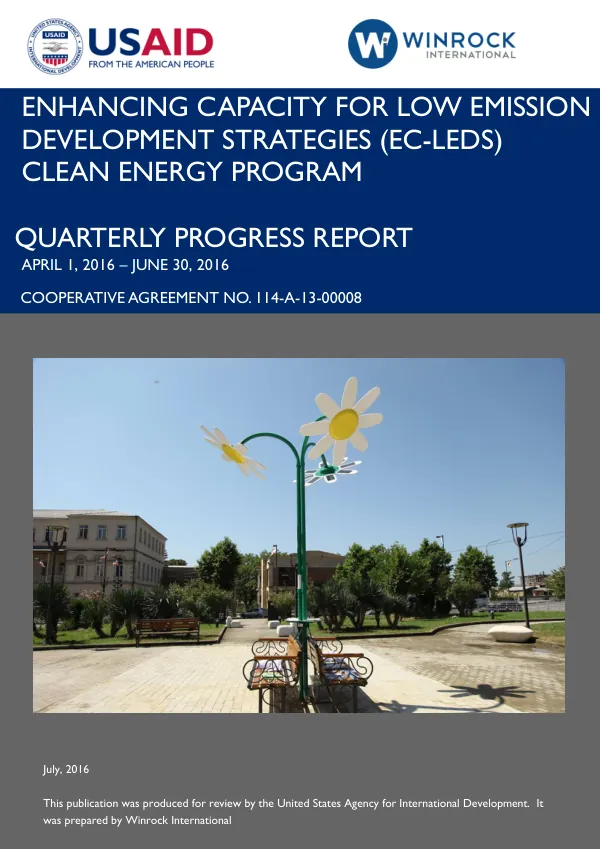
Enhancing Capacity for Low Emission Development Strategies (EC-LEDS) Clean Energy Program, Quarterly Progress Report (April 1, 2016 – June 30, 2016)
Open record 2015
2015USAID DEC