USAID DEC
Enhancing Capacity for Low Emission Development Strategies (EC-LEDS) in the Philippines
Sign inDEPARTMENT OF AGRICULTURE
Enhancing Capacity for Low Emission Development Strategies (EC-LEDS) in the Philippines
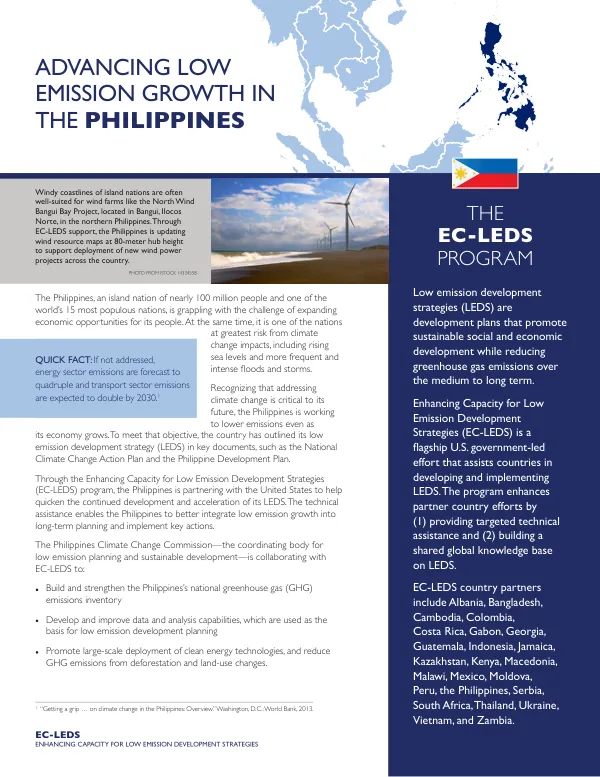
The Philippines is an island nation of nearly 100 million people, one of the world's 15 most populous nations, and is grappling with the challenge of expanding economic opportunities for its people.
2013 · 2 pages
Sign in to readA free account is required to download.
Abstract
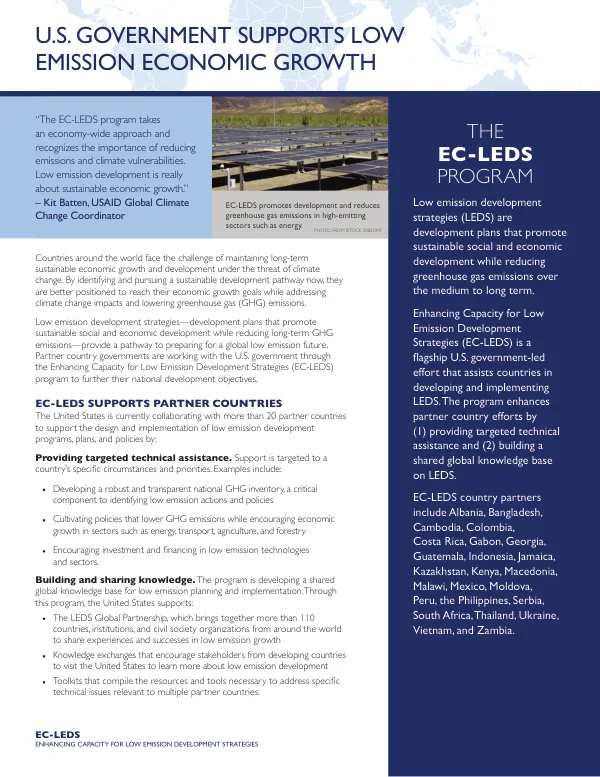
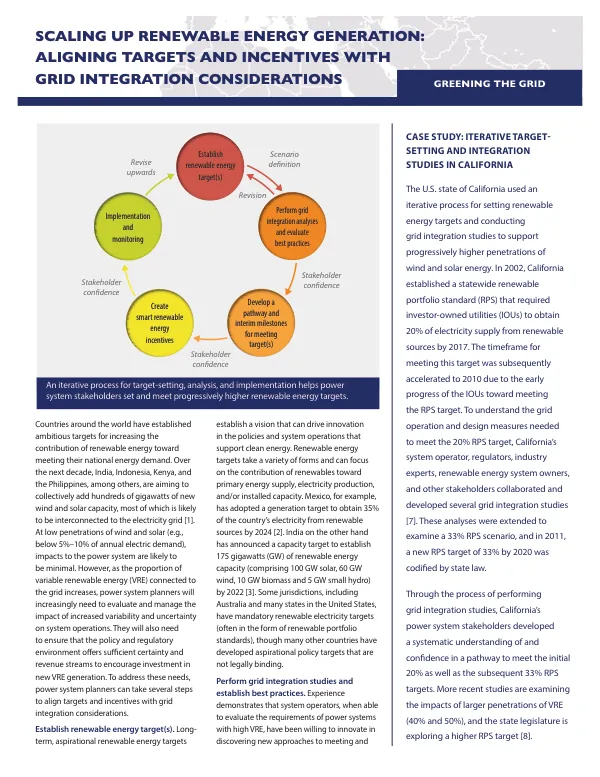
At the same time, it is one of the nations at greatest risk from climate change impacts, including rising sea levels and more frequent and intense floods and storms. Recognizing that addressing climate change is critical to its future, the Philippines is working to lower emissions even as its economy grows. The country has outlined its low emission development strategy (LEDS) in key documents, such as the National Climate Change Action Plan and the Philippine Development Plan. Through the Enhancing Capacity for Low Emission Development Strategies (EC-LEDS) program, the Philippines is partnering with the United States to help quicken the continued development and acceleration of its LEDS. The technical assistance enables the Philippines to better integrate low emission growth into long-term planning and implement key actions. The Philippines Climate Change Commission, the coordinating body for low emission planning and sustainable development, is collaborating with EC-LEDS to build and strengthen the country's national greenhouse gas (GHG) emissions inventory. This involves developing and improving data and analysis capabilities, which are used as the basis for low emission development planning. Additionally, the commission is promoting large-scale deployment of clean energy technologies and reducing GHG emissions from deforestation and land-use changes. EC-LEDS is providing targeted technical assistance to the Philippines, focusing on deploying clean energy and improving forest management. In the energy sector, the program is conducting grid impact analyses to help overcome the hurdles to integrating renewable energy into the power grid. It is also developing tools and maps to assess the siting of renewable energy equipment, helping private investors maximize their investment. Furthermore, EC-LEDS is evaluating alternative transportation options to reduce the environmental impacts of transportation and modeling energy and economic scenarios for national climate change and development planning. In the forestry and land-use planning sector, EC-LEDS is helping the Philippines improve the design and implementation of forestry programs with climate benefits. The program is building expertise in collecting, processing, and archiving GHG inventory data, providing a foundation for managing and monitoring land-use emissions. It is also training specialists in forest cover mapping using remote-sensing technologies and creating a national forest inventory designed to support improved forest data accuracy and availability for forest management decision-making.