CATHOLIC RELIEF SERVICES ORGANIZATION
Enquête sur les Indicateurs du Paludisme au Niger 2021 - Factsheet
The Enquête sur les Indicateurs du Paludisme au Niger 2021 was conducted in 2021 by the Institut National de la Statistique (INS) in collaboration with the Programme National de Lutte contre le Paludisme (PNLP) of the ministère de la Santé Publique (MSP).
2021 · 2 pages
Sign in to readA free account is required to download.
Abstract
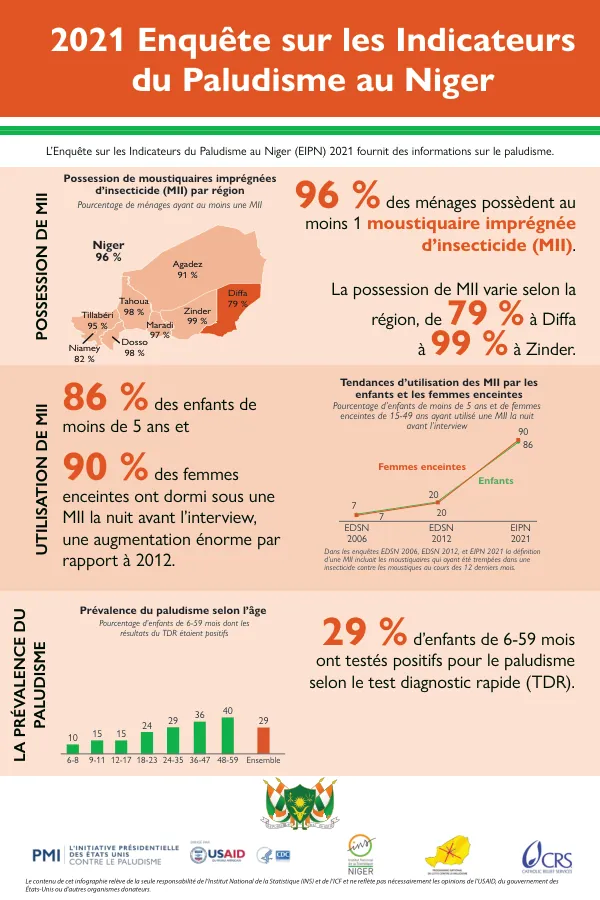
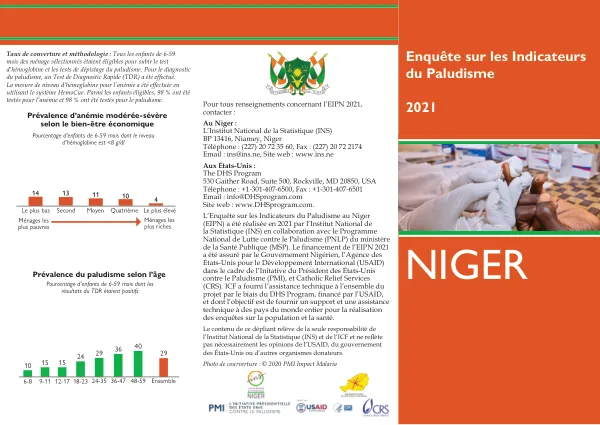
The study aimed to provide detailed information on malaria in Niger. The survey covered 4,729 households and 5,795 women aged 15-49 years, as well as all children aged 6-59 months who were eligible for hemoglobin and malaria tests. The study found that 98% of eligible children were tested for anemia and 98% were tested for malaria. The prevalence of anemia among children aged 6-59 months was highest in the poorest households, with 14% of children having a hemoglobin level below 8 g/dl. The prevalence of malaria was also highest in the poorest households, with 36-47% of children testing positive for malaria. The study also found that the use of insecticide-treated bed nets (MII) by pregnant women increased significantly between 2006 and 2021. In 2006, only 37% of women who had given birth in the two years prior to the survey had received at least one dose of sulfadoxine-pyrimethamine, a medication used to prevent malaria during pregnancy. By 2021, this number had increased to 82%. The possession of MII by households also increased significantly, from 43% in 2006 to 96% in 2021. The study found that the use of MII by children and pregnant women also increased significantly between 2006 and 2021. In 2006, only 7% of children under the age of 5 and 20% of pregnant women reported using a MII the night before the survey. By 2021, these numbers had increased to 86% and 90%, respectively. The study also found that the possession of MII by households varied by region, with the highest rates found in the regions of Agadez, Dosso, and Zinder. The use of MII by households also varied by region, with the highest rates found in the regions of Maradi and Niamey. The study provides detailed information on the prevalence of anemia and malaria among children aged 6-59 months in Niger. The study also provides information on the use of MII by households and the possession of MII by households. The study found that the use of MII by households and the possession of MII by households increased significantly between 2006 and 2021. The study also found that the prevalence of anemia and malaria among children aged 6-59 months was highest in the poorest households. The study highlights the importance of continued efforts to control and prevent malaria in Niger. The study also highlights the need for further research on the effectiveness of MII in preventing malaria among children and pregnant women. The study provides a valuable resource for policymakers and healthcare professionals working to control and prevent malaria in Niger. The study found that 67% of children under the age of 5 with fever had received treatment or advice from a healthcare provider. The study also found that 32% of children under the age of 5 with fever had a blood sample taken for testing. The study highlights the need for further research on the effectiveness of healthcare services in treating and preventing malaria among children in Niger. The study provides a comprehensive overview of the prevalence of anemia and malaria among children aged 6-59 months in Niger. The study also provides information on the use of MII by households and the possession of MII by households. The study highlights the importance of continued efforts to control and prevent malaria in Niger and the need for further research on the effectiveness of MII in preventing malaria among children and pregnant women.
Related documents