USAID DEC
Entre ilusiones, ambiciones y decepciones. Los efectos sociales, culturales y económicos de la minería aurífera en el departamento de Amazonas
Sign inCONSERVATION STRATEGY FUND
Entre ilusiones, ambiciones y decepciones. Los efectos sociales, culturales y económicos de la minería aurífera en el departamento de Amazonas
The gold mining industry in the Amazonas department of Colombia has significant social, cultural, and economic impacts on local communities.
2016 · 32 pages
Sign in to readA free account is required to download.
Abstract
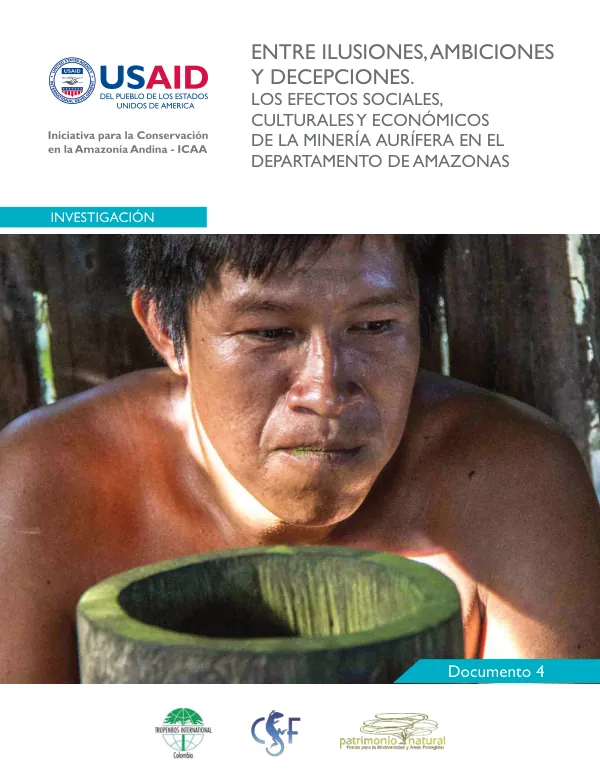
The report "Entre ilusiones, ambiciones y decepciones" documents the effects of illegal gold mining on local economies, health, and cultural spaces and practices within indigenous communities in the Colombian Amazon. The report draws on testimonies of indigenous men and women who have personally experienced the changes brought about by gold mining activities. Oral histories collected in the report provide insight into the situations in towns such as Araracuara and Puerto Santander, as well as the surrounding areas of Cahuinarí National Park and Amacayacu National Park in the department of Amazonas over the last 15 years. The report shows how illegal mining has created new social, economic, and cultural conflicts within local communities, exacerbating existing tensions. Social, economic, and cultural consequences of illegal mining can be harsh and affect entire communities. According to local histories, the sequence of illusions leading to ambition and then to disappointment captures many of the individual and collective experiences of different individuals and communities dealing with gold mining in the Amazon region. From an indigenous perspective, the environmental transformations in the Amazon are inherently social and have a symbolic dimension based on the stories of origin. The report documents the impacts of mining on the water, fauna, and forest of the Amazon, which manifest themselves in community life, local economies, health, and cultural practices. A local indigenous person states that, according to tradition, stones and some minerals trigger disasters. The report highlights the complexity of the problem, emphasizing that mining not only creates new problems and conflicts but also exacerbates existing ones. The report focuses on documenting and analyzing the impacts of mining on society and local economies, as well as traditional cultural practices. The emphasis on the theme of social, economic, and cultural deterioration associated with mining is autonomous for three reasons. Firstly, to show the complexity of the problem in detail for a non-specialized Western audience. Secondly, to highlight the fact that mining not only creates new problems and conflicts but also exacerbates existing ones. Thirdly, to emphasize that even when mining is of smaller scale and appears to cause few environmental or low-intensity effects because only a few people practice it, the social effects can be of great magnitude and affect the totality of communities. The report describes the experience of people in mining as a sequence of illusions, ambitions, and disappointments associated with gold. Initially, rumors about gold appear, and people from outside the territory arrive with promises of business and opportunities for money. In contexts of cultural and social fragility, such as those found in some Amazonian territories, these promises seduce many local inhabitants, especially the younger population. With the promise of a better income, agreements are made, and in many cases, profits and sums of money are generated that have never been seen in the communities before. People leave the territory to go where the "gold is painting" and spend long periods of time outside the community. The report highlights the significant social, cultural, and economic impacts of gold mining on local communities in the Amazonas department of Colombia. The report's findings emphasize the need for a comprehensive understanding of the complex relationships between mining, local communities, and the environment.
Related documents
Documents in this collection
 2015
2015USAID DEC
Plan de Acción para Amazonas: Integración de Servicios Ecosistémicos en la Planificación para el Desarrollo en la Amazonía Andina
Open record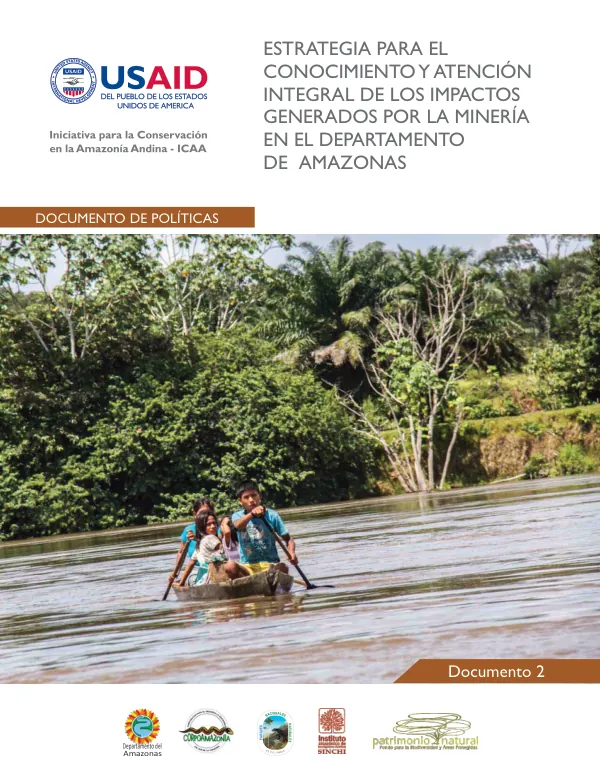 2016
2016USAID DEC
Estrategia para el Conocimiento y Atención Integral de los Impactos Generados por la Minería en el Departamento de Amazonas
Open record