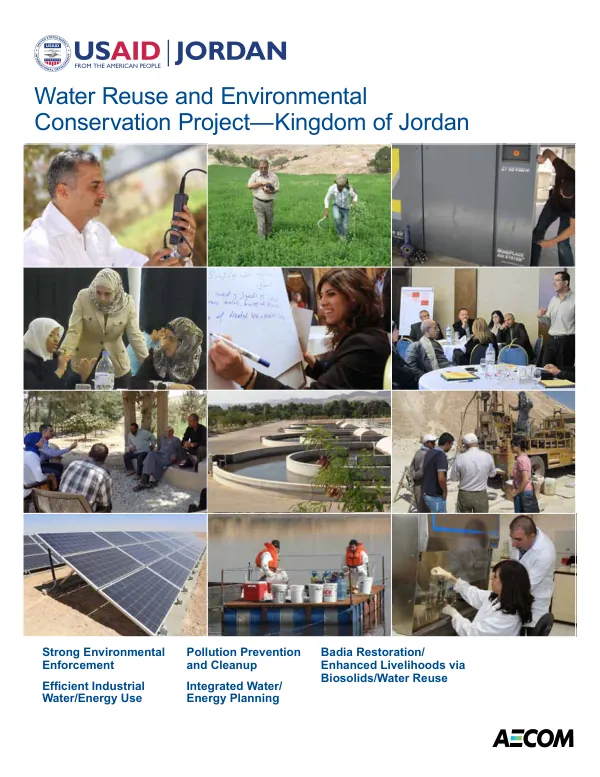
AECOM INTERNATIONAL
Environmental Considerations Report for Russeifah Area 3 Remediation
The Russeifah Area 3 Remediation project is a water reuse and environmental conservation project located in Jordan.
2015 · 85 pages
Sign in to readA free account is required to download.
Abstract
The project is situated in the Zarqa Governorate, approximately 20 kilometers east of Amman. The site is characterized by a flat to gently sloping terrain, with elevations ranging from 700 to 800 meters above sea level. The project area is underlain by a complex geological sequence, including alluvial deposits, Amman Silicified Limestone Formation, Al-Hisa Phosphorite Formation, Wadi Umm Ghudran Formation, and Wadi As Sir Limestone Formation. The geology of the area is influenced by the presence of groundwater, which is a critical component of the project's remediation efforts. The project's institutional framework involves multiple stakeholders, including the Zarqa Chamber of Industry, Ministry of Environment, Jordanian Natural Resources Authority, Ministry of Water and Irrigation, Ministry of Health, Ministry of Agriculture, Ministry of Municipal Affairs, Ministry of Labor, General Directorate of Jordan Civil Defense, Royal Society for the Conservation of Nature, International Atomic Energy Agency, Jordan Nuclear Regulatory Commission, and International Commission on Radiological Protection. The project's objectives are to remediate the contaminated site, restore the environment, and promote sustainable development in the region. The proposed project involves the removal of a pile of contaminated material, which will be sieved on-site to separate the hazardous waste from the non-hazardous material. The contaminated material will be disposed of in a licensed landfill, while the non-hazardous material will be reused or recycled. The project's components include slope stability measures, radiation and dust control systems, and a stormwater management system. The slope stability measures will involve the installation of geotextiles and geogrids to prevent soil erosion and landslides. The radiation and dust control systems will include the installation of radiation shielding and dust suppression systems to minimize the risks associated with radiation and dust exposure. The project's environmental considerations report highlights the importance of environmental monitoring and inspection, as well as the need for a comprehensive environmental impact assessment. The report also emphasizes the need for a robust institutional framework to ensure the effective implementation of the project's objectives. The project's regulatory framework is governed by a range of laws, bylaws, and regulations, including the Environment Protection Law, Natural Resources Affairs Law, Public Health Law, Archaeology Law, Water Authority Law, Agriculture Law, Law of Planning of Towns and Villages and Buildings, Labor Law, Air Protection Bylaw, Soil Protection Bylaw, Environmental Impact Assessment Regulations, Mining Regulation, Regulation for the Prevention of Health Nuisances, Regulation for the Protection and Safety of Workers from Machineries and Workplaces, Regulation of Preventive and Therapeutic Medical Care for the Workers in Establishments, Environmental Monitoring and Inspection Regulation, Regulation for Protecting the Environment from Pollution in Emergency Situations, Groundwater Control Regulation, Water Protection Regulation of 2004, Regulation of Land Use of 2007, Hazardous Materials and Wastes Management, Transfer and Circulation Regulation, Solid Waste Regulation, Regulation for the Formation of Committees and Moderators of Occupational Safety and Health, Instructions for the Protection of Workers and Institutions from Workplace Risks and Hazards, Instructions for Preliminary Medical Testing of Workers, Instructions for Regular Medical Testing of Workers, Instruction for the Management and Handling of Consumed Oil, Instruction for Management and Handling of Hazardous Waste, Instructions for Noise Prevention, Ambient Air Quality Standards, Radiation Protection Standards, Jordanian Building Codes, and Jordanian Code No. 22: Public Safety during Construction. The project's description of the study area highlights the importance of understanding the local climate, geology, topography, and soils in order to develop effective remediation strategies. The study area is characterized by a hot and dry climate, with limited rainfall and high evaporation rates. The geology of the area is complex, with a range of formations and deposits that are influenced by the presence of groundwater. The topography of the area is flat to gently sloping, with elevations ranging from 700 to 800 meters above sea level. The soils in the area are characterized by a range of textures and compositions, including alluvial deposits, clay, silt, and sand.
Related documents