USAID
Environmental Investments Boost Economic Performance at Al-Baha Chlorine Plant
The Al-Baha Company for Caustic Chlorine facility in Jordan's Al Hallabat Industrial Park has implemented multiple initiatives to reduce its environmental impact while increasing profits.
2015 · 2 pages
Sign in to readA free account is required to download.
Abstract
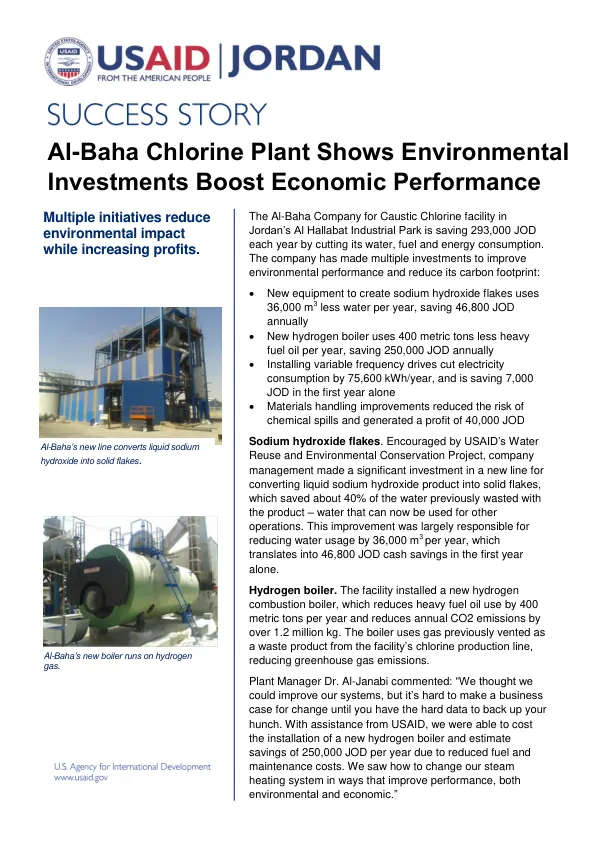
The company has made significant investments to improve its environmental performance and reduce its carbon footprint. One of the key investments was the installation of new equipment to create sodium hydroxide flakes, which uses 36,000 m3 less water per year, saving 46,800 JOD annually. This improvement was largely responsible for reducing water usage by 36,000 m3 per year, translating into 46,800 JOD cash savings in the first year alone. Another significant investment was the installation of a new hydrogen combustion boiler, which reduces heavy fuel oil use by 400 metric tons per year and reduces annual CO2 emissions by over 1.2 million kg. The boiler uses gas previously vented as a waste product from the facility's chlorine production line, reducing greenhouse gas emissions. The company projects that the boiler will save 250,000 JOD per year due to reduced fuel and maintenance costs. The facility has also implemented variable frequency drives (VFDs) on large cooling fans, which are expected to cut its annual electricity consumption by approximately 75,600 kWh, equating to a reduction of about 40,000 kg per year in CO2-equivalent emissions. The company expects to save approximately 7,000 JOD in electricity costs for the first year, with savings likely to increase over time. In addition to these investments, the company has implemented sub-metering to track water use more specifically within any given process, identifying further water-saving options. The meters have opened up "many opportunities for water saving and better water management practices." The company has also applied best practices in materials handling, resulting in the sale of unwanted spare parts and a reduction in the risk of chemical spills. The Al-Baha Company for Caustic Chlorine is one of 30 industrial partners working with USAID to reduce industrial pollution and conserve scarce water and energy resources. The Water Reuse and Environmental Conservation Project examined water and energy use, material and waste flow, production processes, quality control, and other aspects of each facility's operations, suggesting options for minimizing pollution and saving water, energy, and money. The assessments also analyzed costs and payback periods for various options, providing a business case for change.
Related documents