AECOM INTERNATIONAL
Water Reuse and Environmental Conservation Project
The Water Reuse and Environmental Conservation Project in Jordan was implemented from 2010 to 2015 with a total funding of $32.6 million.
2015 · 2 pages
Sign in to readA free account is required to download.
Abstract
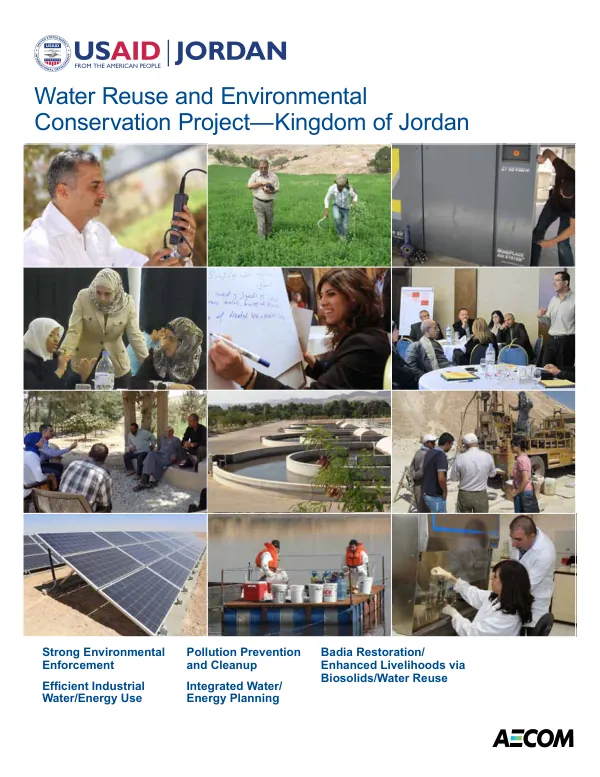
The project focused on industrial water and energy conservation, improved industrial waste management, and community-level water reuse. The project's beneficiaries included industry, farmers, government officials, and the general public, with a geographic coverage of the entire country. The project supported the improvement of the regulatory environment by strengthening the Ministry of Environment's capacity in institutional development, environmental policies, laws, and regulations. This resulted in better enforcement of environmental regulations, increased institutional transparency, and the approval of a new Environmental Protection Law by the cabinet. The project also established a shared database of best practices through the website www.jordannetwork.net, which was registered by 1865 users and uploaded 1326 resources. The project trained staff from 100 industrial facilities on environmental management systems and pollution prevention, and partnered with 30 facilities to develop environmental management systems and pollution prevention plans. This led to the implementation of water- and energy-saving and pollution control measures in factories throughout Jordan. The project also prepared designs and tender documents for wastewater treatment plants, including the Zarqa industrial WWTP and the upgrade of the WWTP at Abdullah II Ibn Hussein Industrial Estate (Sahab). The project's achievements in pollution prevention and industrial waste management included the development of a process for a national environmental performance award, which was transferred to the King Abdullah II Center for Excellence. The project also supported the qualification of three national laboratories for accreditation in wastewater testing, providing the government and industry with access to affordable wastewater testing for compliance. The project's achievements in disposal site rehabilitation included the planning of site cleanup and new treatment and disposal facilities for Ekeder, as well as the design of cleanup plans for Russeifah landfill, lagoon, mining pit, and abandoned tunnels. The project also designed a sanitary landfill cell in Aqaba and investigated recycling opportunities. The project's achievements in water reuse included the training of water users' associations and farmers in irrigation system repair, best practices in water reuse for irrigation, and marketing at the Wadi Mousa pilot project. This resulted in improved crop yield, the establishment of a seeds farm, and increased incomes. The project also worked with farmers at Lajjoun, Al-Zaatari, and Azraq to replicate the Wadi Mousa success, standardizing options for reuse that can be easily replicated to improve community livelihoods. The project's achievements in biosolids management included supporting the government in revising regulations for biosolids use in land application for agriculture. This will enable the safe use of biosolids, increasing fodder crop yields, restoring rangeland, reducing pollution, and benefiting communities economically. The project also prepared design and tender documents for a new landfill to dispose of biosolids at As Samra, ensuring safe disposal of biosolids.
Related documents