USAID DEC
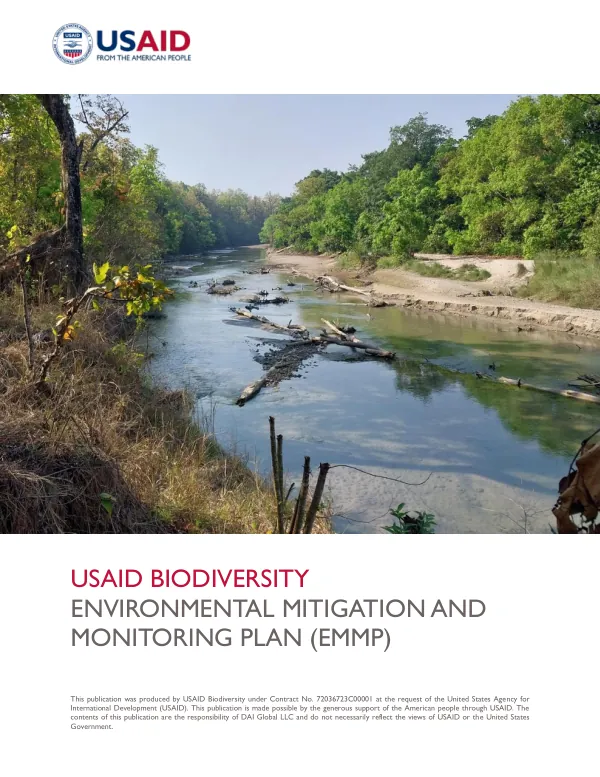
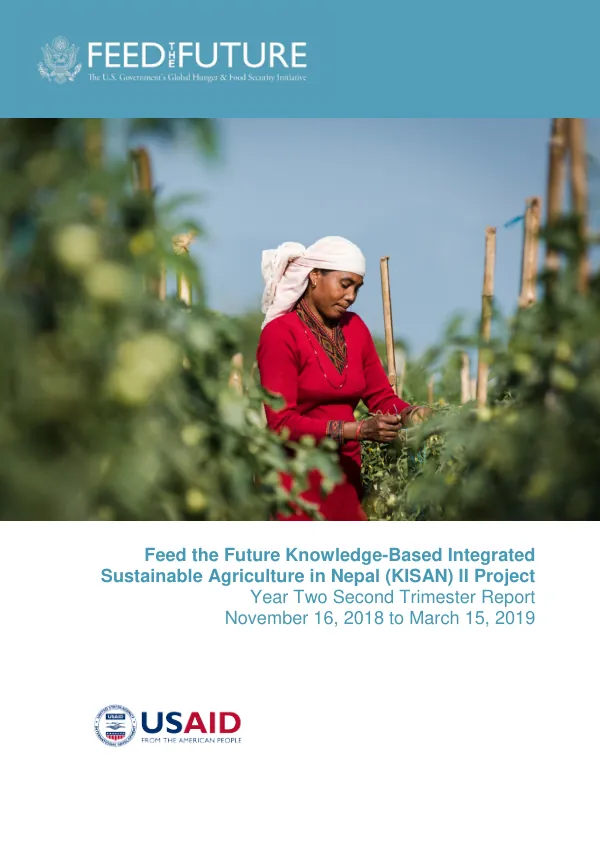
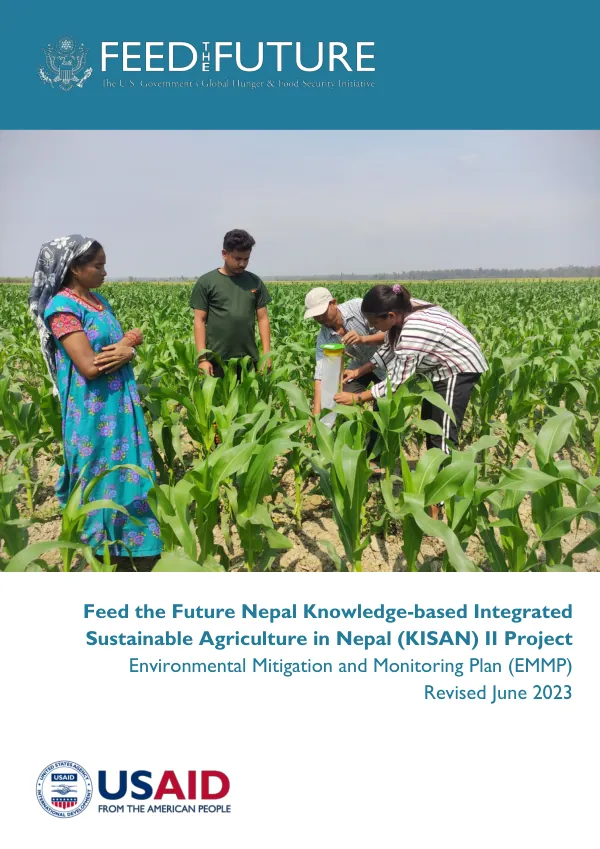
Environmental Mitigation and Monitoring Plan (EMMP) for the Feed the Future Nepal Knowledge-based Integrated Sustainable Agriculture in Nepal (KISAN) II Project
Sign inGOVERNMENT OF SENEGAL
Environmental Mitigation and Monitoring Plan (EMMP) for the Feed the Future Nepal Knowledge-based Integrated Sustainable Agriculture in Nepal (KISAN) II Project
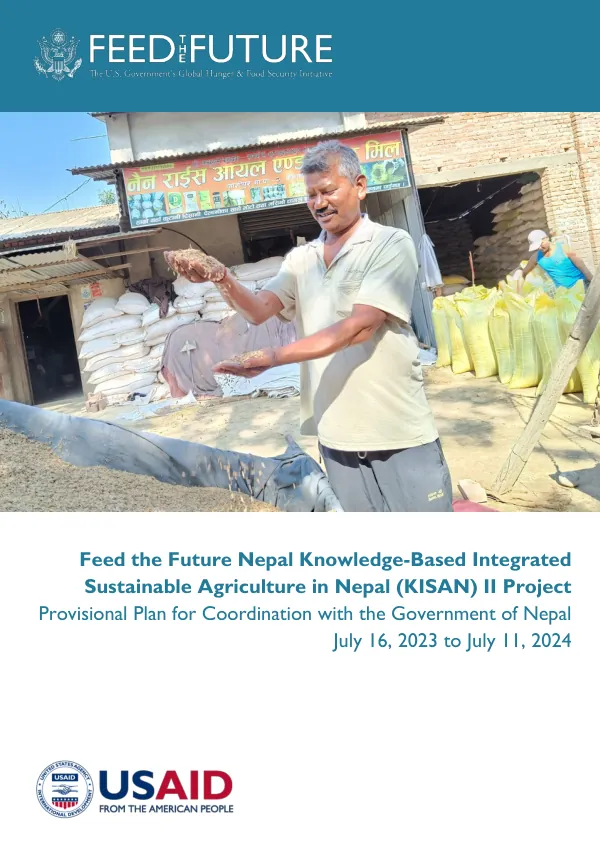
The KISAN II project, implemented by Winrock International and partners, aims to enhance productivity of high value agriculture products in Nepal.
2023 · 14 pages
Sign in to readA free account is required to download.
Abstract
As of Year 6, the project has partnered with the private sector, built their technical capacity and business models to help achieve inclusive growth in the agriculture sector, while increasing farmers' incomes. The project has received additional resources from USAID through a supplemental Scope of Work (SSOW) to respond to the COVID-19 pandemic in Nepal and promote transformational change in the rice and maize sub-sectors. The project will focus on three main outcomes: enabling market actors to upgrade their management and technical capacity and infrastructure to meet increased domestic market demand for improved rice and maize products; facilitating adoption of inclusive business practices that expand market actors' resource and customer base and deliver benefits to a range of market actors; and assessing needs of migrant returnees and other populations heavily affected by the COVID-19 crisis and connecting them to agriculture-related employment opportunities. The project will work in selected metropolitan, sub-metropolitan, municipal, and rural municipal areas in eight districts in Lumbini, Karnali, and Sudurpaschim Provinces. The project will continue to coordinate with diverse development stakeholders, and federal and provincial government to support sustainable, competitive, and inclusive market systems. The KISAN II project has the potential for adverse impacts on the environment, primarily related to the following activities: promoting climate smart, drought and disease tolerant/resistant seed varieties and precise fertilizer application; promoting proven climate-smart irrigation technologies, including multiple-use water systems; using videos that promote practices to scale up productivity and reduce post-harvest losses; improving access to timely, affordable, high-quality inputs; strengthening agronomic extension skills, including use of bioproducts, pesticides, and climate-smart technologies; guiding judicious use of additives, climate and soil-smart use of vermi-compost, manure, and ridging for planting hybrid, drought-tolerant seed; and expanding domestic manufacture of high-quality inputs. The project has submitted an Environmental Mitigation and Monitoring Plan (EMMP) along with the first work plan and updates it with every subsequent work plan. The EMMP describes how the project will implement all Initial Environment Examination (IEE) and/or Environmental Assessment (EA) conditions that apply to all the proposed project activities within the scope of the award. The EMMP includes monitoring the implementation of the specified conditions and their effectiveness. The project will work to mitigate potential environmental impacts through various measures, including promoting sustainable agriculture practices, reducing water pollution, and conserving biodiversity. The project will also establish a monitoring and reporting system to track progress and identify areas for improvement. The KISAN II project will work in coordination with the Government of Nepal (GON) programs at municipal, provincial, and federal levels to achieve its objectives. The project will also engage with diverse development stakeholders, including private sector companies, NGOs, and community-based organizations, to support sustainable, competitive, and inclusive market systems. The project's EMMP will be updated regularly to reflect changes in the project's activities and to ensure that the project is meeting its environmental mitigation and monitoring commitments. The project will also establish a system for reporting on progress and identifying areas for improvement.
Related documents