USAID DEC
Equitable decision-making in households: Production, Post-Harvest Handling, Processing, Transportation, and Storage Services
Sign inGOVERNMENT OF UGANDA
Equitable decision-making in households: Production, Post-Harvest Handling, Processing, Transportation, and Storage Services
Equitable decision-making in households is a critical component of agricultural development initiatives.
1 pages
Sign in to readA free account is required to download.
Abstract
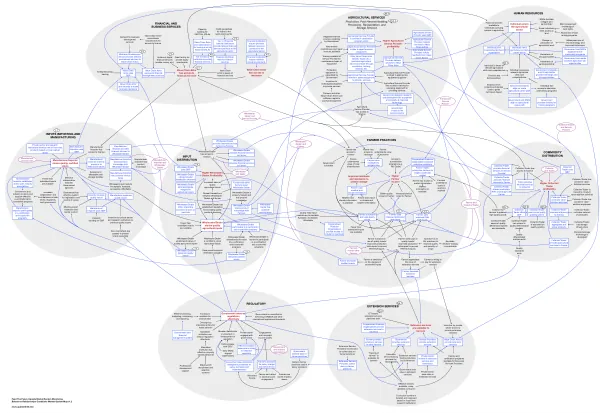
Incentives for all household members to improve the quality and quantity of crops are essential for achieving this goal. Farmers must understand the costs of reaching markets and have access to quality inputs, improved production techniques, and post-harvest handling methods. The curriculum content for agricultural training programs is iterated and improved based on input from research institutions. Private sector and research institutions develop new or improved products based on local market needs. Cooperatives and producer organizations organize collective marketing, and affordable cold storage facilities are essential for maintaining the quality of produce. These organizations also provide extension services to their members, including training and financial services. Effective trainers are available, using updated curriculum content to train farmers in the use of quality inputs and improved production techniques. Data on farmer practices is used in policy decisions, and government agencies collect data on farmer practices. Extension service providers are incentivized to collect data on farmer practices, and collectors and traders provide agricultural services to farmers. Financial services are available to individuals pursuing careers in agriculture, and government subsidies support the development of the services sector. The government invests in the services sector, and effective human resource recruitment and selection systems are in place. Professional development support is available, and wholesalers and dealers stock quality agricultural inputs. Collectors and traders share production and post-harvest handling knowledge with farmers, and increased collaboration and trust between the private sector, regulators, and government are essential for achieving equitable decision-making in households. Regulation and service provision enabling by the government are critical for the development of the agricultural sector. Production equipment is subsidized by the government, and quality retail input markets are acceptable, available, accessible, and affordable. Extension services are available to farmers, and agricultural service providers have access to finance. Collectors and traders provide financial services to service providers, wholesalers, and farmers, and the use of GBP is widespread among value chain actors. The government is committed to enforcing COMESA and other international regulations and standards, and wholesalers and dealers demand quality inputs. Private sector engagement with government is essential for the development of the agricultural sector, and collectors and traders use formal quality grading systems. Quality-differentiated markets exist, and manufacturers and importers have product knowledge and customer service focus. Incentives for private sector and research institutions to produce quality inputs are essential, and anti-counterfeits laws are in place to protect brand ownership. Financial institutions and insurers provide tailored insurance products to the agricultural sector, and value chain actors join associations for lending such as SACCOs and VSLAs. Other value chain actors facilitate agricultural service provision through investment, training, and referrals. Farmers are trained in advocacy and engagement, and mandated institutions can enforce regulation effectively. Farmers are aware of policy issues, and government agencies engage stakeholders. Effective industry associations lobby for effective regulation, and government uses structured, transparent processes for policy formation and implementation. Broader stakeholder involvement in the development of regulation is essential, and DLGs engage with GOU. Farmers advocate for policy change and enforcement, and engagement and oversight by civil society and international forums are critical for the development of the agricultural sector. Funding is available for enforcement, and mandated institutions have effective, properly trained personnel. Government uses financial management systems, and effective planning, budgeting, monitoring, and reporting are in place. Wholesalers and dealers set appropriate margins for agricultural inputs, and they offer marketing promotions such as free trials. Training is available to service providers for maintenance and repair of equipment, and agricultural service providers solicit feedback from value chain actors. Higher agricultural service provider profitability is achieved through the provision of quality services, and certification programs exist for agricultural service providers. After-market maintenance and repair services are available, and government supports research and development for equipment and imports of improved technology. Agricultural service providers are linked to appropriate equipment suppliers, and incentives exist for individuals and companies to provide services. Farmers and other value chain actors lack sufficient capital to purchase equipment, and farmers take measures to mitigate risks. Farmers see value in climate and weather information, and improved resilience and resistance to climate change are achieved through the use of weather and climate information. Weather and climate information is available, and farmers use this information to make informed decisions. The collector and trader cultivates a network of producers, improves efficiency by bulking, aggregates and stores products, and is educated on quality grading. The collector and trader is aware of quality-differentiated markets and standards, and effective collaboration between government agencies is essential for the development of the agricultural sector. The government has an effective system for registration and control of inputs, and manufacturers and importers establish and/or join industry associations. Government and industry invest in and support effective e-verification/anti-counterfeit programs, and effective import inspection and border control are in place. Importers source quality inputs, and agricultural service providers deliver services to value chain actors. Agricultural service providers invest in assets and equipment to provide services, and business development service providers deliver professional services to value chain actors. Wholesale input markets are acceptable, available, accessible, and affordable, and farmers tell other
Related documents