FOOD AND AGRICULTURAL ORGANIZATION
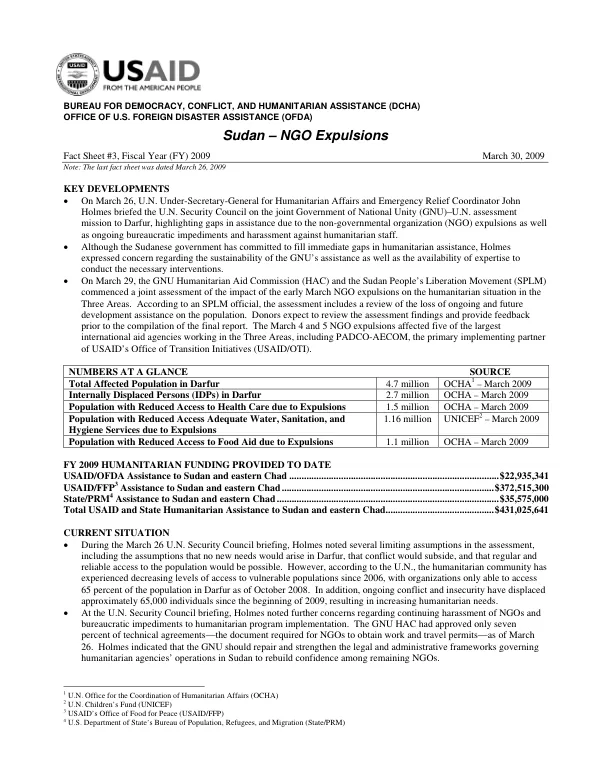
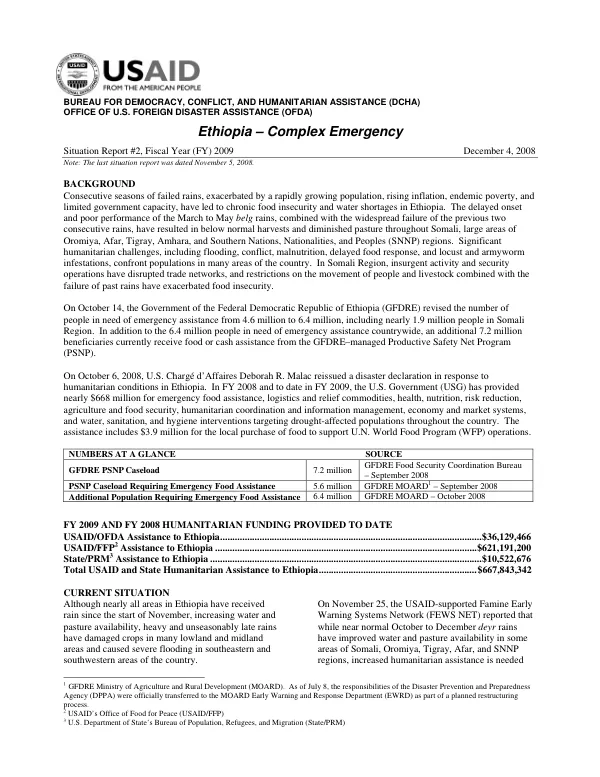
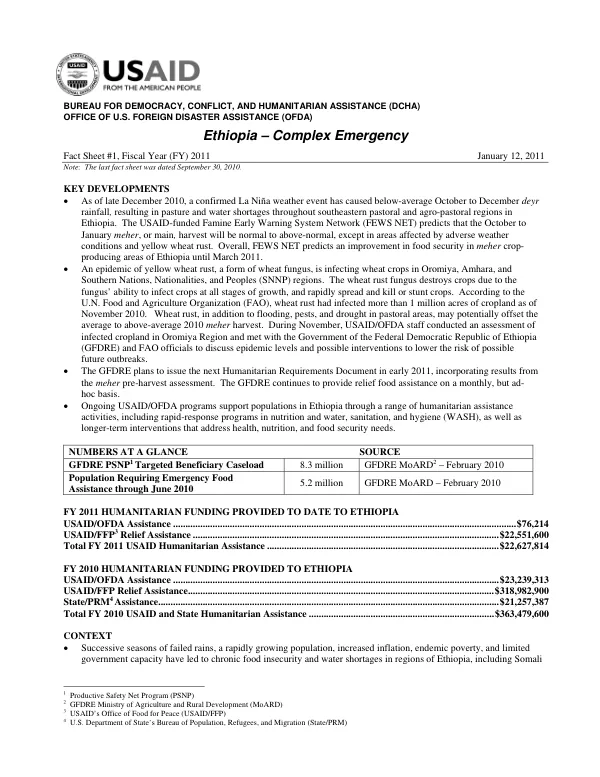
Ethiopia Complex Emergency Fact Sheet #1
The complex emergency in Ethiopia is characterized by below-average rainfall, resulting in pasture and water shortages throughout southeastern pastoral and agro-pastoral regions.
2011 · 3 pages
Sign in to readA free account is required to download.
Abstract
The Famine Early Warning System Network (FEWS NET) predicts that the October to January meher harvest will be normal to above-normal, except in areas affected by adverse weather conditions and yellow wheat rust. The wheat rust fungus has infected more than 1 million acres of cropland, potentially offsetting the average to above-average 2010 meher harvest. The Government of the Federal Democratic Republic of Ethiopia (GFDRE) plans to issue the next Humanitarian Requirements Document in early 2011, incorporating results from the meher pre-harvest assessment. The GFDRE continues to provide relief food assistance on a monthly, but ad-hoc basis. USAID/OFDA programs support populations in Ethiopia through a range of humanitarian assistance activities, including rapid-response programs in nutrition and water, sanitation, and hygiene (WASH), as well as longer-term interventions that address health, nutrition, and food security needs. FEWS NET forecasts that household food access will stabilize food security among poor households through March 2011 in eastern meher crop-producing areas. USAID/OFDA interventions continue to provide affected populations with essential tools to improve food security during FY 2011. For example, USAID/OFDA supports two FAO programs—a root and tuber multiplication program in SNNP, Oromiya, and Amhara regions and a livestock disease surveillance program in Somali Region—that benefit a total of more than 1.4 million people. Water shortages have affected pastoral communities in Oromiya, Somali, Tigray, Amhara, and SNNP regions. Authorities in Somali Region have appealed to the international community to begin water trucking in affected zones. The Regional Water Bureau in Oromiya Region has begun water trucking in Borena and Bale zones, while the Disaster Prevention and Preparedness Bureau in Somali Region is providing affected populations with water services through a UNICEF-supported emergency water trucking program. The GFDRE Emergency Nutrition Coordination Unit (ENCU) has released the findings of recent nutrition surveys, indicating poor nutrition conditions in Somali and Amhara regions and normal nutrition conditions in Oromiya Region. Humanitarian agencies and the GFDRE have planned to initiate emergency nutrition interventions through the Humanitarian Response Fund in four woredas in Somali Region. New admissions to Therapeutic Feeding Programs (TFP) in various regions have continued to decrease between August and November 2010.