THE LOUIS BERGER GROUP, INC.
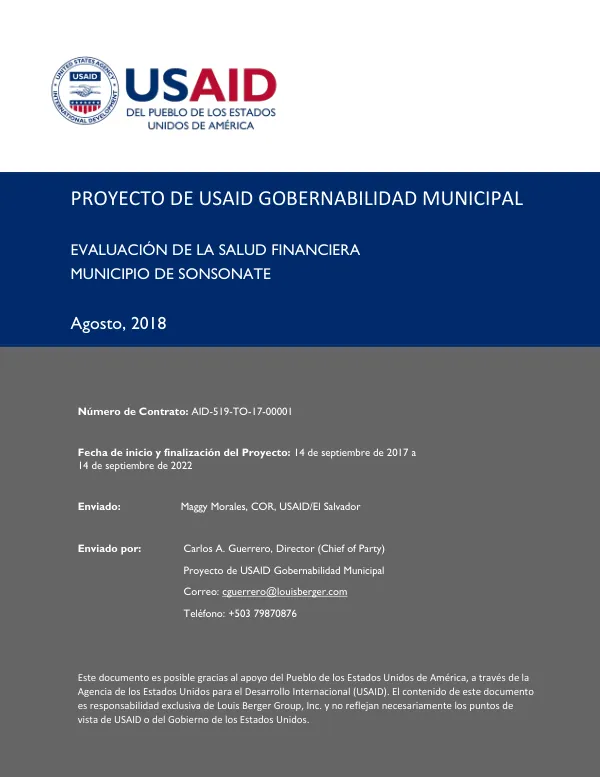
Evaluación de la salud financiera del municipio de Sonsonate
The municipality of Sonsonate, located in the department of Sonsonate, is situated 63.1 kilometers west of the capital city.
2018 · 48 pages
Sign in to readA free account is required to download.
Abstract
The municipality's primary access is via the CA-8 highway. Sonsonate covers an area of 232.53 square kilometers, with the urban area divided into the barrios of El Pinar, Mejicanos, and San Francisco. The municipality's administrative structure consists of the Concejo, gerencias, and jefaturas. The Concejo is the municipal council, responsible for making decisions and setting policies. The gerencias are departments that oversee various aspects of municipal administration, such as finance, public works, and social services. The jefaturas are leadership positions that oversee specific areas of municipal administration. The municipality's financial performance is analyzed using financial and accounting information from the past three years. The analysis examines 19 indicators related to income and expenses, including current savings or deficit, fiscal surplus or deficit, public debt, and budget execution. The results of this analysis are used to evaluate the municipality's financial management and identify areas for improvement. The municipality's tax performance is also evaluated, including its tax legislation, property and business registry, collection of contributions from taxpayers, tax arrears, and recovery of taxes owed. The analysis of tax performance is used to identify areas where the municipality can improve its tax collection and management. The municipality provides various services to its residents, including public safety, sanitation, and social services. However, not all services are covered, and some are not paid for by residents. The municipality's service delivery is evaluated to identify areas where services can be improved and expanded. The document concludes with an evaluation of the municipality's financial management, tax performance, and service delivery. The findings of this evaluation are used to inform the development of plans to improve the municipality's financial management, tax collection, and service delivery. These plans are implemented in collaboration with the municipal council and other stakeholders. The municipality's financial performance is characterized by a current deficit, with expenses exceeding income. The municipality's tax performance is also a concern, with high levels of tax arrears and a low collection rate. The municipality's service delivery is also a challenge, with many services not being covered or paid for by residents. The municipality's financial management is overseen by the Gerencia Financiera y Tributaria, which is responsible for managing the municipality's finances, including budgeting, accounting, and tax collection. The Gerencia Financiera y Tributaria works closely with other departments, such as the Gerencia Administrativa and the Unidad de Contabilidad, to ensure that the municipality's finances are managed effectively. The municipality's tax legislation is based on the Ley de Impuestos Municipales, which sets out the rules and regulations for tax collection and management. The municipality's tax collection is overseen by the Unidad de Administración Tributaria Municipal, which is responsible for collecting taxes from taxpayers and ensuring that tax payments are made on time. The municipality's service delivery is overseen by the Gerencia de Servicios Municipales, which is responsible for providing various services to residents, including public safety, sanitation, and social services. The Gerencia de Servicios Municipales works closely with other departments, such as the Gerencia de Obras Públicas and the Unidad de Salud, to ensure that services are delivered effectively and efficiently. The municipality's financial performance is evaluated using 19 indicators related to income and expenses, including current savings or deficit, fiscal surplus or deficit, public debt, and budget execution. The results of this analysis are used to evaluate the municipality's financial management and identify areas for improvement. The municipality's tax performance is evaluated using indicators such as tax collection rate, tax arrears, and tax recovery rate. The results of this analysis are used to identify areas where the municipality can improve its tax collection and management. The municipality's service delivery is evaluated using indicators such as service coverage, service quality, and service accessibility. The results of this analysis are used to identify areas where services can be improved and expanded.
Related documents