USAID DEC
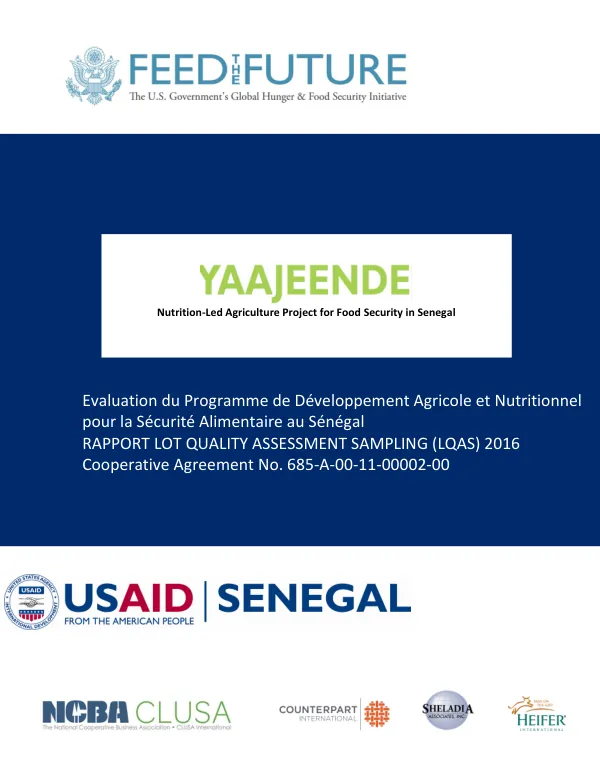
Evaluation du Programme de Développement Agricole et Nutritionnel pour la Sécurité Alimentaire au Sénégal
Sign inWORLD HEALTH ORGANIZATION
Evaluation du Programme de Développement Agricole et Nutritionnel pour la Sécurité Alimentaire au Sénégal
The Nutrition-Led Agriculture Project for Food Security in Senegal is a program implemented by USAID|Yaajeende in collaboration with local stakeholders.
2016 · 61 pages
Sign in to readA free account is required to download.
Abstract
The project aims to improve food security and nutrition outcomes in Senegal through a nutrition-led agriculture approach. The program focuses on enhancing the capacity of local communities to produce and consume nutritious food, particularly in rural areas. The Lot Quality Assurance Sampling (LQAS) methodology was used to assess the effectiveness of the program. LQAS is a statistical method that involves collecting data from a representative sample of households to estimate the prevalence of a specific outcome, such as malnutrition. The LQAS survey was conducted in four regions of Senegal: Kolda, Kédougou, Bakel, and Matam. The survey collected data on various indicators, including malnutrition rates among women and children, dietary diversity, and access to clean water and sanitation facilities. The data were collected through a combination of household surveys and anthropometric measurements. The survey also collected information on the types of food consumed, the sources of water, and the practices of hygiene and sanitation. The results of the LQAS survey indicate that malnutrition rates are high in Senegal, particularly among children under the age of 5. The survey found that 34% of children under 5 years old were stunted, and 15% were wasted. The survey also found that 22% of women of reproductive age were underweight, and 15% were overweight. The survey results also indicate that there are significant disparities in nutrition outcomes across different regions and departments in Senegal. For example, the survey found that the prevalence of stunting among children under 5 years old was highest in the Kédougou region (43%) and lowest in the Matam region (20%). Similarly, the survey found that the prevalence of underweight women of reproductive age was highest in the Kolda region (30%) and lowest in the Bakel region (10%). The LQAS survey provides valuable insights into the nutrition situation in Senegal and highlights the need for targeted interventions to address the root causes of malnutrition. The survey results can inform the development of effective nutrition programs and policies that address the specific needs of different regions and populations in Senegal. The survey was conducted by a team of researchers and enumerators who were trained in the LQAS methodology and data collection procedures. The survey data were analyzed using statistical software, and the results were presented in a series of tables and figures. The survey report provides a comprehensive overview of the nutrition situation in Senegal and highlights the need for continued investment in nutrition programs and policies to improve food security and nutrition outcomes in the country.