USAID DEC
Evaluation of a Mobile Reporting System for the Collection of Routine Malaria Data in Mali
Sign inCAROLINA POPULATION CENTER AT THE UNIVERSITY OF NORTH CAROLINA AT CHAPEL HILL
Evaluation of a Mobile Reporting System for the Collection of Routine Malaria Data in Mali
The evaluation of a mobile reporting system for the collection of routine malaria data in Mali aimed to assess the effectiveness of improved technologies, including mobile reporting and web-based databases, in enhancing the timeliness, quality, and use of routine information.
2014 · 25 pages
Sign in to readA free account is required to download.
Abstract
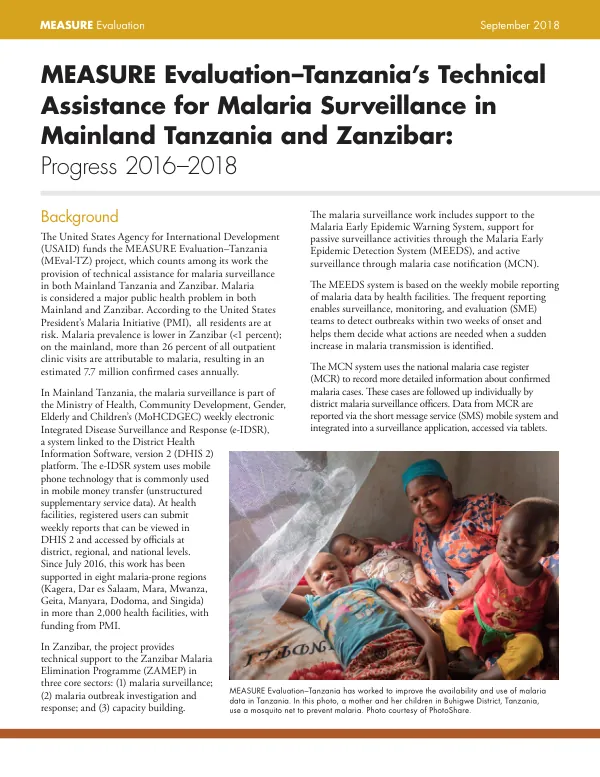
The evaluation utilized data from a recently established routine reporting system for malaria in Mali to examine these issues. A total of 935 monthly reports from 85 community health centers (CSCom) were analyzed to assess the timeliness, completion, and accuracy of the data comparing three different reporting mechanisms. The three reporting mechanisms examined were mobile reporting at the facility level (SMS), electronic entry and uploading at the district level (EEUD), and the existing health management information system (HMIS) for Mali (SLIS). The results of the evaluation indicated that mobile reporting directly from the facility via SMS was associated with significant improvements in the timeliness and completion of routine monthly reports when compared with reporting systems that rely on the transfer of paper to the district. Virtually all SMS reports (96%) were captured in the database before the lockout date on the 10th of the month, and 85% of reports made it within 5 days of month's end. However, the accuracy of the malaria data was found to be very low, with fewer than 1 in 6 reports within the acceptable ±10 percent margin of error regardless of the reporting system used (SMS or EEUD). The discrepancies observed between data in the database and those identified in the recount from the registers can largely be explained by the inclusion of community health worker data in monthly reports by several of the CSCom and errors in how the registers are filled out. Facility staff indicated that the SMS system was easy to use, data entry took little time (14 minutes on average), and issues with impaired cell phone connectivity were infrequent. Mobile reporting via SMS is a practical solution in remote areas where transferring paper reports to districts in a short period of time is made difficult by poor transportation options. The evaluation highlights the potential of mobile reporting systems to improve the timeliness and completion of routine malaria data in Mali. However, it also underscores the need for improved data accuracy and quality, particularly in the context of community health worker data and register filling errors.