ABT ASSOCIATES
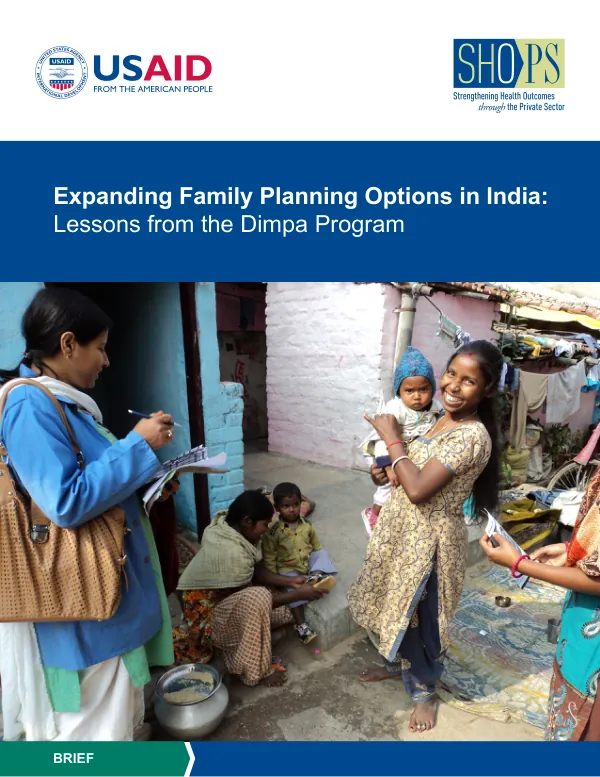
Expanding Family Planning Options in India: Lessons from the Dimpa Program
The Dimpa program was initiated in 2003 by the United States Agency for International Development (USAID) to demonstrate the feasibility of safe provision of depot medroxyprogesterone acetate (DMPA) through the private sector in India.
2015 · 24 pages
Sign in to readA free account is required to download.
Abstract
The program aimed to expand contraceptive options available to couples, decrease unmet need for spacing, and increase contraceptive prevalence rates. Key objectives included demonstrating the feasibility of safe provision of DMPA through the private sector, expanding contraceptive options, and building evidence on client acceptance and satisfaction with DMPA to support policy advocacy on inclusion in the national family planning program. A formative assessment carried out in 2002 among 1,769 intended beneficiaries, 152 qualified private sector health practitioners, and 599 pharmacies in the northern Indian state of Uttar Pradesh highlighted several key findings. Potential clients reported a likelihood of trying DMPA in the next year, with 21 percent expressing interest. However, health care providers, particularly obstetricians/gynecologists and female general practitioners, expressed concerns or had questions on the side effects of DMPA. Product availability and pricing were also significant deterrents, with low availability and high prices hindering access to DMPA. The Dimpa program addressed these challenges by creating a network of private sector clinics that provided quality care and services. Key components of the program included product supply, demand generation, continuity of care, policy and media advocacy, and quality assurance, monitoring, and evaluation. The program focused on building the capacity of private sector health providers to offer DMPA, increasing awareness and demand for the method, and ensuring continuity of care for clients. The Dimpa program's approach to quality of care was a critical component of its success. By creating a network of private sector clinics that provided high-quality services, the program was able to increase access to DMPA and improve client satisfaction. The program's focus on quality of care also helped to build trust and confidence among clients, health care providers, and other stakeholders. The Dimpa program's impact on the availability and use of DMPA was significant. By the end of the program, the number of private sector clinics offering DMPA had increased, and the availability of the method had improved. Client acceptance and satisfaction with DMPA also increased, with many clients reporting high levels of satisfaction with the method. The program's findings and recommendations have been widely disseminated, and the Dimpa program has served as a model for other initiatives aimed at increasing access to family planning services in India. The Dimpa program's success can be attributed to its focus on quality of care, its ability to build the capacity of private sector health providers, and its commitment to increasing access to DMPA. The program's findings and recommendations have important implications for policymakers, program managers, and other stakeholders working to increase access to family planning services in India. By building on the successes of the Dimpa program, it is possible to improve the availability and use of DMPA and other family planning methods, ultimately contributing to improved reproductive health outcomes for women and families in India.