USAID DEC
Expert Workshop on Shifting Cultivation, Gender and REDD+ in West and Central Africa
Sign inCENTER FOR INTERNATIONAL FORESTRY AND RESEARCH
Expert Workshop on Shifting Cultivation, Gender and REDD+ in West and Central Africa
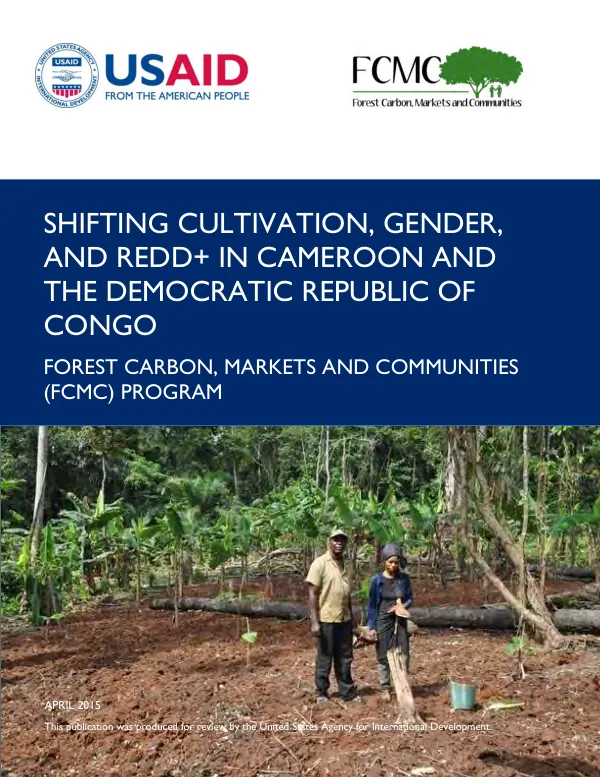
Shifting cultivation, a complex and adaptable set of systems, represents a significant intersection of social and environmental soundness issues regarding REDD+ in West and Central Africa.
2012 · 21 pages
Sign in to readA free account is required to download.
Abstract
The global experts meeting on the social dimension of REDD+, hosted by FCMC in October 2011, provided background and impetus for the shifting cultivation study. Shifting cultivation relates to other SES issues, including safeguards, stakeholder participation, and gender, with gender being a key element as shifting cultivation systems tend to be highly gendered. While there is a long history of research on farming systems and community forestry in West and Central Africa, there has yet to be any meaningful exchange of lessons learned regarding shifting cultivation with REDD+ planning efforts in the region. This wealth of knowledge and experience should be brought to bear for more informed REDD+ planning. USAID has a comparative advantage for engagement at the intersection of shifting cultivation and REDD+ based on its regional programs, on-the-ground resources, comprehensive monitoring systems, and ongoing initiatives related to tenure, livelihood, and food security. Key methodological questions for this study relate to tools and resources to better understand shifting cultivation, including understanding what remotely-sensed maps tell us about shifting cultivation, whether available data is fine-grained enough to link to shifting cultivation patterns, and how the variety of tools can help to select sampling frames and relate sites to the bigger regional picture. A particular challenge relates to how REDD+ can be integrated into an overall landscape approach that takes into account the complex interactions between shifting cultivation, land use, and forest conservation. The Central Africa Regional Program for the Environment (CARPE) program and the Sustainable and Thriving Environments for West African Regional Development (STEWARD) program are two regional programs underway in West and Central Africa with dedicated Sustainable Landscapes (REDD+) funding. USAID and its implementing partners have on-the-ground resources in West and Central Africa, with select sites addressing issues of shifting cultivation and forest conservation. Some of these sites are slated to become REDD+ pilots, and USAID has ongoing initiatives related to tenure, livelihood, and food security, and a mandate to address gender throughout all USAID activities. The study aims to bring together lessons learned from research on farming systems and community forestry in West and Central Africa to inform REDD+ planning efforts in the region. The study will focus on understanding the complex interactions between shifting cultivation, land use, and forest conservation, and will use a variety of tools and resources to better understand shifting cultivation. The study will also explore how REDD+ can be integrated into an overall landscape approach that takes into account the complex interactions between shifting cultivation, land use, and forest conservation. The study will be conducted in collaboration with regional and subject matter experts, including Diane Russell of USAID, Carol Colfer of the Center for International Forestry Research (CIFOR), and FCMC consultant Janis Alcorn. The study will use a variety of tools and resources, including remotely-sensed maps, to better understand shifting cultivation and its relationship to REDD+ planning efforts in the region. The study will also explore how REDD+ can be integrated into an overall landscape approach that takes into account the complex interactions between shifting cultivation, land use, and forest conservation. The study will have significant implications for REDD+ planning efforts in West and Central Africa, and will provide valuable insights into the complex interactions between shifting cultivation, land use, and forest conservation. The study will also contribute to the development of more effective and sustainable REDD+ strategies that take into account the needs and concerns of local communities.
Related documents